Category: Cover Art
Dive into a gallery of vintage cover art from books, magazines, and albums. Discover how graphic design and illustration reflected the moods of their times.
These covers capture the essence of cultural evolution — from bold propaganda to elegant minimalism.
-
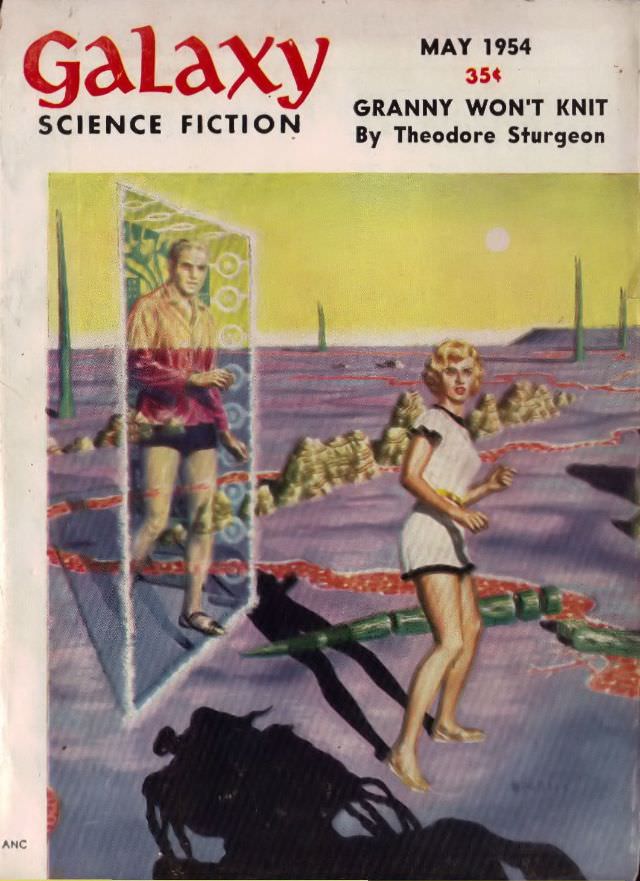
#23 Galaxy Science Fiction cover, May 1954
Galaxy Science Fiction’s May 1954 cover greets the eye with bold, red lettering and a crisp promise of pulp-era wonder, priced at 35¢ and headlined by “Granny Won’t Knit” by Theodore Sturgeon. The typography and clean masthead layout place it firmly in mid-century magazine culture, when science fiction was sold as both sleek entertainment and…
-
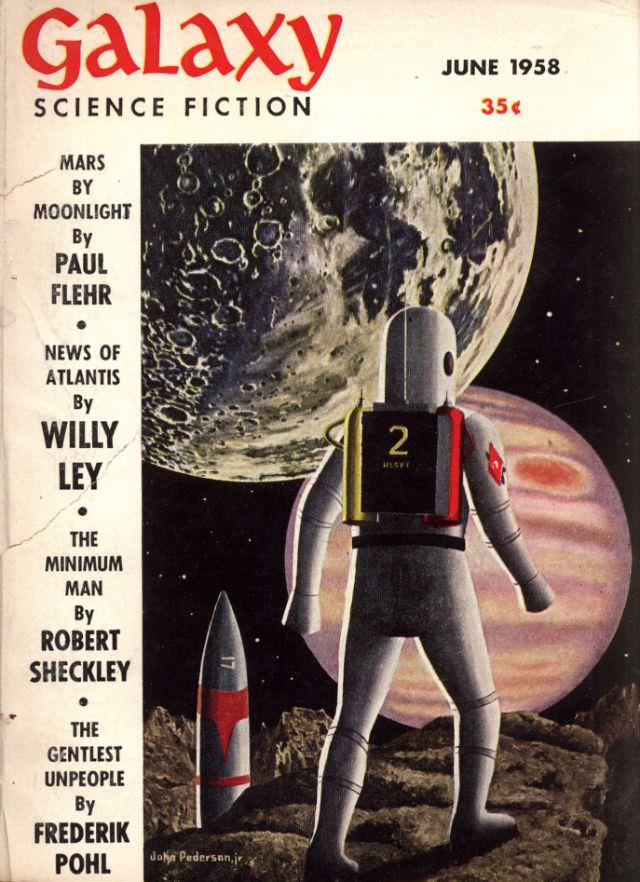
#39 Galaxy Science Fiction cover, June 1958
Bold red lettering crowns the June 1958 issue of *Galaxy Science Fiction*, pulling the eye into a classic mid-century vision of space travel. A lone suited explorer stands on a jagged, cratered foreground while a compact rocket waits nearby, its fins and markings rendered with the clean, confident lines of magazine illustration. Behind him, two…
-
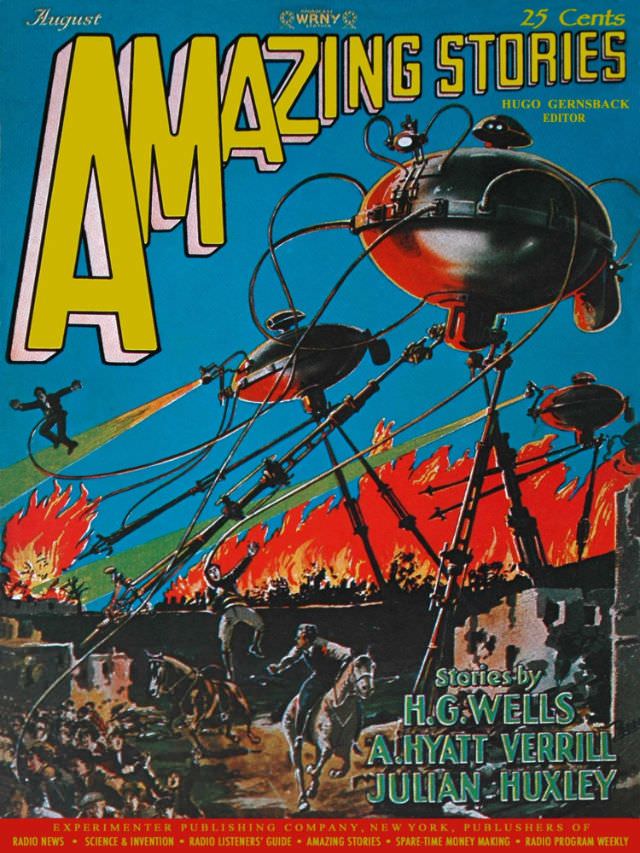
#10 Amazing Stories cover, August 1927
Bold, blocky lettering announces **Amazing Stories** at a glance, while the August 1927 cover art throws the reader straight into a sky-blue future charged with danger. Above a landscape of fire and shattered masonry, looming spherical war machines stride on spindly legs, their cable-like appendages and glowing beams suggesting relentless control. Tiny human figures scatter…
-
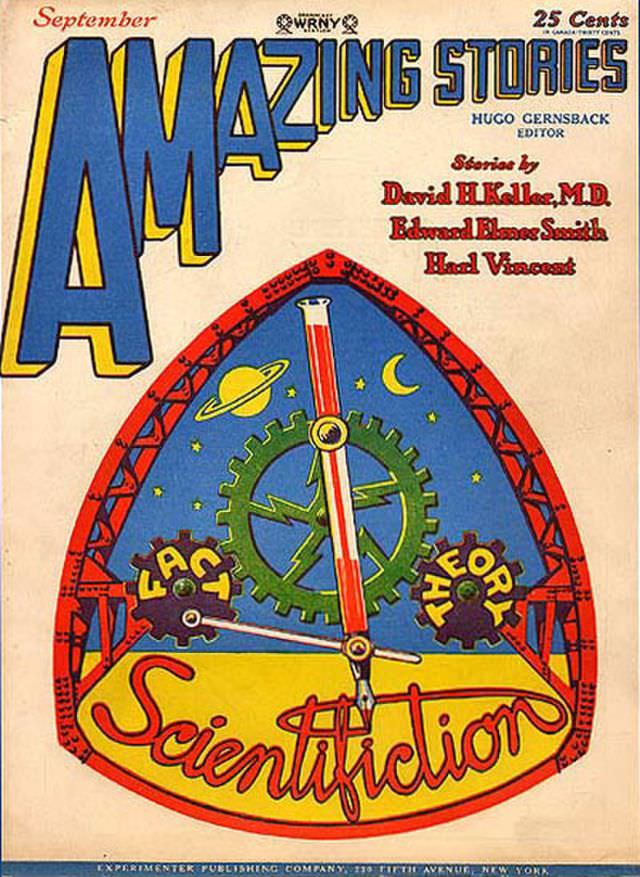
#26 Amazing Stories cover, September 1928
Bold block lettering shouts “Amazing Stories” across the top of this September 1928 cover, with a crisp 25-cent price and the familiar early pulp layout that helped define American science fiction magazines. Beneath the masthead, the editor credit to Hugo Gernsback anchors the issue in the era when “scientifiction” was still a freshly coined promise,…
-

#7 Argosy cover, July 10, 1920
Argosy’s masthead dominates the top of the July 10, 1920 cover, proudly announcing the magazine as an “Issued Weekly” staple of the newsstand. Beneath it, the illustration sets a tense, theatrical mood: a young woman in a warm-toned dress stands at the center, her arm extended, while a dark-clad man looms close behind her, his…
-
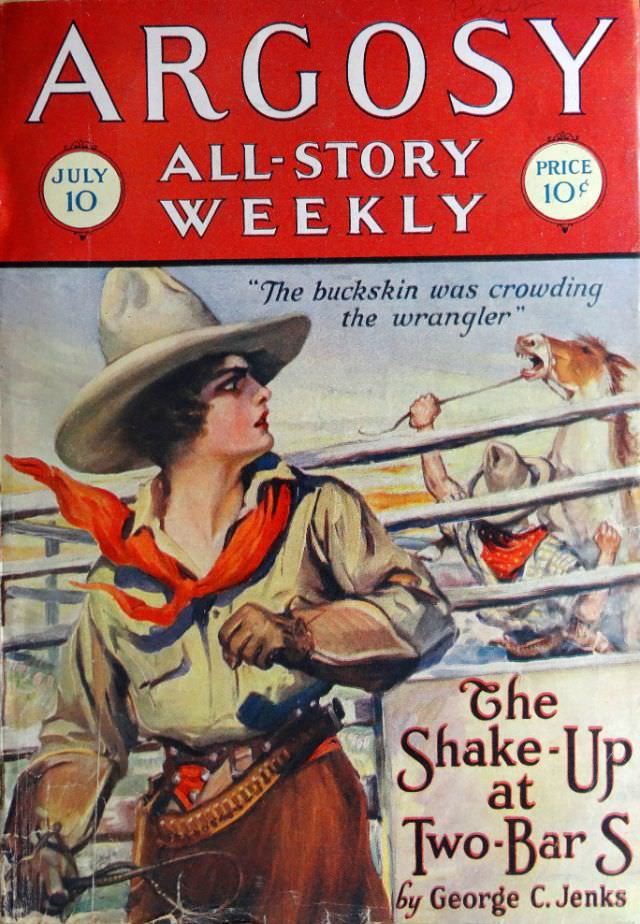
#23 Argosy cover, July 10, 1926
Bold red lettering crowns the July 10, 1926 issue of Argosy All-Story Weekly, with the 10¢ price tucked into a small circle like a promise of affordable thrills. The cover art plunges straight into Western tension: a hat-brimmed wrangler in a dusty shirt and neckerchief turns sharply, gloved hand raised, pistol at the ready. Behind…
-
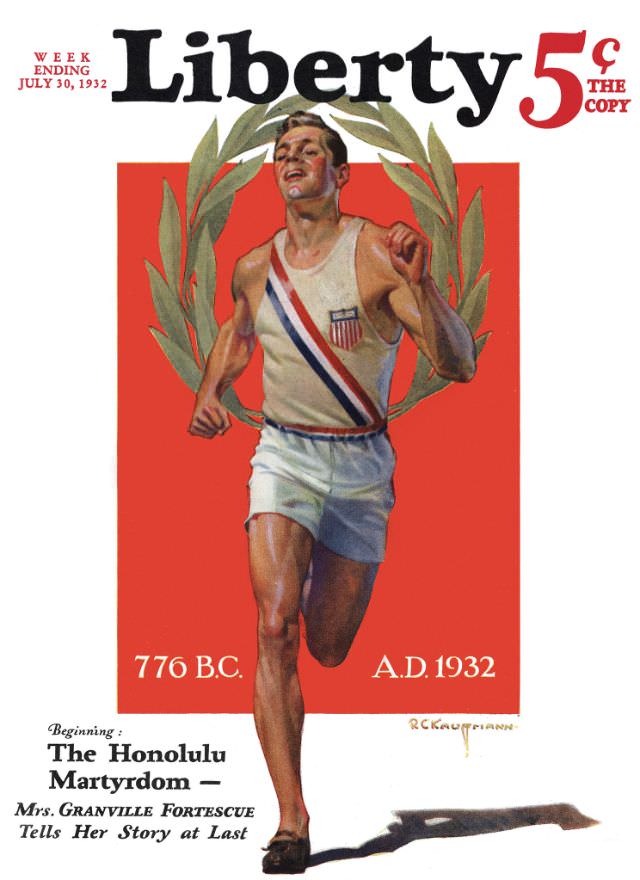
#4 Liberty cover, July 30, 1932
Bold letters announce “Liberty” across the top of this July 30, 1932 cover, priced at five cents and framed like a poster meant to stop a passerby. At center, an exhausted runner drives forward in a white kit, a red‑white‑blue sash and small shield emblem hinting at national pride. Behind him, a laurel wreath rises…
-
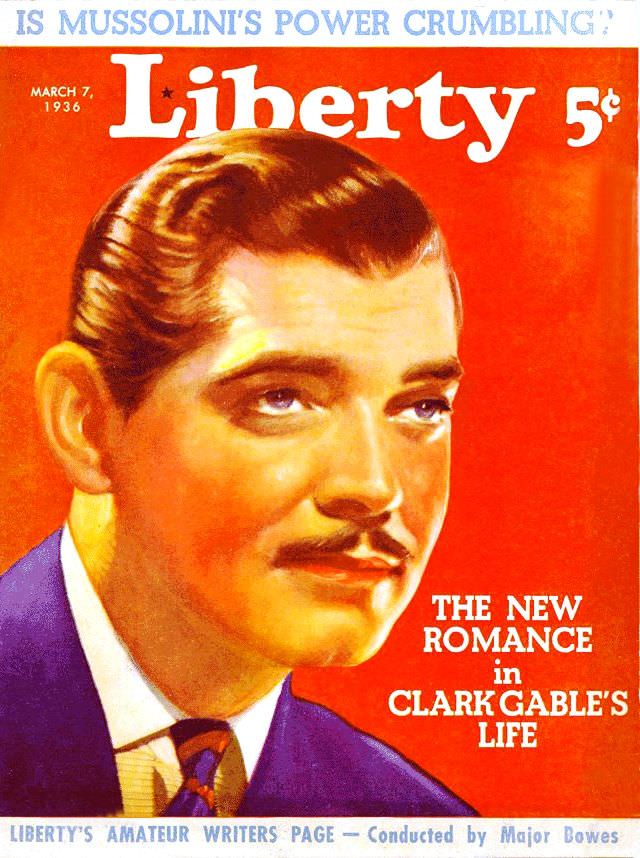
#20 Liberty cover, March 7, 1936
Bold color and movie-star glamour dominate the Liberty cover dated March 7, 1936, with a richly painted portrait that leans into the era’s appetite for polished celebrity imagery. The warm orange-red background, crisp white masthead, and neatly composed profile create a striking piece of magazine cover art designed to grab attention from a newsstand distance.…
-
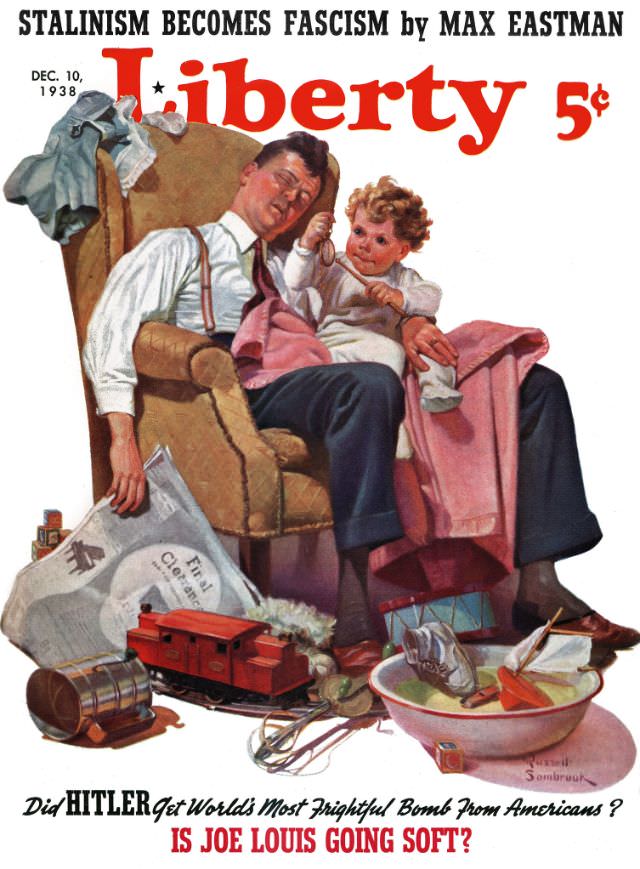
#36 Liberty cover, December 10, 1938
December 10, 1938 finds *Liberty* selling for 5¢, its bold red masthead hovering over a warmly painted domestic scene. A tired father slumps in a worn armchair, suspenders loosened, while a small child perches close and tugs at his face with the curious insistence only children have. The illustrator’s soft shading and cozy textiles suggest…
-
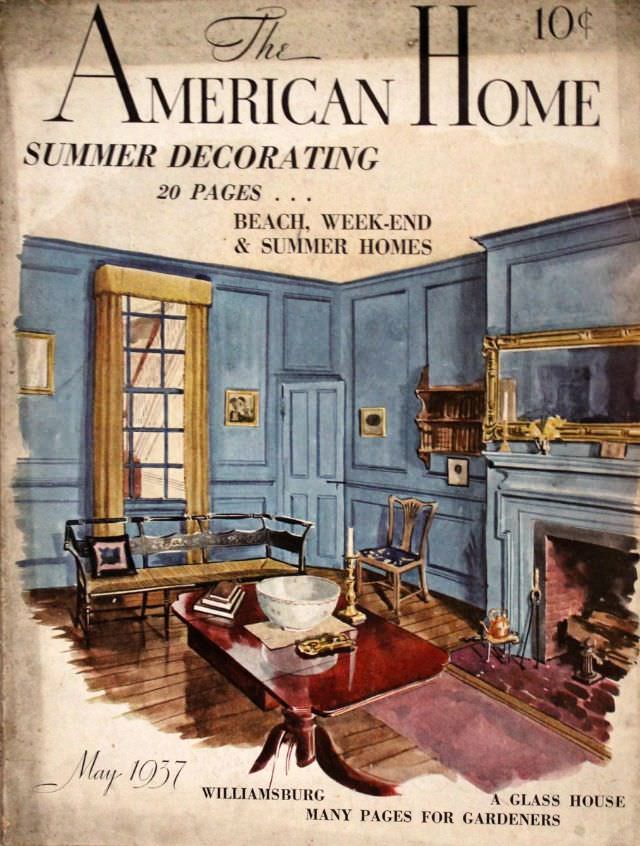
#5 The American Home cover, May 1937
May 1937’s cover of *The American Home* invites you into a cool, composed living room rendered in richly colored illustration. The magazine’s bold promise of “Summer Decorating” and “Beach, Week-End & Summer Homes” sits above paneled blue walls, wide-plank floors, and an arrangement that feels both orderly and lived-in. Even the small “10¢” price marker…