Category: Cover Art
Dive into a gallery of vintage cover art from books, magazines, and albums. Discover how graphic design and illustration reflected the moods of their times.
These covers capture the essence of cultural evolution — from bold propaganda to elegant minimalism.
-

#37 Terms of Endearment. Artist: Andrzej Pagowski. Year: 1985
Andrzej Pągowski’s 1985 cover art for “Terms of Endearment” turns an everyday object into a charged metaphor: two telephone receivers loom like figures, their cords tangled together as if they can’t quite separate. The palette leans into raw reds and cool blues, setting up a visual argument between heat and distance, while the rough, textured…
-

#8 Around the World in Posters: A Look at Vintage Travel Advertising #8 Cover Art
Bold lettering announces “Jamaica” across a sunlit field of color, framing a classic piece of vintage travel advertising cover art that sells paradise at a glance. The tagline “The Gem of the Tropics” floats above a tranquil bay and layered blue-green hills, while decorative floral borders lend the whole poster the feel of an illustrated…
-
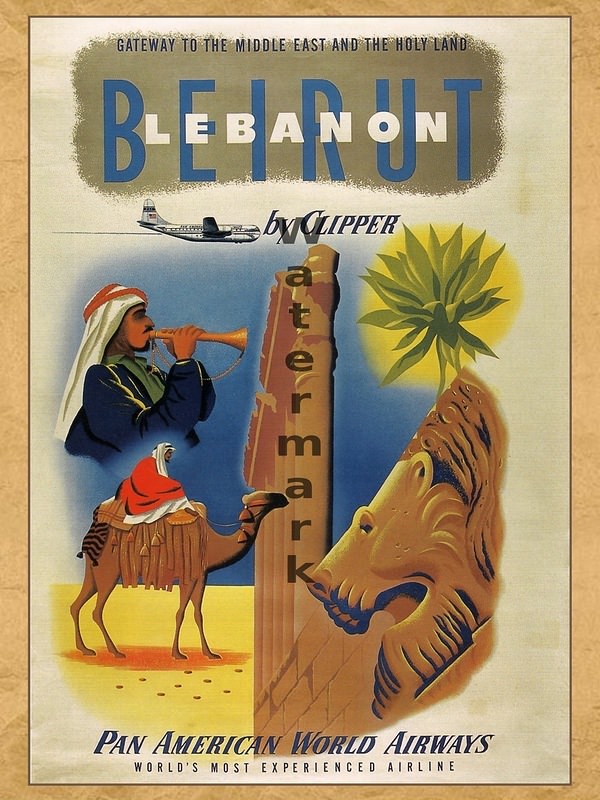
#24 Around the World in Posters: A Look at Vintage Travel Advertising #24 Cover Art
Bold lettering announces “BEIRUT” like a marquee, with the tagline “Gateway to the Middle East and the Holy Land” framing the promise of faraway horizons. A sleek airplane labeled “Clipper” slices across a deep blue sky, tying modern air travel to a destination marketed as timeless and storied. The overall composition is pure vintage travel…
-
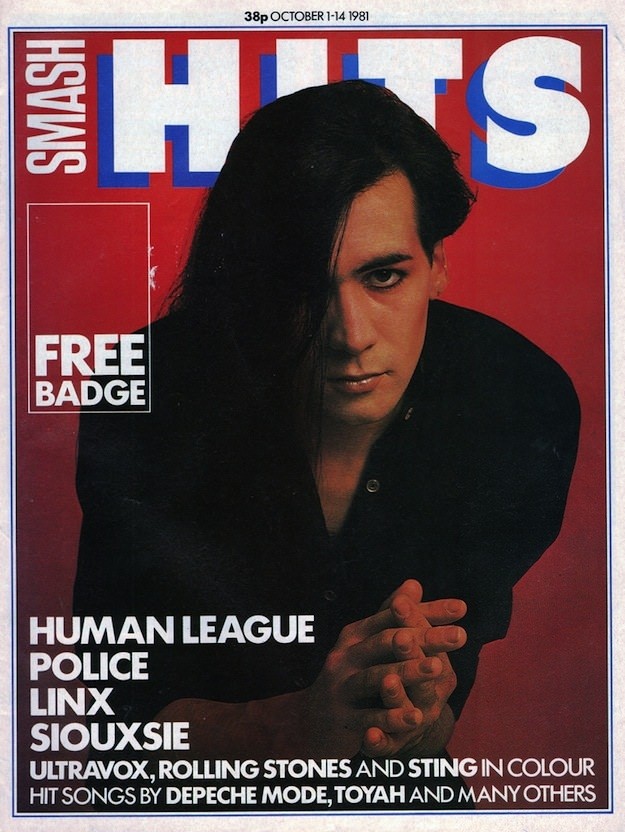
#13 Inside Smash Hits: The Iconic Magazine Covers of the 1980s #13 Cover Art
Bold block lettering shouting “HITS” against a saturated red field sets the tone immediately, with the masthead stacked in white and blue like a pop-art billboard. Centered beneath it, a moody studio portrait leans into the era’s drama: heavy fringe, dark clothing, and a direct stare that feels equal parts glamorous and confrontational. Even the…
-

#6 A Blast from the Past: Exploring the World of Vintage Teen Magazine Covers #6 Cover Art
Bold color and big type leap off the page on this *TEEN* magazine cover, dated January 1967 with a 35¢ price at the top. A smiling model fills the frame in classic mid-century styling—sleek hair, wide-eyed makeup, and a daisy held gently between her teeth—creating the kind of friendly, close-up portrait that sold aspiration as…
-
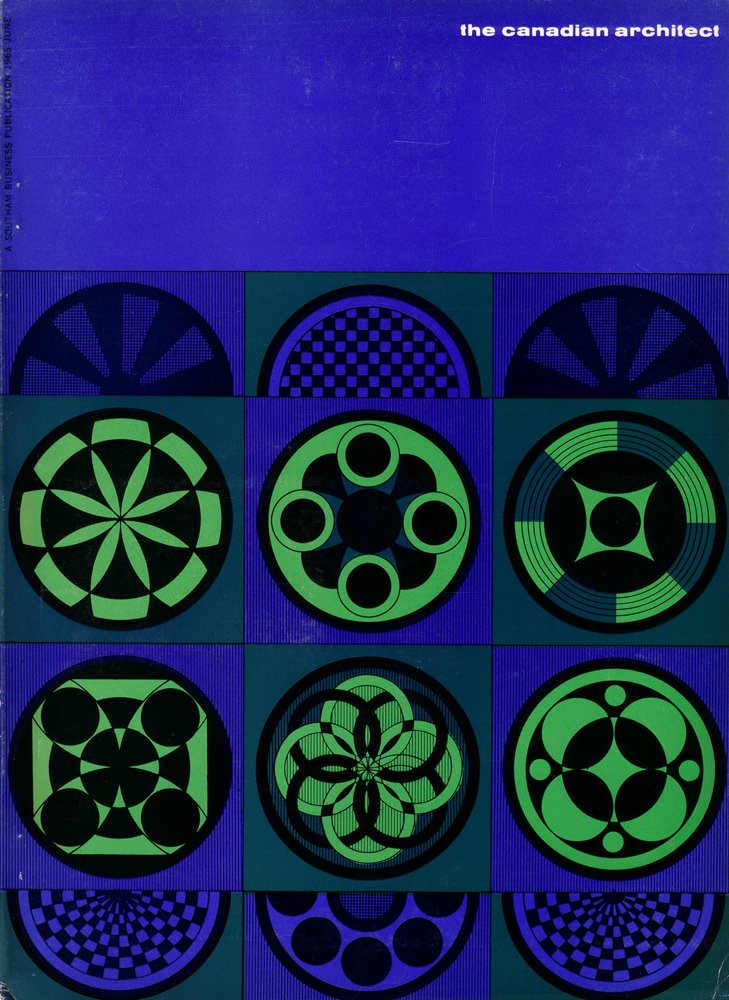
#11 The Canadian architect – June 1965
June 1965 arrives in a rush of saturated colour on the cover of *The Canadian Architect*, where deep ultramarine fields and luminous green circles turn the page into a study of rhythm. A tight grid organizes the design into repeated roundels, each one a different geometric experiment—pinwheel wedges, checkerboard domes, and petal-like rosettes that feel…
-
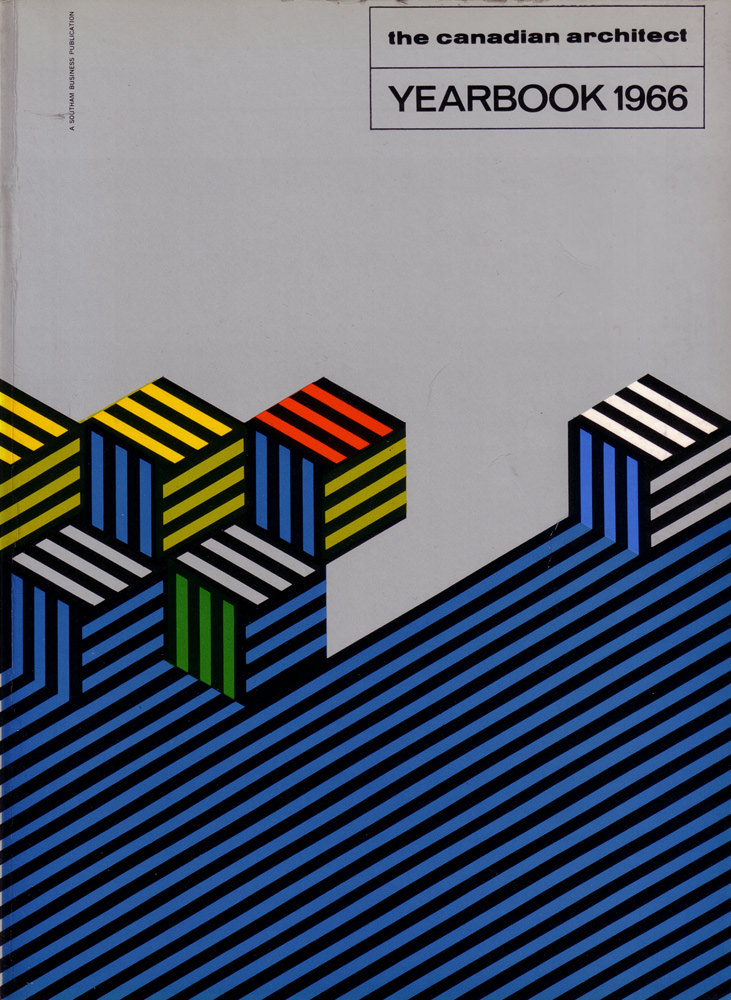
#27 The Canadian architect – Yearbook 1966
Bold geometry and restrained typography define the cover of *The Canadian Architect – Yearbook 1966*, a piece of graphic design that feels as modern as the era it represents. Set against a cool grey field, the title block sits crisply in the upper corner, letting the artwork do the talking. Along the margin, the small…
-
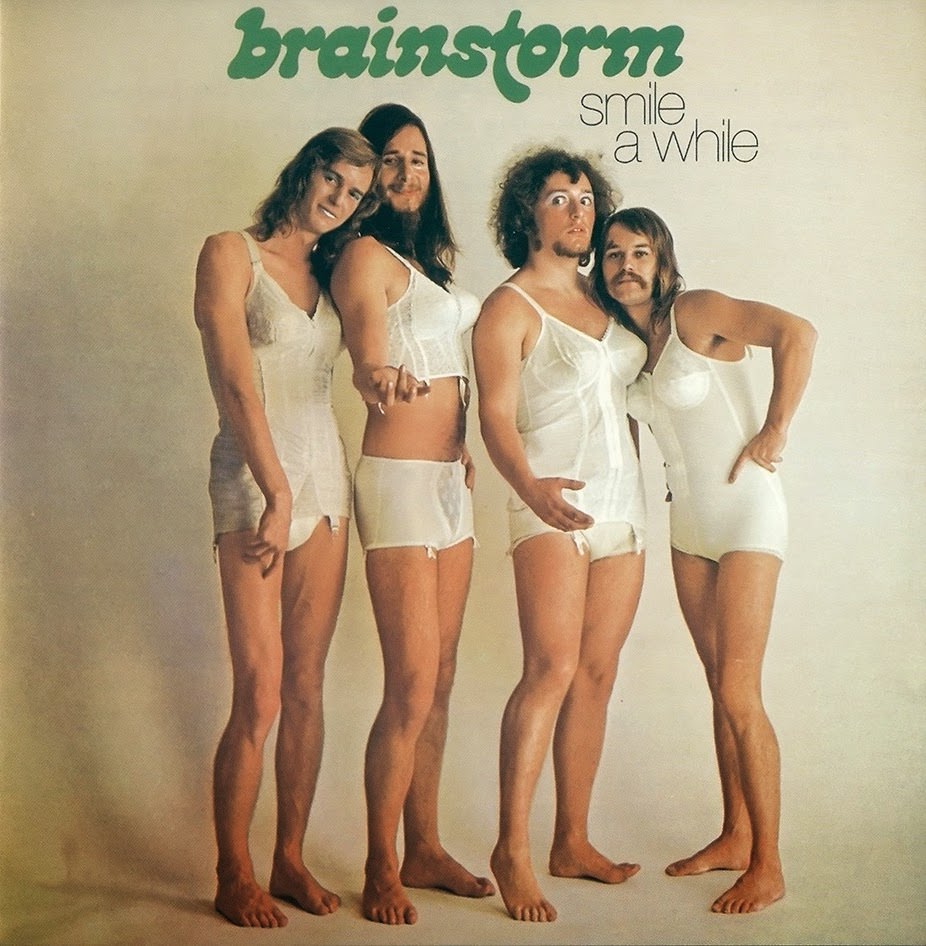
#16 So Bad, They’re Good: Vintage Album Covers That Will Make You Laugh #16 Cover Art
Campy confidence practically radiates from this album cover, where four long-haired bandmates pose barefoot in matching white lingerie against a plain studio backdrop. The contrast between the soft garments and the rugged, bearded rock look is the whole joke—and the whole hook—made even better by the exaggerated facial expressions and theatrical stances. Overhead, the text…
-
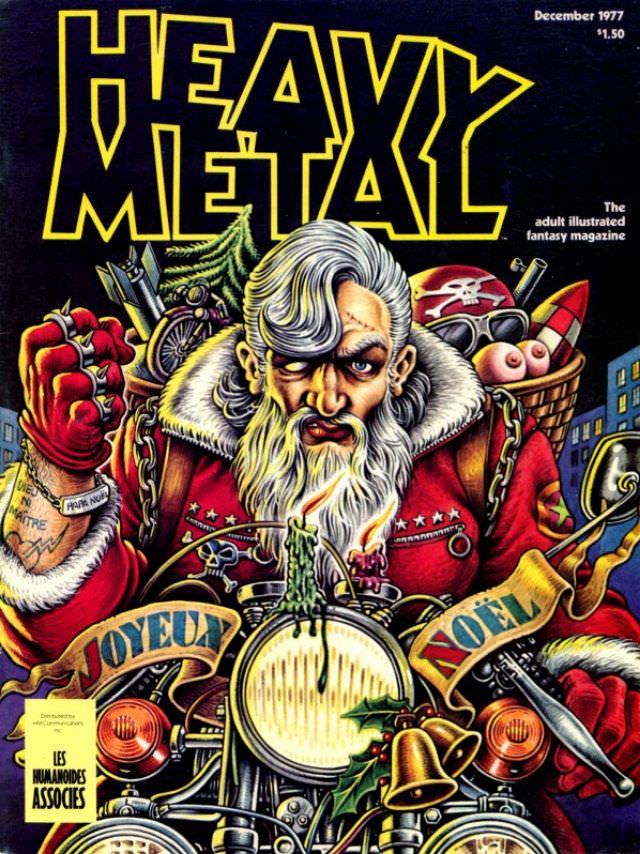
#7 Heavy Metal Magazine Covers: A 1970s Blast of Sci-Fi and Fantasy #7 Cover Art
Heavy Metal screams across the top in towering yellow letters, framing a bold, painterly scene that instantly signals 1970s fantasy magazine cover art at its most unapologetic. The issue is marked December 1977, and the tagline “The adult illustrated fantasy magazine” sits off to the side, underscoring the era’s push toward edgier, more cinematic sci‑fi…
-
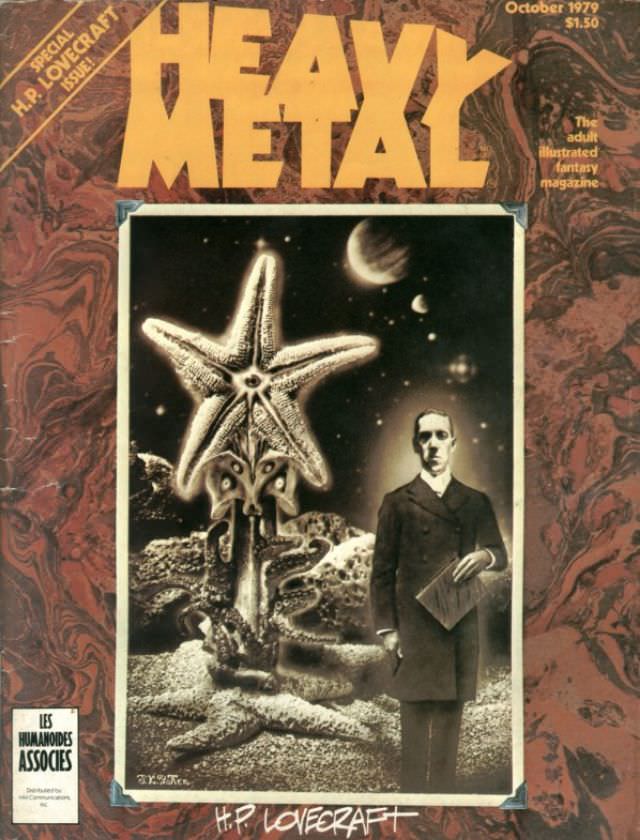
#23 Heavy Metal Magazine Covers: A 1970s Blast of Sci-Fi and Fantasy #23 Cover Art
Bold block lettering shouts “HEAVY METAL” across the top, instantly signaling the magazine’s late-1970s appetite for loud, imaginative sci‑fi and fantasy cover art. The issue is marked October 1979 with a $1.50 price, and it bills itself as “The adult illustrated fantasy magazine,” a small line that hints at how the publication positioned itself—edgier than…