Category: Inventions
Explore the fascinating evolution of technology through historic inventions that changed the world. From early aviation to bizarre gadgets — creativity knows no bounds.
Each photo celebrates human innovation and the spirit of discovery that pushed civilization forward.
-
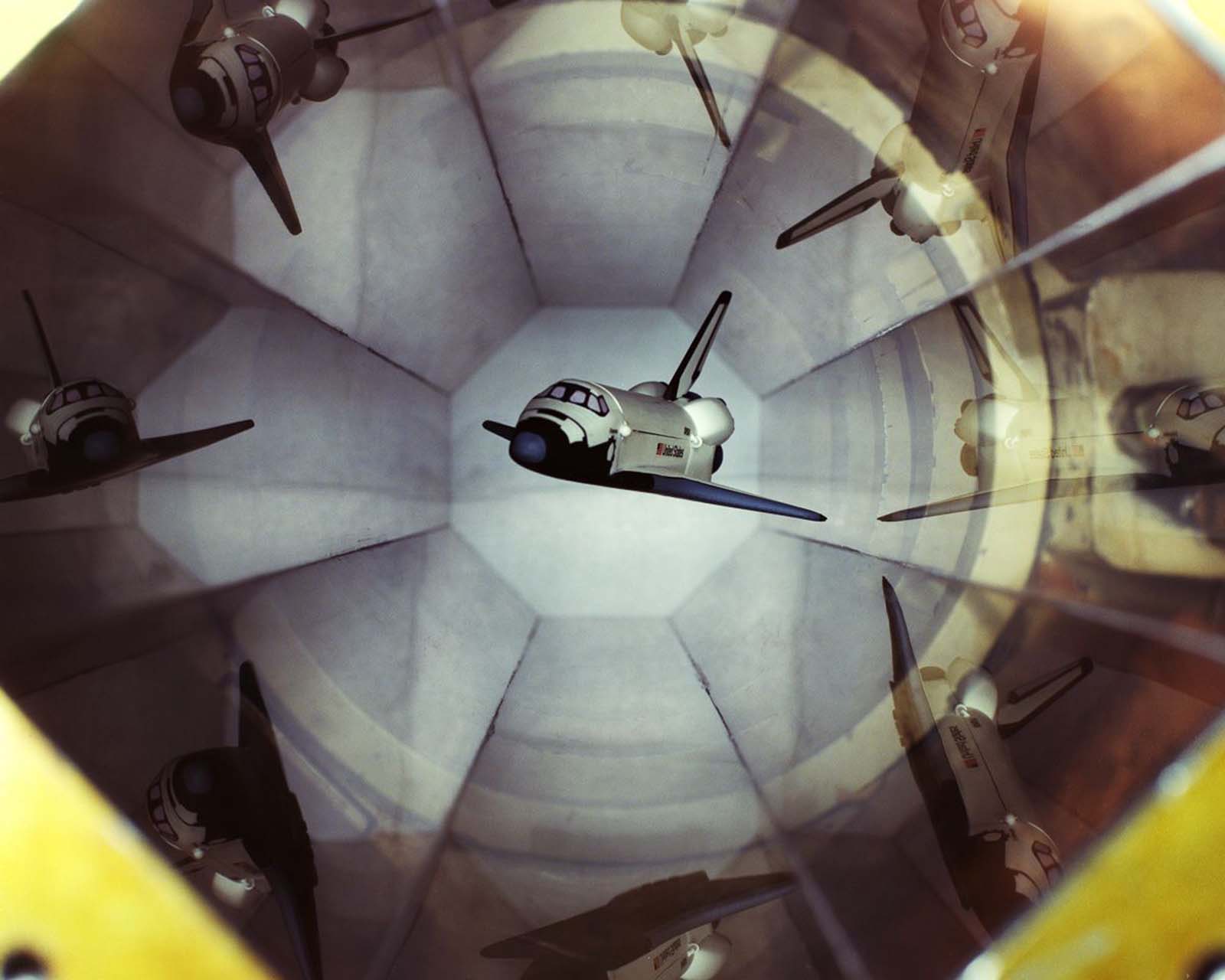
#31 A shuttle model is magnetically suspended in the transparent hexagonal test section of the MIT/NASA Langley 6 inch MSBS.
Floating in the center of a transparent, hexagonal test section, a small shuttle orbiter model appears to hover with uncanny steadiness, its nose pointed into an invisible stream. The chamber’s faceted walls and the soft reflections around the edges give the scene a geometric, almost cathedral-like depth, emphasizing just how controlled—and how precise—this kind of…
-

#1 Double-Wide Limousine: The Weird Car that Spanned 2.5 Cars Wide and 30 Feet Long from the 1980s #1 Inve
Parked on an open stretch of pavement, an impossibly broad turquoise limousine sits low and flat, looking more like a rolling patio than a car. The rear end seems doubled, with twin sets of tail-lamp panels and wide chrome trim spanning a body that fills the lane from side to side. Peering into the open-top…
-
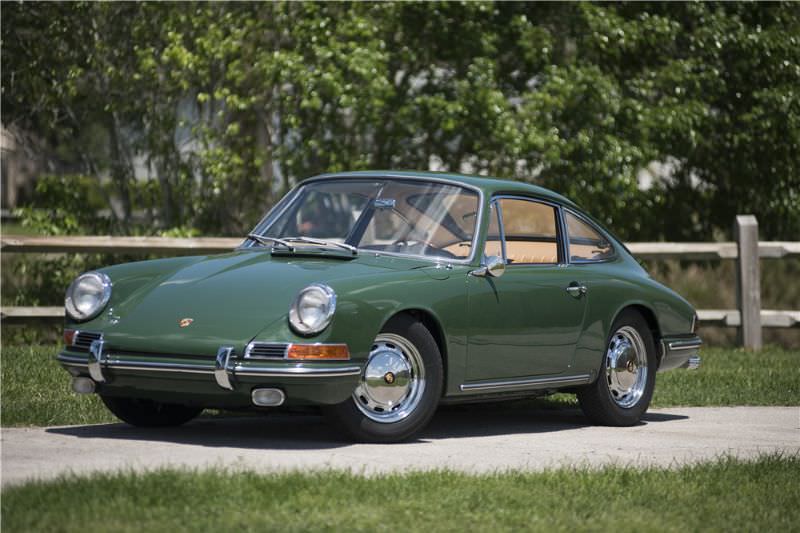
#1 Stunning Photos of the 1966 Porsche 911 Luxury Sports Car #1 Inventions
Curved fenders, a low nose, and those unmistakable round headlights give the 1966 Porsche 911 its instant recognition, even at a glance. In this photo, the coupe’s clean, uncluttered styling reads like a design manifesto from an era when elegance and speed were expected to share the same silhouette. The deep green paint and chrome…
-
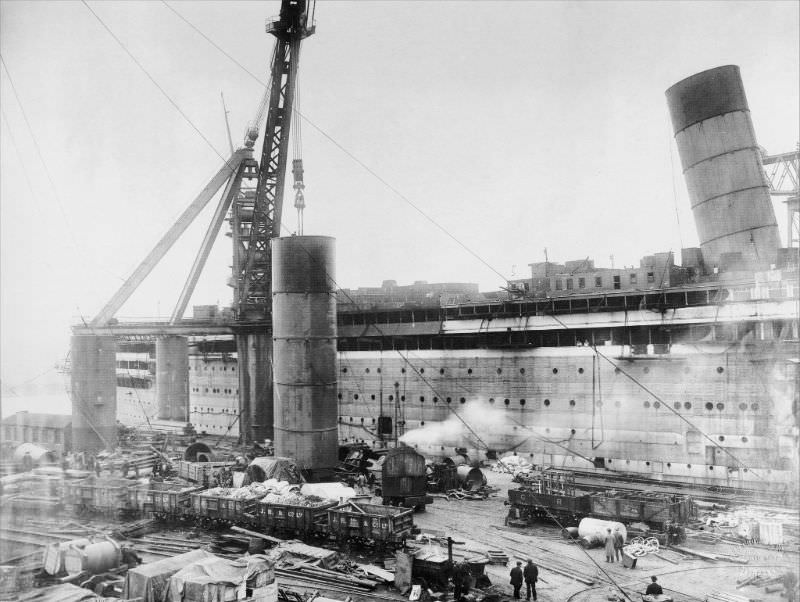
#5 One of Aquitania’s massive funnels is about to be hoisted onboard during the liner’s fitting-out, circa 1913
Steelwork and rigging dominate the shipyard scene as one of RMS Aquitania’s enormous funnels waits to be lifted into place during fitting-out around 1913. A tall crane looms beside the liner’s flank, its cables poised over the cylindrical structure, while the hull’s rows of portholes and long bands of plating hint at the scale of…
-
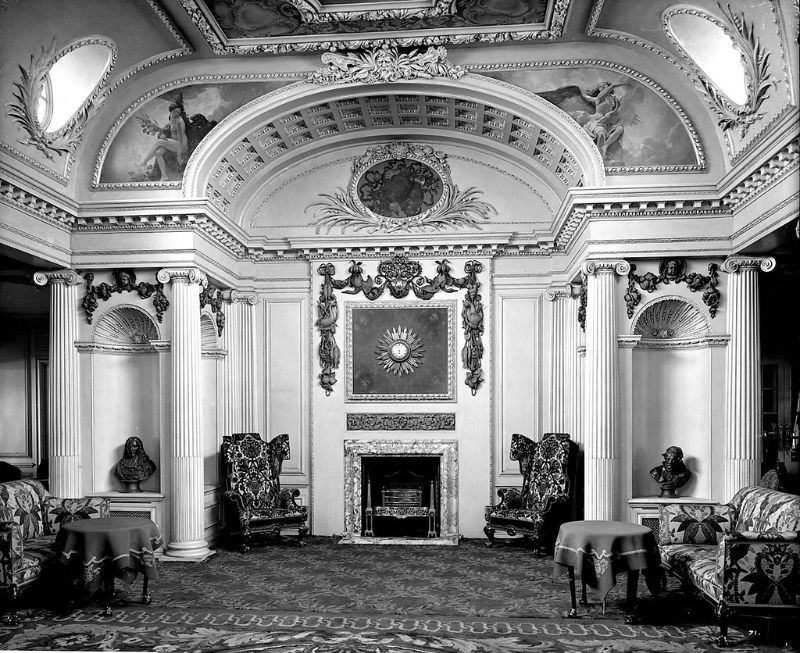
#21 Aquitania’s 1st Class Lounge (fireplace detail). Aquitania’s Palladian Lounge is often described as the most beautiful room ever put to sea, May 1914
Set into a grand classical surround, the fireplace detail of Aquitania’s 1st Class Lounge reads like a salon borrowed from a palazzo rather than a ship at sea. Fluted columns, arched niches, and dense carved ornament frame the hearth, while deep armchairs and upholstered seating invite the kind of lingering conversation that defined luxury travel…
-
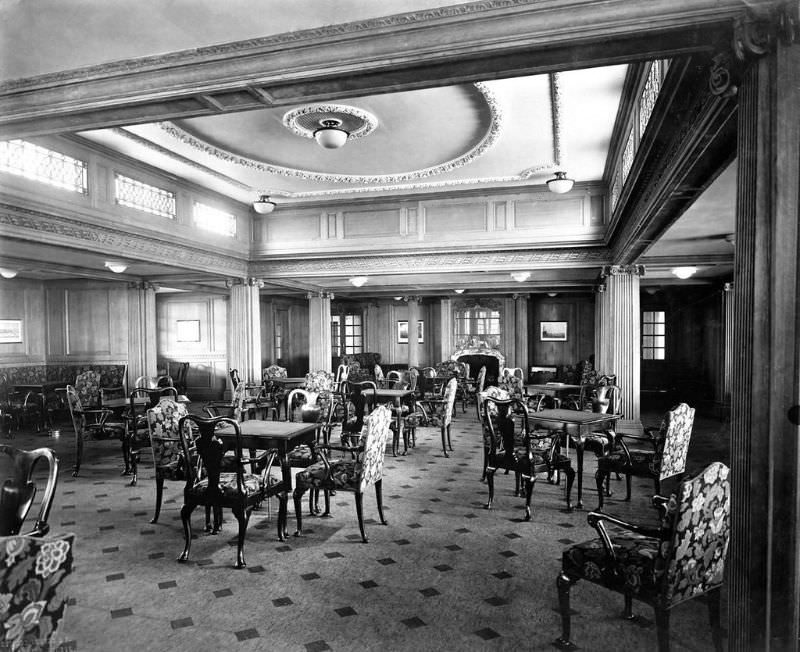
#37 The 2nd Class Smoking Room aboard Aquitania.
Polished woodwork, a coffered ceiling, and a broad, open floor plan give the 2nd Class Smoking Room aboard Aquitania the feel of a respectable club rather than a mere shipboard lounge. Tables are spaced for conversation and cards, while upholstered chairs with patterned fabric soften the room’s formality and invite travelers to settle in. Even…
-
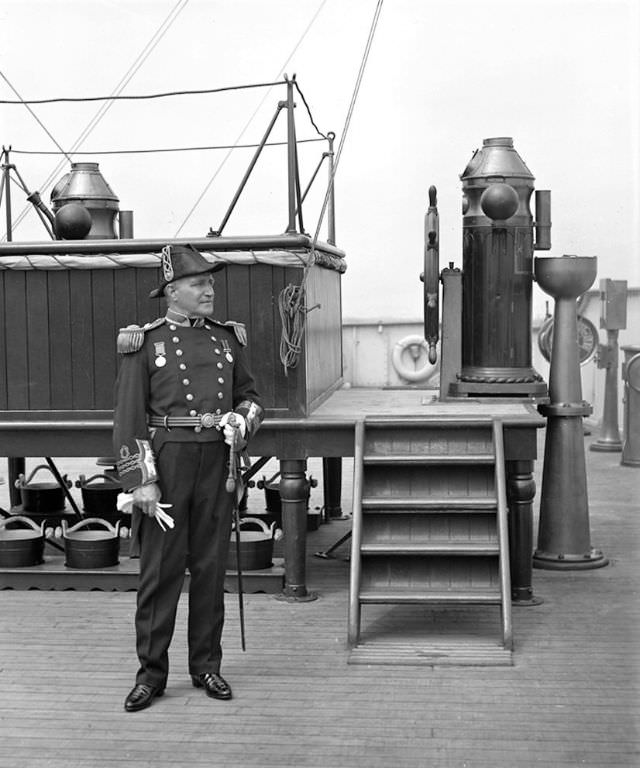
#53 Captain William Turner aboard Aquitania, May 1915
Captain William Turner stands on Aquitania’s deck in May 1915, dressed in a formal maritime uniform that signals authority as much as tradition. Medals and braided cuffs catch the light, while his posture—gloved hands near a cane—suggests a practiced ease amid the routines of shipboard command. Overhead rigging and the clean lines of the deck…
-
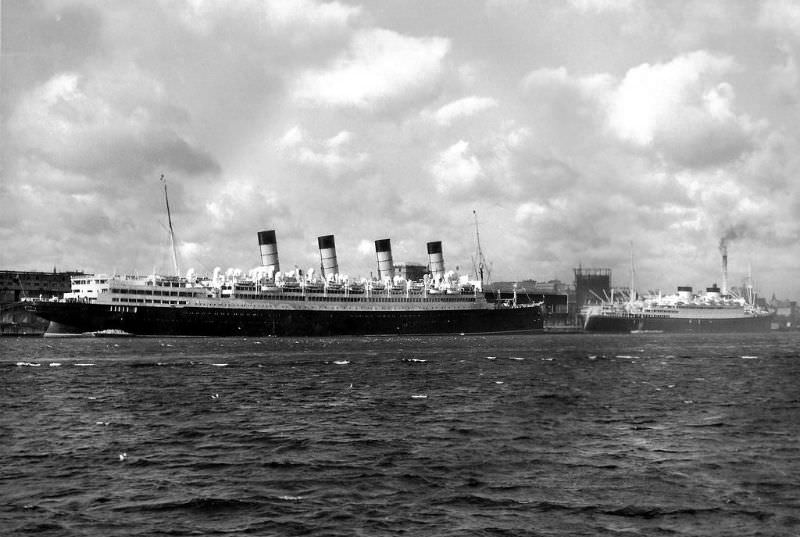
#69 Aquitania and Britannic at Halifax in the summer of 1949. After completing troopship service, Aquitania was handed back to Cunard-White Star in 1948. She underwent a refit for passenger service
Across the choppy foreground of Halifax Harbour, two great liners share the frame in the summer of 1949, their long hulls set against a low shoreline and a sky mottled with high, bright cloud. Aquitania dominates the view with her unmistakable profile and multiple funnels, while Britannic rides farther to the right, slightly smaller in…
-
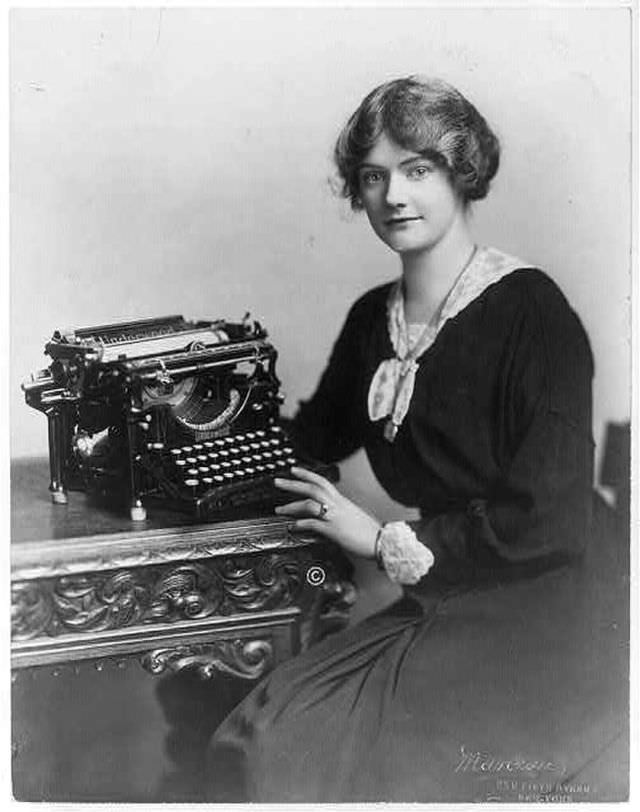
#2 Historical Photos of Ladies using Typewriters from the Past #2 Inventions
Poised beside an ornate desk, a young woman rests her hands near a heavy early typewriter, its metal levers and rows of round keys dominating the foreground. The careful studio-like composition draws attention to both the machine’s intricate engineering and the sitter’s calm confidence, a pairing that echoes the era’s fascination with modern office technology.…
-

#18 Historical Photos of Ladies using Typewriters from the Past #18 Inventions
Sunlight spills across a tidy office desk where two sturdy typewriters sit side by side, their metal bodies catching the glow from a large window. A woman rests in her chair and smiles toward the camera, framed by patterned curtains and the faint geometry of buildings beyond the glass. The scene feels quietly modern for…