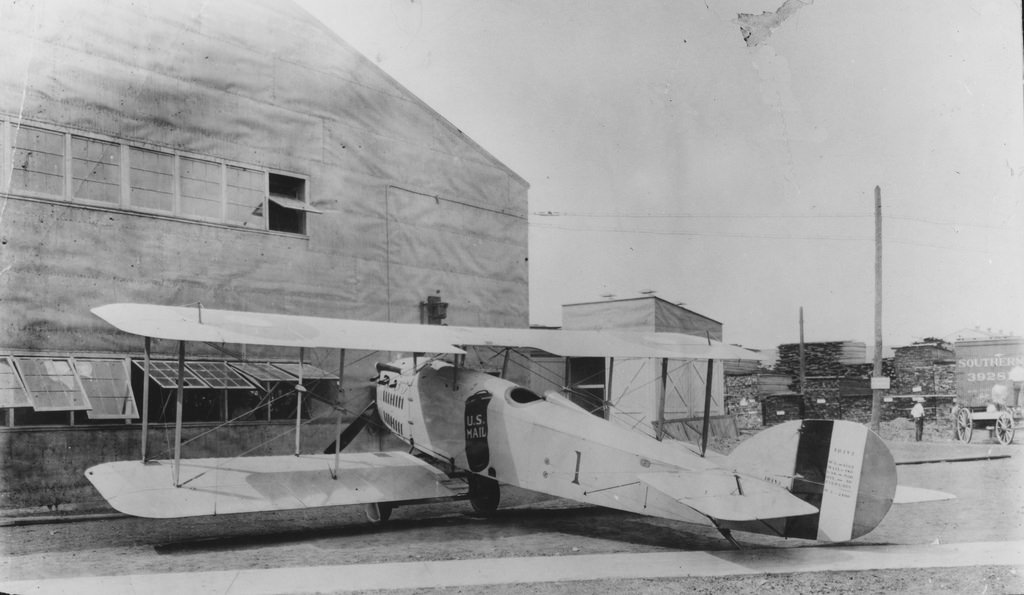
Parked beside a plain industrial building, the JR-1B mail airplane sits with its broad biplane wings stretched like a scaffold of wood and wire, a working machine rather than a showpiece. The fuselage bears clear “U.S. MAIL” lettering, while the exposed struts, bracing, and fabric-covered surfaces reveal the practical engineering of early aviation. Even at rest, the aircraft’s tall tail and narrow body hint at how lightly these pioneers had to build to lift letters and parcels into the sky.
Airmail service in 1918 represented more than speed; it was a bold experiment in reliability, navigation, and logistics at a time when pilots and mechanics were still learning what airplanes could endure. Photographs like this one help tell the story of communication shifting from rail lines and roads to air routes, where schedules depended on weather, daylight, and the durability of engines. The JR-1B stands as a reminder that “inventions” are often systems—aircraft design, maintenance routines, sorting practices, and route planning—working together to make a new kind of everyday service possible.
Look closely and the scene feels like a busy edge of an aerodrome: warehouse walls, open windows, stacked materials, and the aircraft positioned for loading or inspection. For readers searching the history of the JR-1B, early U.S. Mail airplanes, or 1918 aviation technology, this image provides grounded detail on how mail planes actually looked and operated before streamlined metal airliners became the norm. It’s a snapshot of the moment when innovation met necessity, and the promise of faster connection began to take flight.