Category: Inventions
Explore the fascinating evolution of technology through historic inventions that changed the world. From early aviation to bizarre gadgets — creativity knows no bounds.
Each photo celebrates human innovation and the spirit of discovery that pushed civilization forward.
-
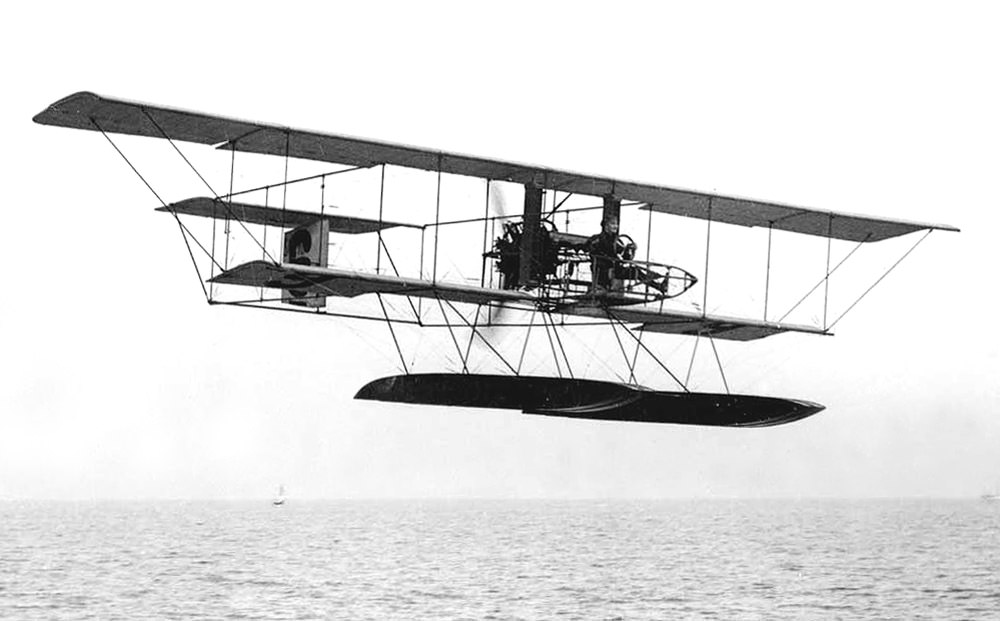
#33 Sanchez Besa 1912
Suspended above a calm stretch of water, the Sanchez Besa aircraft from 1912 appears almost skeletal—an intricate lattice of struts and tensioned wires holding two stacked wings in perfect alignment. The open framework exposes the engine and cockpit area, a reminder that early aviation often wore its mechanics on the outside, with little separation between…
-
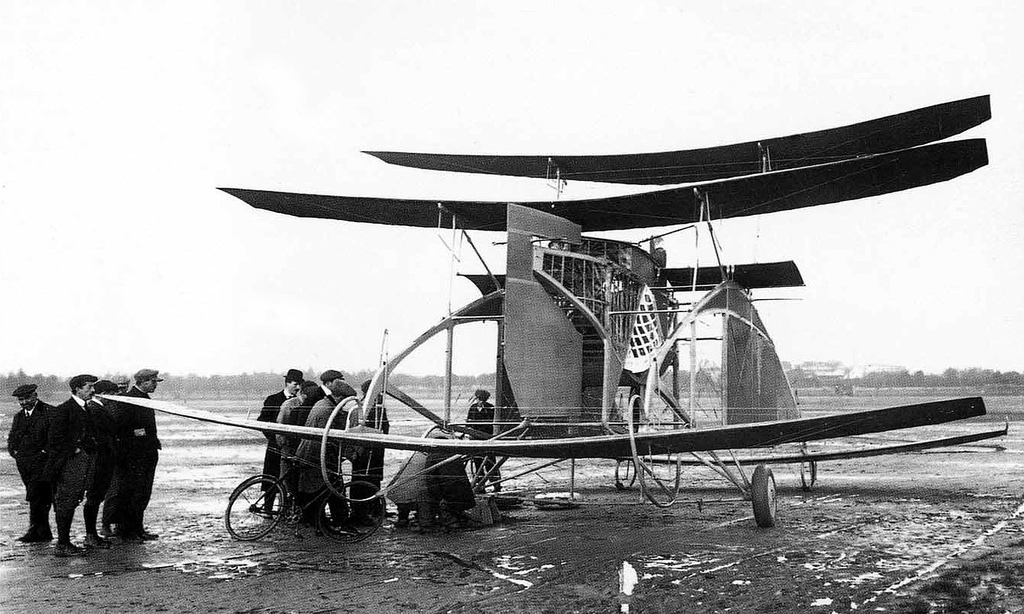
#49 Vedovelli 1911
On a muddy field, a cluster of men in heavy coats and hats gathers around a striking experimental flying machine, its long wings stacked in layers above a compact central frame. The title “Vedovelli 1911” places it in the feverish early years of aviation, when inventors and mechanics chased lift with bold geometry and trial-and-error…
-
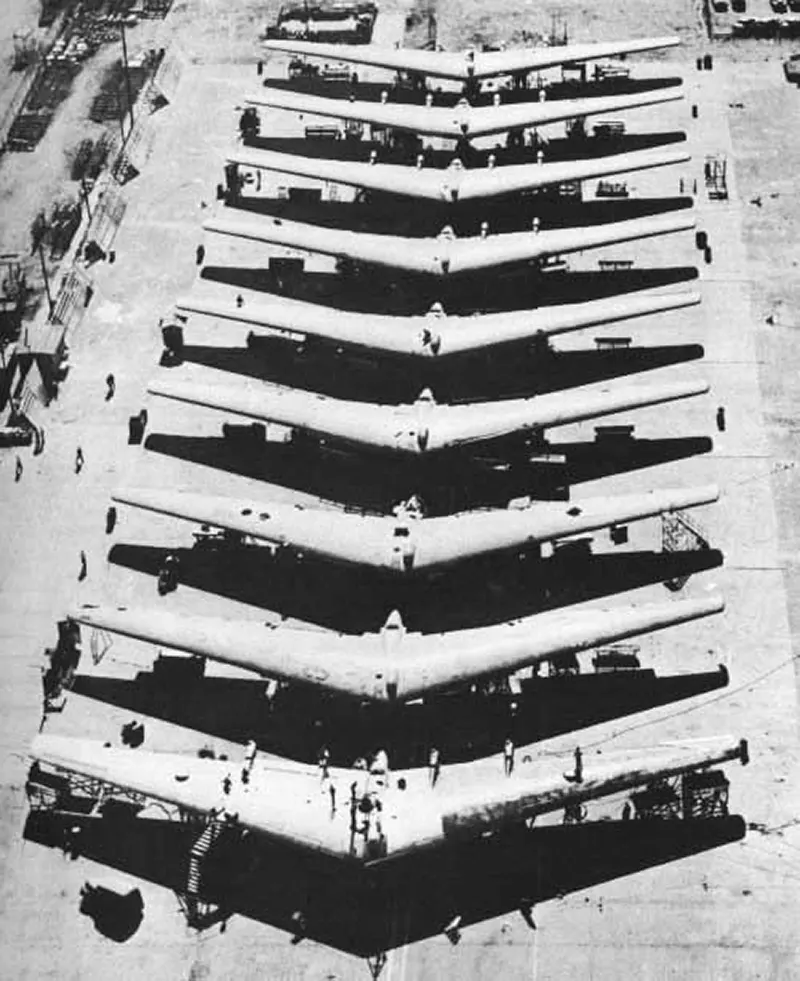
#13 This is a rare photo of nine Northrop Flying Wing Bombers. Many people do not realize that more than one or two prototypes were built of this design. Here, for the first time, is actual proof of their existence. Two of the big wing bombers are undergoing modifications from XB-35’s to Flying Wing B-49 1t Bombers.
Lined up nose-to-tail on a sunlit ramp, nine Northrop flying wing bombers form an almost unreal pattern of stacked triangles, their broad, tailless planforms dominating the frame. The perspective emphasizes repetition and scale: wing after wing, each airframe separated by just enough space for crews and equipment to move between them. Even in grainy detail,…
-

#4 The Custer Chair Car: A Beacon of Hope in the Roaring ’20s #4 Inventions
On a cobblestone street, a suited driver in a wide-brimmed hat sits upright in what looks like an improbable blend of wheelchair comfort and motorcycle mechanics—the Custer Chair Car. The vehicle’s low, boxy body, thin spoked front wheel, and hand controls hint at an era when inventors were still deciding what an “automobile” could be.…
-
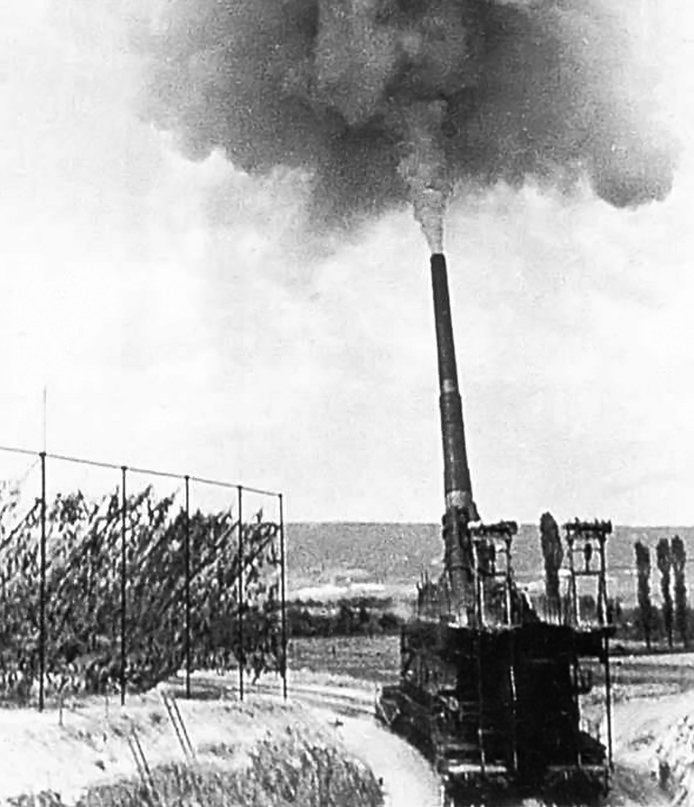
#10 The Gustav Gun: An Astonishing Relic of Nazi Engineering #10 Inventions
A towering artillery barrel rises from a rail-mounted platform, its muzzle crowned by a thick bloom of smoke that blurs the sky and hints at the violence of the shot just fired. The surrounding landscape looks almost ordinary—flat ground, sparse vegetation, and utilitarian structures—until the sheer scale of the weapon pulls everything into perspective. Even…
-
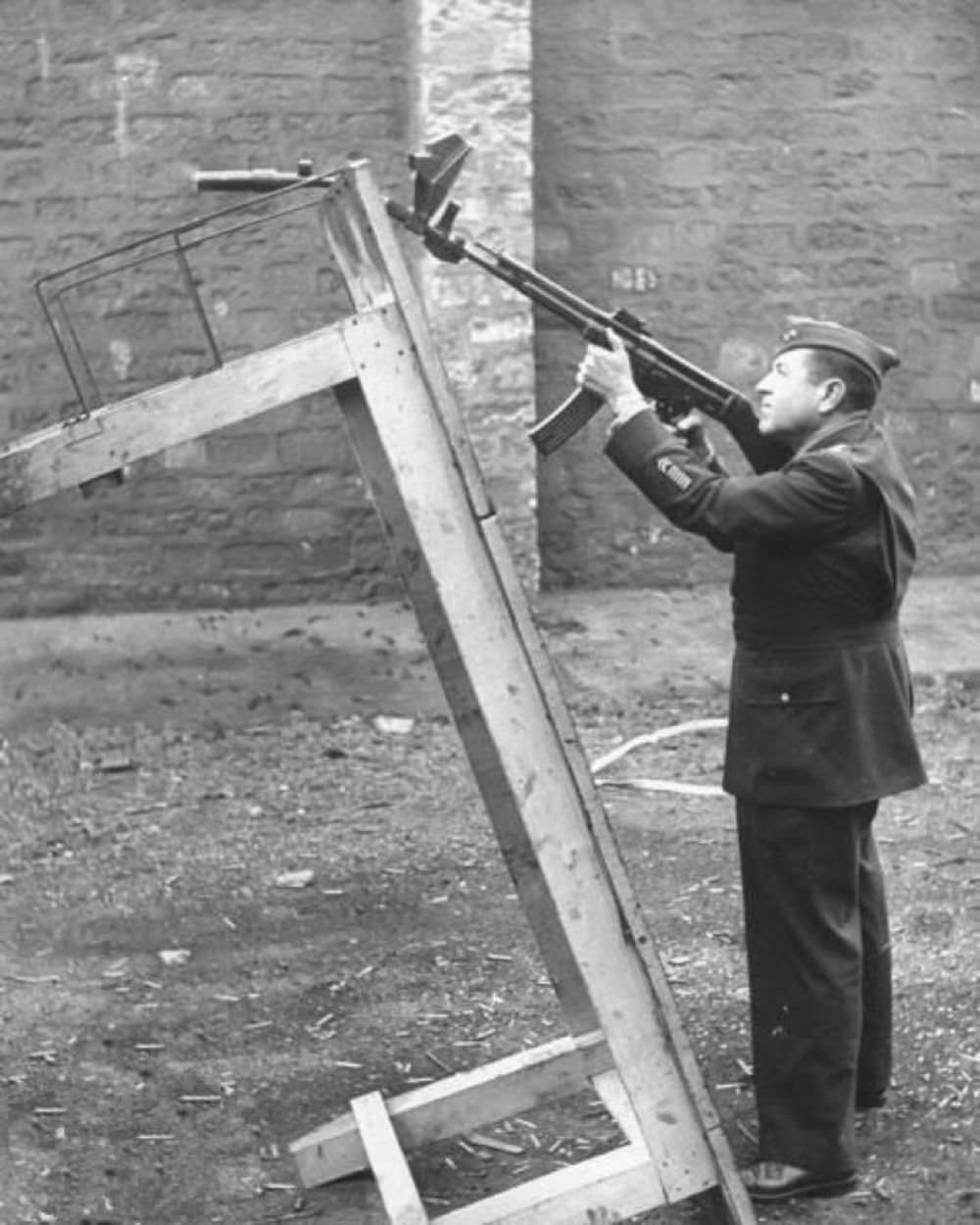
#10 Bending Bullets in WWII: The Astonishing Tale of the Krummlauf that Attempted to Curve Shots #10 Invent
At a makeshift test range, a uniformed soldier raises a rifle fitted with an oddly bent attachment at the muzzle, aiming toward a simple wooden stand and wire-framed target. The setting feels improvised—brick wall behind, bare ground below—yet the experiment itself is audacious: an attempt to redirect gunfire without exposing the shooter. That strange curve…
-

#1 Control room looking aft, starboard side. The manhole to the periscope well and various valve wheels for flooding and blowing are visible.
Crowded with valve wheels, pressure gauges, and tightly bundled piping, the control room view looking aft on the starboard side reveals how intensely mechanical life aboard a submarine could be. Metal surfaces are worn and stained from constant use, and the layout feels less like a single “panel” and more like a three-dimensional map of…
-

#17 Control room looking forward. Hydroplane gear, depth and fuel gauges are visible.
Crowded with handwheels, pipes, and tightly packed instruments, the control room looking forward feels less like a cockpit and more like a mechanical nerve center. The hydroplane gear dominates the scene with its robust wheels and linkages, suggesting the physical effort once required to trim a craft in motion. Every surface appears worked and worn,…
-

#1 Sketch of LZ 129 Hindenburg
Stretching across the frame like a floating cathedral, the LZ 129 Hindenburg is rendered as a technical cutaway sketch, its immense hull opened up to reveal ribs, internal bays, and the tidy geometry that made rigid airships possible. Fine leader lines and German labels point to structural elements and systems, turning the drawing into a…
-
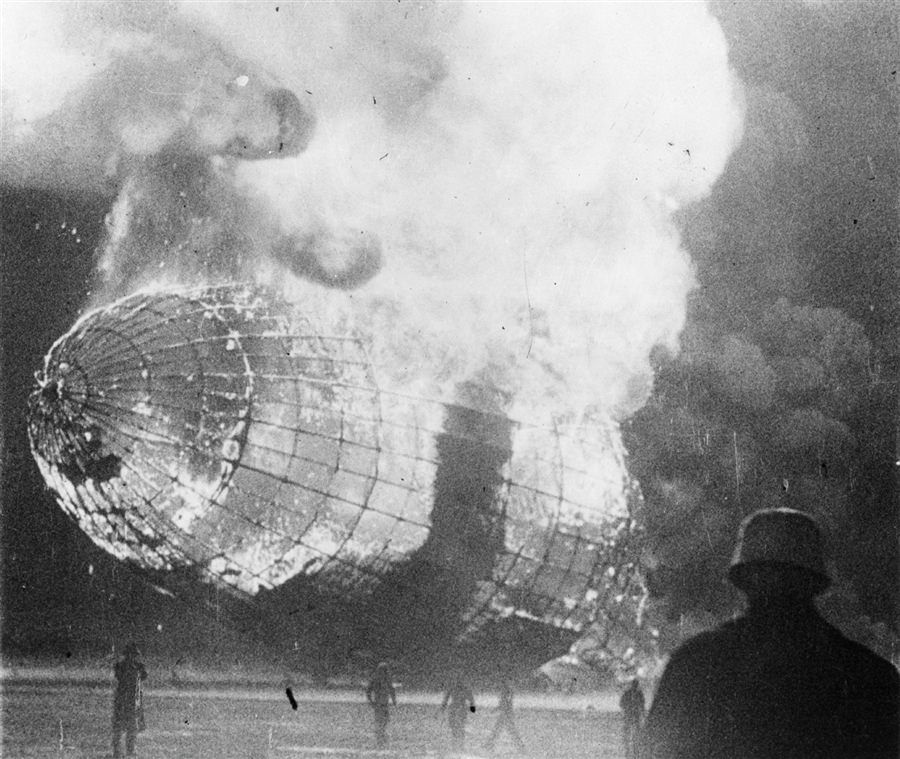
#17 The Hindenburg in flames on its arrival at Lakehurst, New Jersey, May 6, 1937
Night and fire collide in this stark view of the Hindenburg disaster at Lakehurst, New Jersey, on May 6, 1937. The great airship’s skeletal ribs glow through a rolling cloud of smoke, its streamlined form collapsing into a brilliant, chaotic blaze. In the foreground, small human silhouettes and a dark onlooker’s profile emphasize the scale…