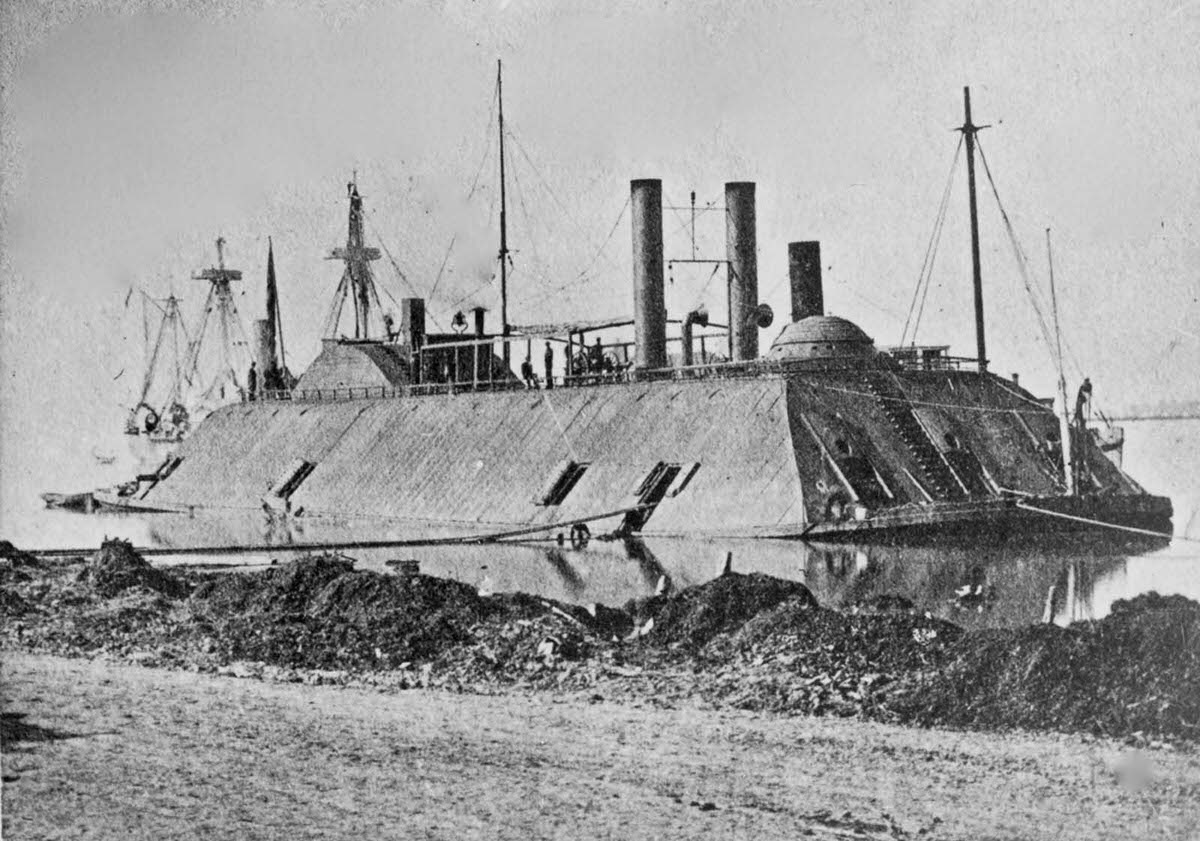
Low in the water and wrapped in angled iron plating, the gunboat Essex appears more like a floating fortress than a conventional warship. Three smokestacks rise above the armored casemate, while masts, rigging, and deck fittings crowd the skyline in a way that hints at a navy straddling two eras—sail and steam at once. Along the hull, the sharp geometry of gun ports and the sloped sides speak to the hard lessons of Civil War combat, when survival depended on deflecting shot as much as returning it.
From the muddy foreground to the calm river surface, the scene has the stillness of a vessel at rest, yet nothing about the Essex feels peaceful. The low profile suggests a craft built for inland waterways, where channels could be narrow, banks close, and enemy fire sudden. Even without action in the frame, the photograph conveys the purpose of an ironclad gunboat: to bring heavy guns into contested rivers and hold a line where wooden ships would have been helpless.
In 1863, images like this helped define what modern war looked like—industrial, improvised, and relentlessly practical. For readers exploring Civil Wars history, the Essex offers a striking example of how engineering and tactics evolved together, turning rivers into strategic highways and iron plating into a kind of moving cover. Whether you’re drawn by naval technology or by the broader story of the conflict, this historical photo anchors the era in metal, smoke, and water.