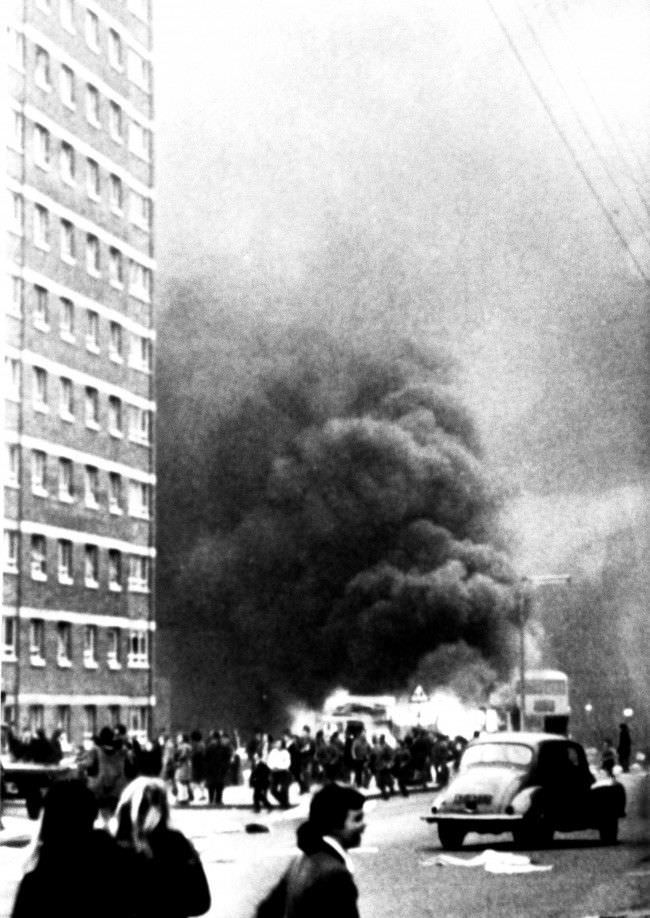
Smoke rises in a thick, rolling column along New Lodge Road in Belfast, swallowing the street in a dark haze as people gather in the foreground and along the edges of the scene. A tall block of flats looms to the left, its rigid rows of windows contrasting with the chaotic plume and the low, bright flare of burning vehicles at road level. Parked cars and scattered debris hint at how quickly an ordinary urban space can be transformed when anger takes hold.
Dated 8 February 1971, the moment is tied to a tragedy described in the title: an army scout car ran over and killed a five-year-old girl, and a crowd of about 200 responded by setting fire to cars, vans, and lorries. The photograph freezes the public aftermath rather than the incident itself—an eruption of grief and fury made visible through fire and smoke. Faces are indistinct at this distance, yet the density of the crowd and their collective attention toward the blaze convey a community caught in the pressure of escalating conflict.
For readers exploring Belfast history, the Troubles, and street unrest in Northern Ireland, the image offers a stark study in how violence and protest imprint themselves on the built environment. The burning vehicles become both barricade and signal, while the apartment tower stands as a witness to a neighborhood’s vulnerability. As a WordPress post in a “Civil Wars” context, it invites reflection on the human cost behind headlines and on the way a single loss can ignite a wider confrontation.