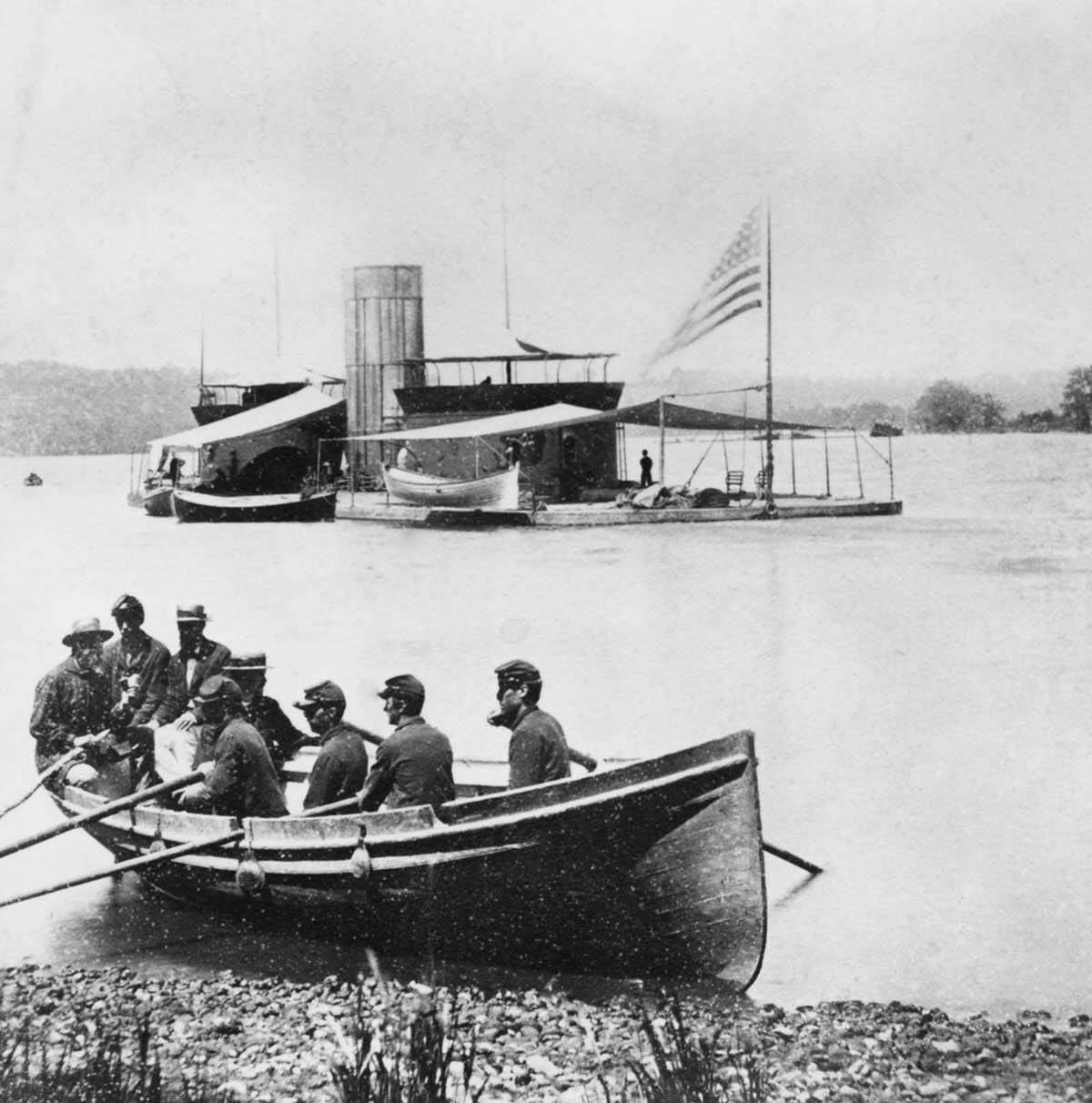
Low on the James River, a small boat loaded with Union soldiers pushes off from the pebbled bank, oars biting into the water as the men angle toward the gunboat Onondaga. The foreground is intimate—caps, coats, and a tight cluster of figures—while the river stretches wide and pale, making the crossing feel both ordinary and exposed. Beyond them, the warship sits steady, its low profile and rigging breaking the horizon beneath a hazy Virginia sky near Richmond.
Onondaga’s presence hints at the changing character of the Civil War, when control of waterways became as decisive as the movement of armies on roads and fields. Even in this quiet moment, the details speak: a U.S. flag lifted by a light wind, a small craft stowed against the vessel, and sailors or guards standing watch on deck. The contrast between the rowboat’s fragile wood and the gunboat’s industrial lines underscores how naval power and river operations shaped campaigns in 1862.
Seen today, the scene reads like a brief pause between duties—messengers, supplies, or orders carried across a contested river corridor where every mile mattered. The photograph invites closer looking at the human scale of military logistics: the strain of rowing, the calm discipline of the group, and the ever-present bulk of the ship waiting ahead. For readers searching Civil War history, Union operations near Richmond, or the James River gunboats, this image offers a vivid doorway into the lived experience of war on the water.