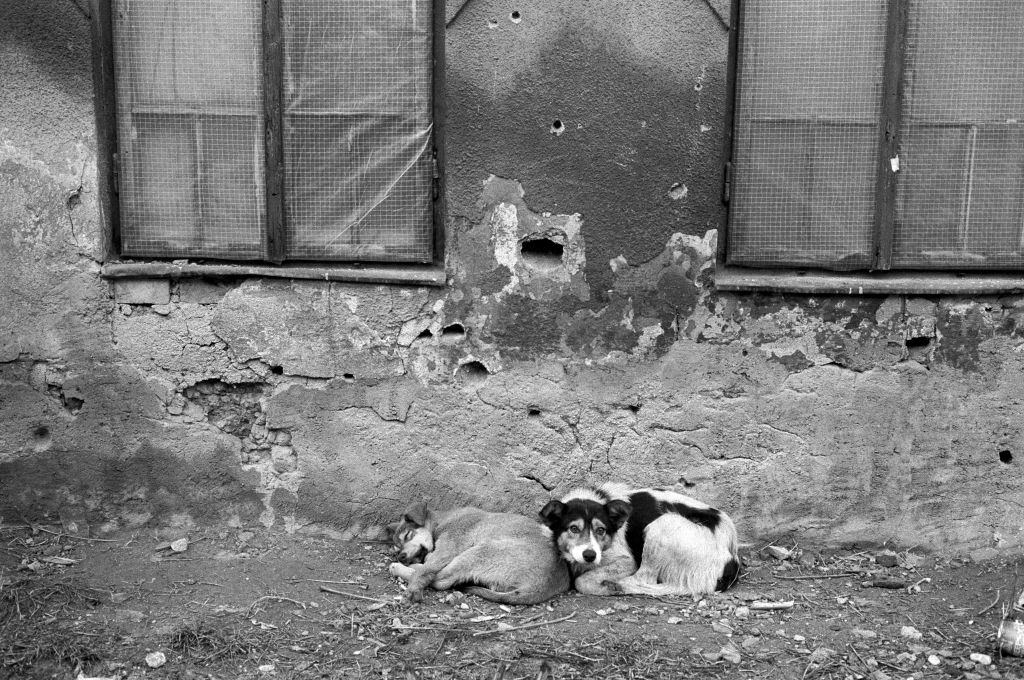
Against a cracked wall pocked with impact scars, two dogs have curled into the smallest pocket of calm a Sarajevo street can offer in 1994. Their bodies form a rough circle on the dirt, pressed close for warmth and safety beneath shuttered windows. One sleeps with its muzzle tucked in, while the other holds a steady, weary gaze toward the camera, as if listening for trouble even while resting.
The surrounding details do much of the talking: flaking plaster, ragged patches of exposed masonry, and holes that read like the punctuation of urban warfare. In the context of civil wars, ordinary street life thins to essentials—shelter, silence, and the search for anything that resembles normal routine. Stray animals become accidental witnesses to siege conditions, moving through the same damaged corridors as the people who once filled them.
What makes this historical photo linger is its refusal to dramatize; it offers instead a quiet study of endurance in wartime Sarajevo. The dogs’ stillness, set against the ruined façade, turns the street into a stage where vulnerability and resilience share the same frame. For readers seeking Sarajevo 1994 imagery, siege-era street photography, or a humane angle on civil conflict, the scene delivers a stark reminder that war imprints itself on every living creature, not only those holding weapons.