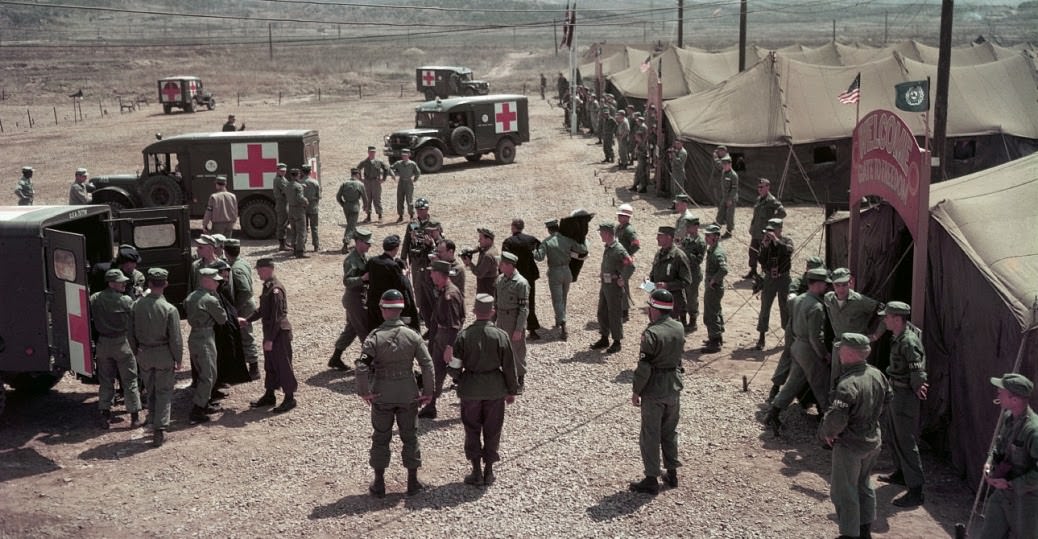
Rows of canvas tents stretch along a dusty road while clusters of uniformed men gather in the open, some waiting, some watching, all caught in the controlled bustle of a wartime camp. Medical trucks marked with prominent red crosses stand ready nearby, their presence hinting at triage, transport, and the human cost behind the paperwork of conflict. Flags and signage lend the scene an official air, suggesting an organized operation where discipline and uncertainty exist side by side.
Prisoners of war were never merely numbers on a ledger; they embodied the unresolved questions of loyalty, legitimacy, and the limits of compromise. As the post title suggests, the return of captives could become a major roadblock to peace negotiations designed to end the conflict, because repatriation touched everything at once—military strategy, domestic opinion, propaganda value, and the fear of what released soldiers might do if they rejoined the fighting. In civil wars especially, the act of “sending people back” carried added weight, since lines between enemy, neighbor, and citizen could blur in ways that made every exchange politically explosive.
Seen through that lens, the camp becomes more than a logistical hub—it is a crossroads where diplomacy meets the lived reality of war. The tents, vehicles, and watchful formations speak to the infrastructure required to process bodies as well as decisions: screening, guarding, treating, transporting, and recording. For readers interested in civil wars, prisoner-of-war repatriation, and the fragile mechanics of peace talks, the photograph offers a grounded reminder that negotiations often stall not over abstract principles, but over the fate of individuals waiting in places like this.