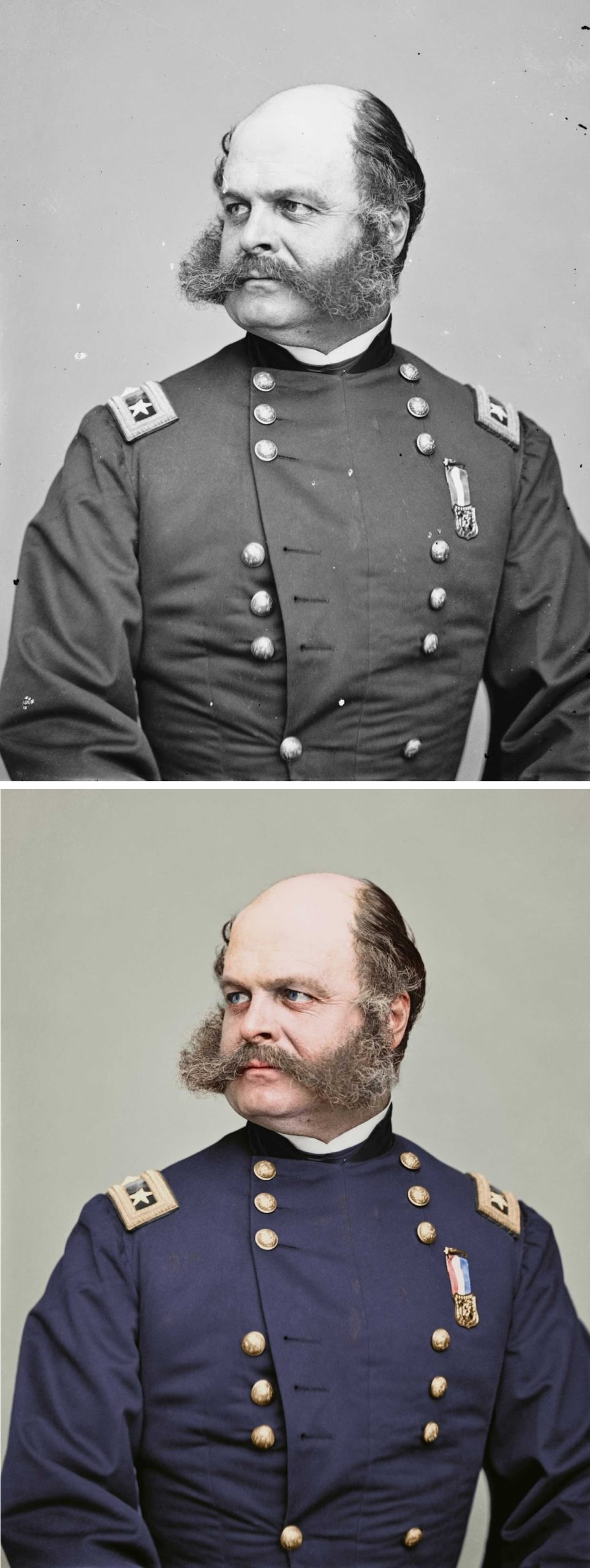
Maj. Gen. Ambrose E. Burnside faces slightly to the side in a formal studio portrait, his gaze set beyond the camera as if weighing distant reports. The uniform is crisp and symmetrical, marked by a double row of bright buttons and prominent shoulder straps that signal high rank in the Federal Army. Most striking are the famous sweeping whiskers that frame his cheeks, a distinctive feature that made Burnside instantly recognizable in Civil War-era imagery.
Details in the photograph reward a closer look: a stiff collar and carefully tailored coat project discipline, while a medal pinned to the chest adds a note of earned distinction without needing any caption to explain it. The plain background isolates the sitter, turning attention to the textures of fabric, metal, and hair—an approach common in 19th-century portrait photography meant to convey authority and steadiness. For readers interested in American Civil War history, this portrait offers a vivid reminder of how military leadership was presented to the public during the conflict.
Placed in the context of 1860–1865, the image serves as both biography and symbol, capturing the Union officer as a figure of command during a period of national fracture. Collectors and researchers often return to portraits like this for clues about rank insignia, wartime decorum, and the visual culture that shaped public memory of the Federal Army. Whether you know Burnside primarily through battlefield narratives or through the era’s political and military turning points, this compelling likeness anchors the story in a human face.