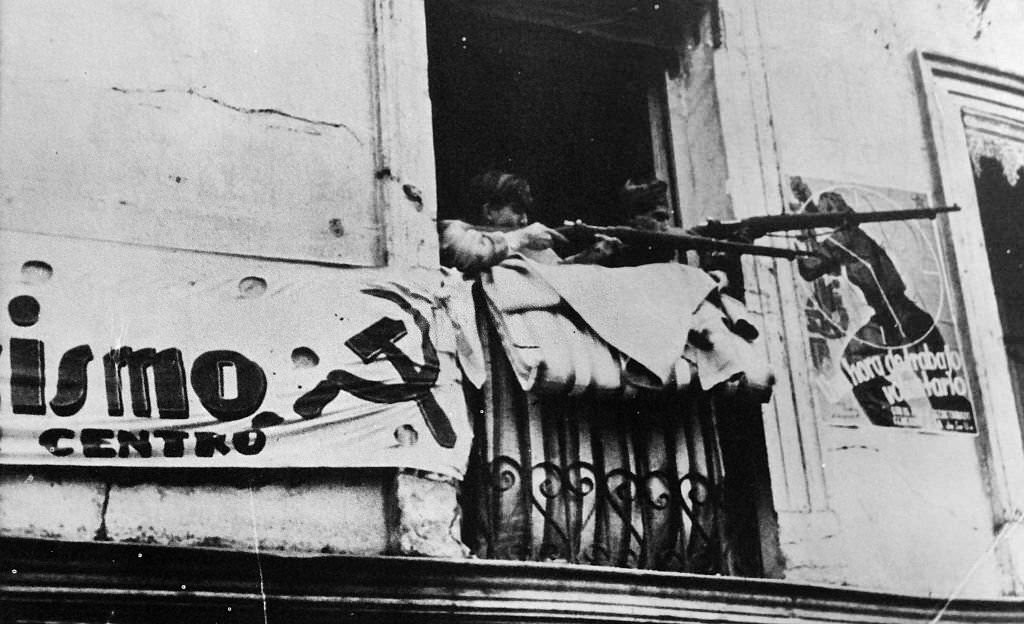
From an upper-floor window in Madrid, armed militia fighters lean into the opening and train their rifles outward, turning an ordinary façade into a firing position. A draped blanket or mattress hangs over the balcony rail as improvised cover, while the plastered wall around them is pocked and scarred, hinting at sustained street fighting. The scene feels cramped and urgent, the kind of close-quarters defense that defined the capital’s resistance during the Spanish Civil War.
On the left, a banner reading “ismo centro” sits beside a clear hammer-and-sickle emblem, a reminder that ideology was not a backdrop but a visible presence on the city’s walls. Posters and signage frame the doorway like competing claims to the public space, while the fighters’ focused posture suggests they are watching for movement below or across the street. Even without showing the enemy, the photograph conveys the tension of an advancing nationalist army met by defenders who used whatever shelter the urban landscape could provide.
Street-level combat in Madrid forced civilians and combatants into the same architecture—apartments became strongpoints, balconies became parapets, and household textiles became barriers against bullets and shrapnel. The image invites a closer look at how propaganda, improvisation, and necessity intertwined in one of the conflict’s most iconic battlegrounds. For readers exploring Spanish Civil War history, Madrid’s defense, and the lived reality of civil wars in cities, this photograph offers a stark, immediate window into resistance under siege.