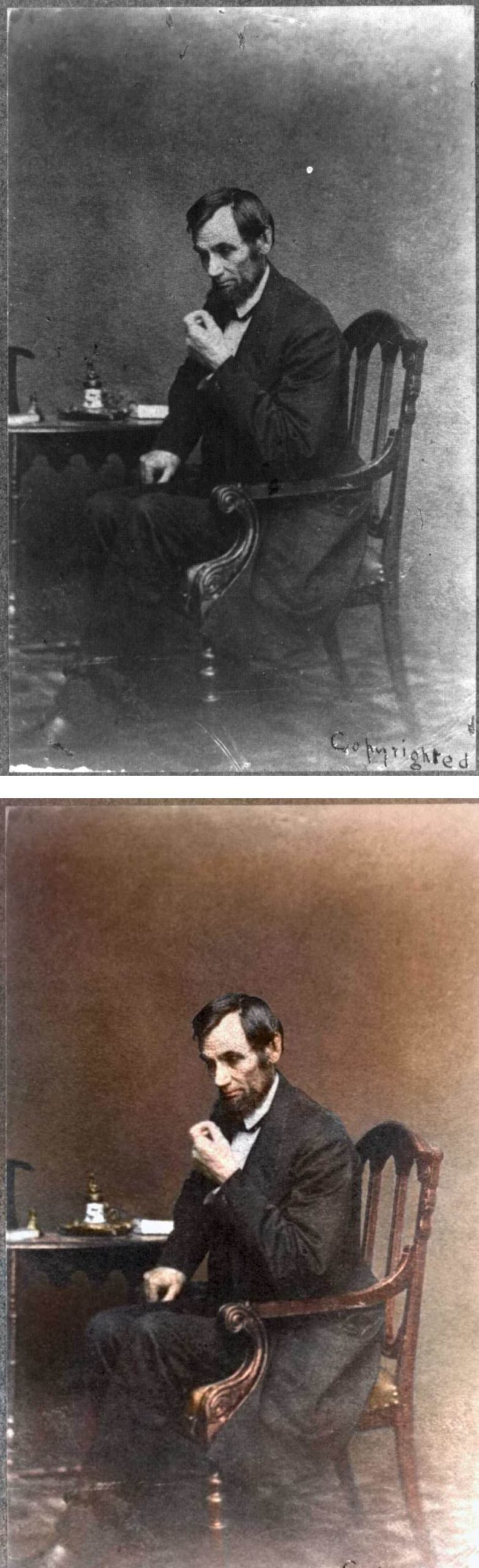
Seated in a plain wooden armchair, Abraham Lincoln turns inward, his hand raised to his chin as if weighing words that have not yet been spoken. The studio setting is spare—just a small table with writing materials and a soft, unfussy backdrop—so the eye settles on his long face, deep-set gaze, and the quiet tension in his posture. Even in stillness, the portrait suggests movement of thought, capturing a commander-in-chief at a moment when reflection itself was a form of labor.
May 16, 1861 places this Washington, DC view at the opening stretch of the American Civil War, when uncertainty pressed in from every direction and decisions carried immediate consequence. Rather than presenting a triumphant leader, the photograph leans into contemplation, offering a human scale to an era often told through proclamations and battle maps. The close, intimate pose invites viewers to consider how leadership can look less like ceremony and more like solitude.
For readers searching Civil War history, Abraham Lincoln photography, or early Washington portraits, this image provides a powerful anchor: a familiar figure rendered with uncommon vulnerability. Details such as the inkstand, the restrained clothing, and the calm studio composition underscore a world where governance was conducted at desks and in sleepless rooms as much as on the field. It’s a reminder that the story of 1861 is not only one of armies and politics, but also of a man pausing to think before the nation’s next step.