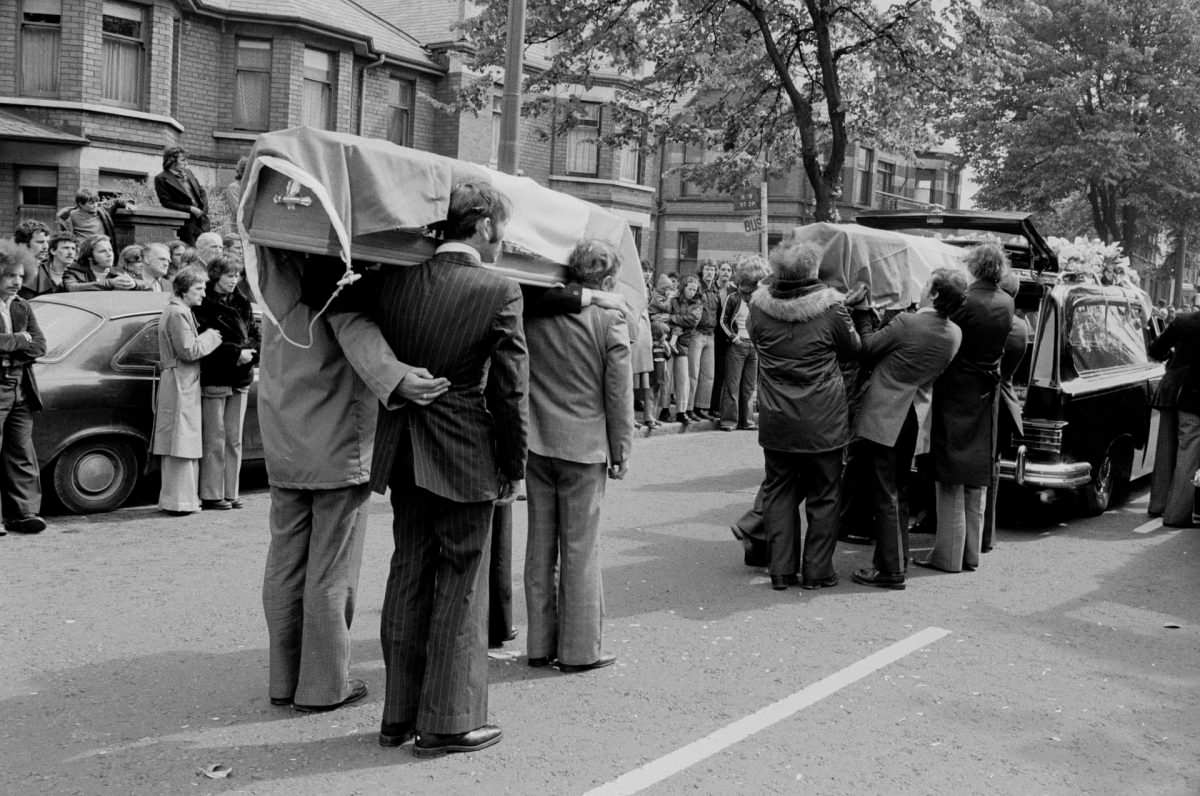
Mourners gather on a terraced West Belfast street as two coffins, each shrouded and carried shoulder-high, move through a corridor of onlookers. The crowd presses in along the pavement beside parked cars and brick-fronted houses, faces turned toward the procession with a mix of vigilance and grief. A hearse waits at the curb, its polished side reflecting the closeness of the moment, while the carriers’ firm grip and bent shoulders convey the weight being borne in public.
In 1978, republican funerals in Catholic West Belfast were more than private rites; they became community events shaped by the pressure of the Troubles and the constant nearness of loss. The title “Republican funeral” hints at the political identity surrounding the dead, yet the photograph dwells on human details—the embrace of an arm around a back, the careful spacing of pallbearers, the silent attention of those watching from doorsteps and kerbs. Even without banners or speeches in view, the shared ritual of carrying and witnessing reads as a declaration of solidarity as much as farewell.
For anyone searching the history of West Belfast, Catholic neighbourhood life, or funerary traditions during Northern Ireland’s conflict, this scene offers a grounded, street-level perspective. The image places memory in ordinary architecture and everyday clothing, reminding us how “civil wars” are lived not only in headlines but in the spaces between houses, under trees, and along familiar roads. It’s a stark record of how mourning, identity, and community intersected in 1978, and why these photographs remain essential to understanding the era.