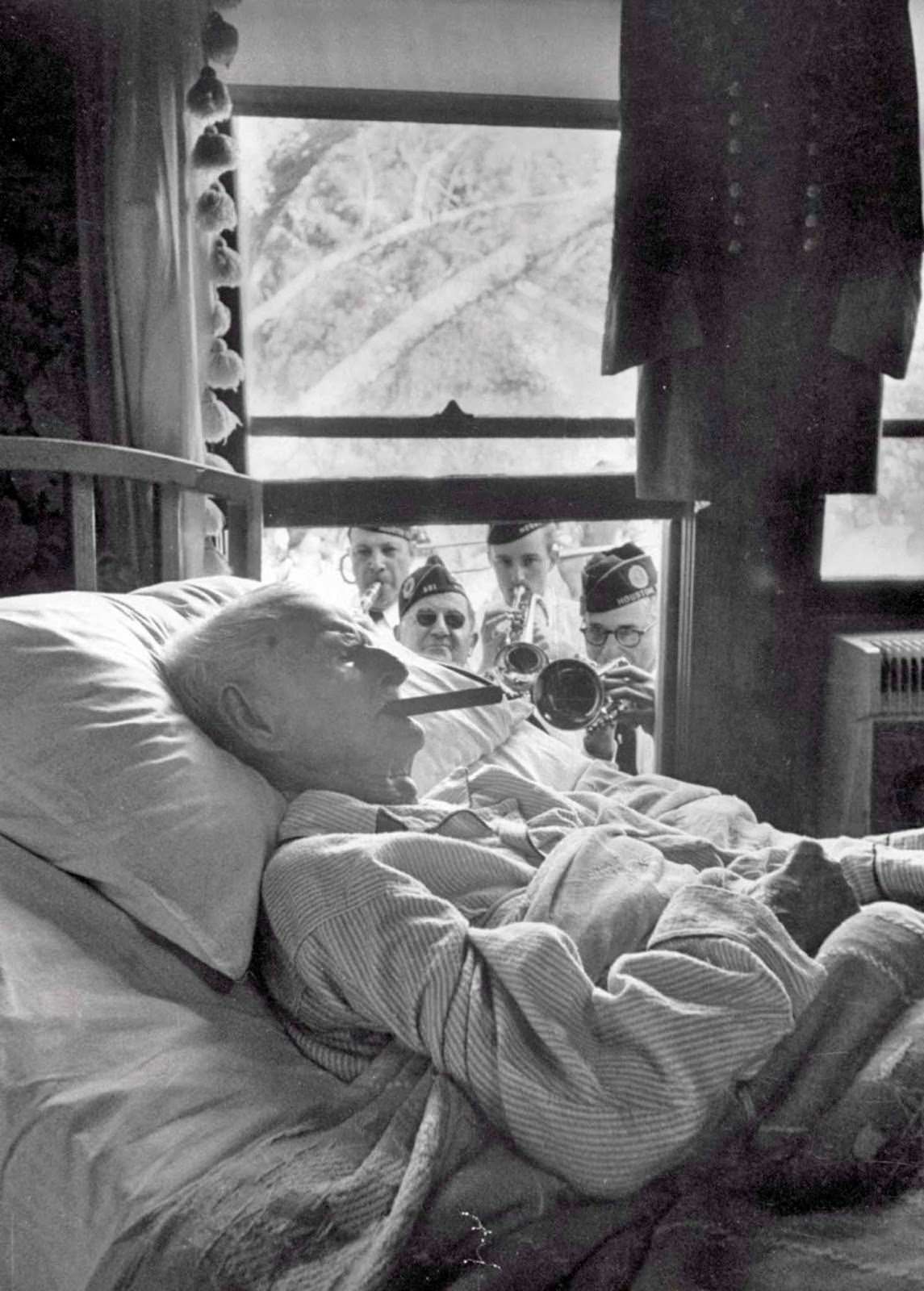
Morning light spills across a neatly made bed as Walter Williams lies propped on pillows, a cigar angled from the corner of his mouth. The scene feels domestic and unguarded—striped pajamas, rumpled blankets, and the quiet geometry of a headboard framing a face turned toward the window. Dated 1959 in the title, the photograph leans into that mid-century mix of comfort and ritual, where even convalescence could be staged with a certain dignity.
Outside the open window, a small group in uniform caps crowds the sill with brass instruments raised, delivering a serenade into the room. Their presence turns a private moment into a public tribute, the kind of community performance that once bridged streets and sickrooms before screens replaced visits. The contrast is striking: soft bedding and smoke inside, crisp hats and shining metal outside, all held together by the thin boundary of glass and air.
For readers drawn to unusual historical photos, this image offers a vivid slice of everyday culture—part humor, part tenderness, and wholly human. It also hints at larger currents behind the label “Civil Wars” in the existing description, suggesting how Americans have long used music and ceremony to honor service, memory, and endurance. Whether viewed as a candid moment or a carefully arranged gesture, the 1959 serenade of Walter Williams remains a memorable snapshot of respect performed at the window.