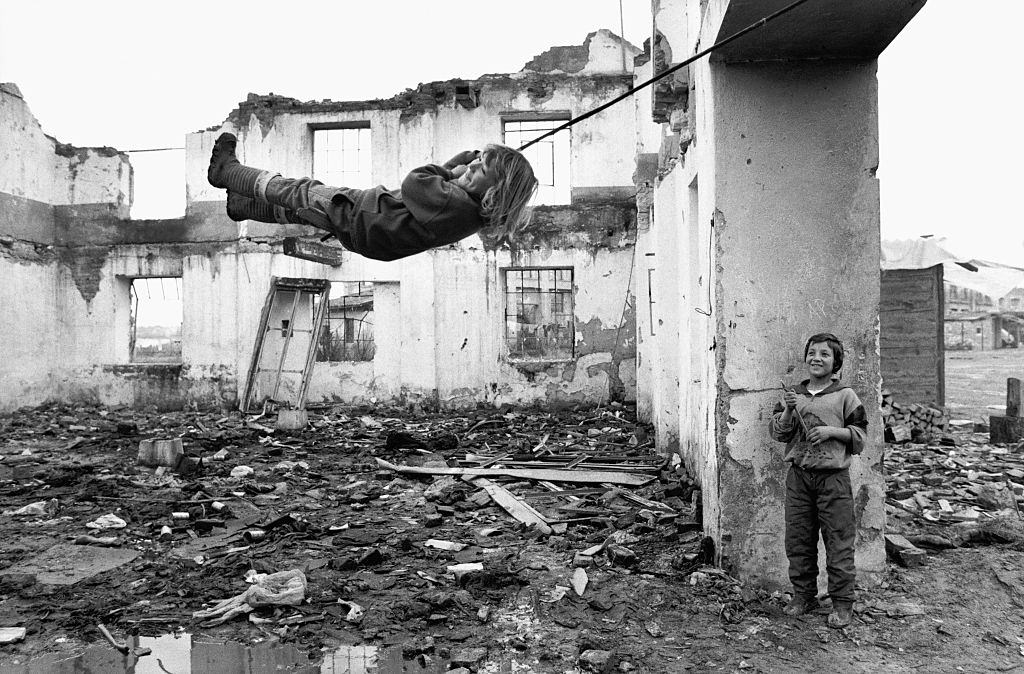
A rope has been stretched across the open shell of a roofless building, turning a shattered interior into a makeshift playground. One child swings out over broken timber and scattered masonry, boots lifted as if the air itself offers a brief escape from the ground below. Nearby, another child grips the line and watches, framed by raw walls and empty window openings that expose the sky where a ceiling used to be.
The rubble underfoot tells the larger story implied by the title: Muslim refugee children growing up amid the aftermath of civil wars, where ordinary rooms have been reduced to debris. Chipped plaster, gaping cracks, and jagged edges give the scene a harsh texture, yet the children’s play adds a stubborn, human counterpoint to destruction. In a single glance, the photograph holds both loss and motion—ruin as a setting, resilience as an action.
For readers searching for historical images of refugees, wartime displacement, and childhood in conflict zones, this photo offers a powerful, grounded moment without needing grand speeches. It invites reflection on how families improvise daily life when homes, schools, and neighborhoods collapse, and how children carve out fleeting normalcy in the most unlikely places. The swing’s arc becomes a quiet reminder that even in devastated spaces, joy can persist—uneven, fragile, and fiercely present.