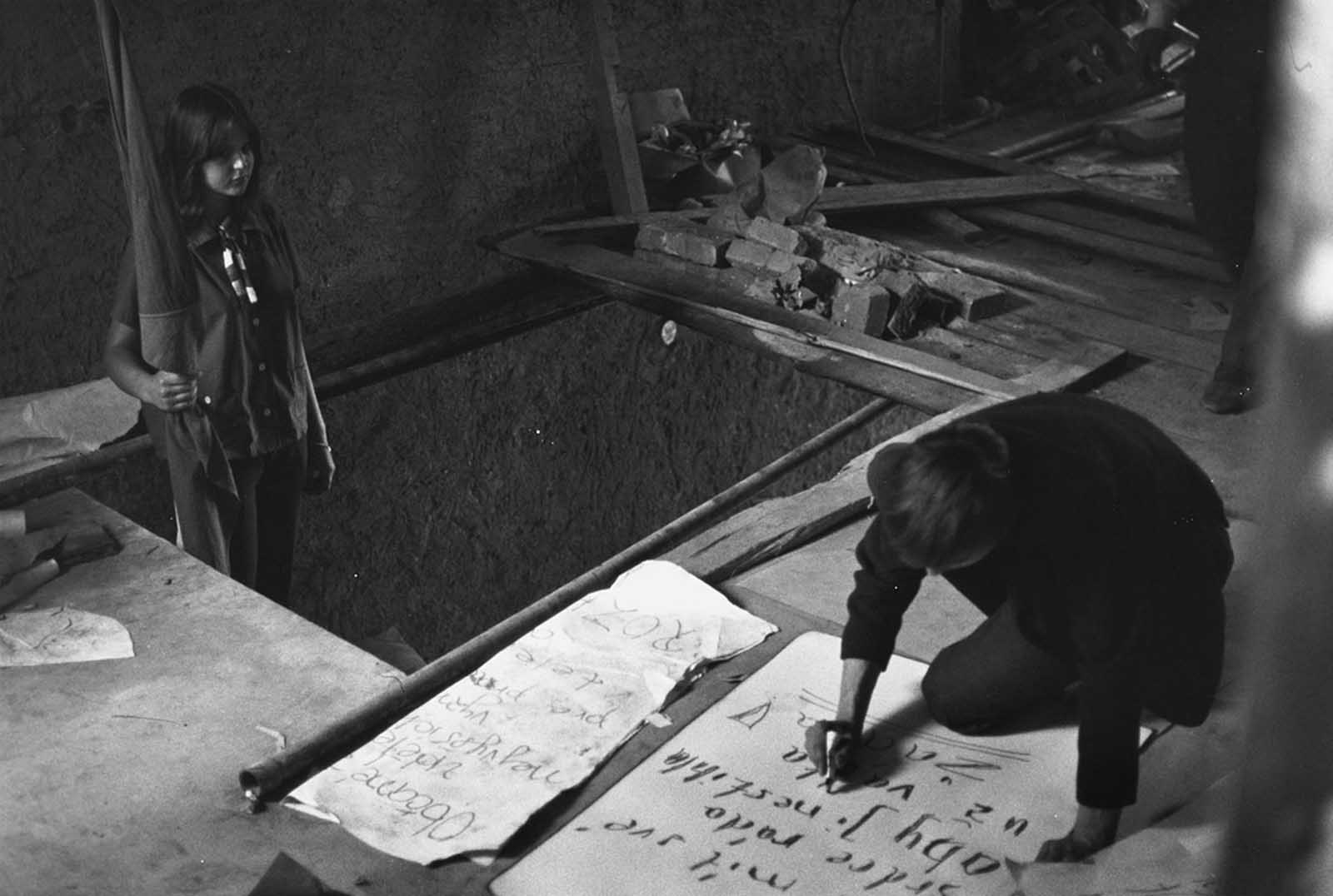
In a dim, improvised workspace in Prague, students of the underground movement bend over sheets of paper and cardboard, turning ink and brushstrokes into defiance. One figure kneels to letter a fresh slogan while another stands nearby holding a rolled banner, keeping watch in the half-light. Around them lie rough boards, bricks, and scattered materials—evidence of a makeshift operation built for speed, secrecy, and survival.
Dated September 3, 1968, the scene belongs to the tense aftermath of the Prague Spring and the Soviet-led invasion that provoked a wave of civic resistance. The anti-Russian posters visible here suggest a fight waged not with weapons but with words: hand-made messages meant to travel quickly through streets, stairwells, and public squares before authorities could tear them down. Even without clear faces or a polished setting, the photograph conveys the courage of ordinary young people choosing protest in an era when dissent carried real risk.
For readers searching the history of Prague 1968, student resistance, and underground activism in Czechoslovakia, this image offers a grounded, human-scale glimpse into how movements communicate when presses are controlled and public speech is dangerous. The rough lettering and cramped interior underline a larger truth about political struggle: revolutions and crackdowns are also fought at tables and on floors, in hurried nights of writing, copying, and distribution. It is a moment of civil conflict rendered quietly—through concentration, collaboration, and the determination to be heard.