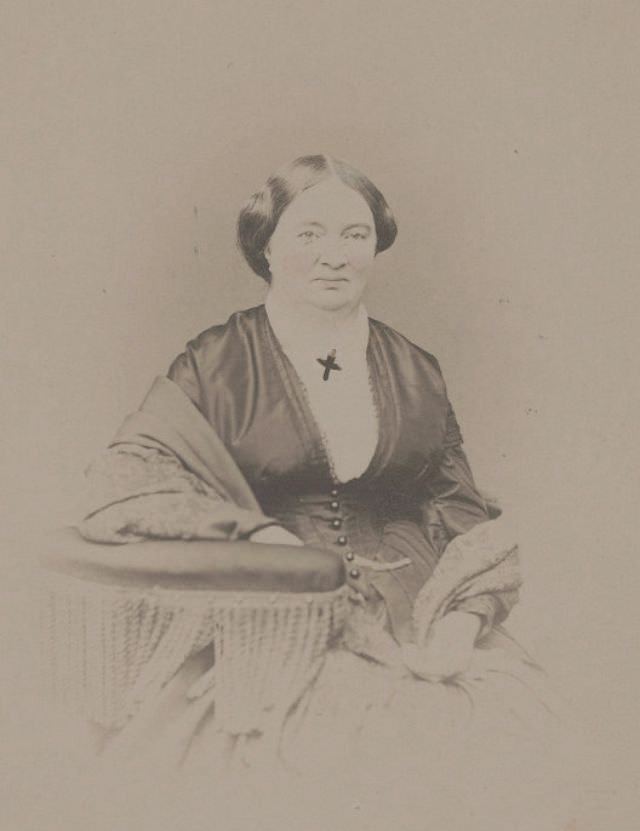
Mary Morris Husband sits for a formal studio portrait, composed and steady, her gaze meeting the camera with the quiet confidence of someone accustomed to responsibility. The plain backdrop and soft, washed light keep attention on her face and dark dress, while a small cross at her throat and a draped shawl hint at personal conviction and practical warmth. It’s the kind of Civil War–era photograph that feels simple at first glance, yet invites you to linger on the human story behind it.
Known from the post title as a Philadelphia Civil War nurse, Husband’s service connects the home front to the war’s harshest realities. The mention of field hospitals at Chancellorsville, Gettysburg, and Port Royal, along with hospital transports to Baltimore, Antietam, and Fredericksburg, evokes the exhausting rhythm of wartime care—triage, long nights, and the constant movement of wounded men. Her portrait becomes a doorway into the broader history of Union medical work and the essential, often under-credited labor of women who organized relief and tended the injured.
For readers searching Civil War nursing history, Philadelphia wartime relief, or the everyday faces behind famous battles, this image offers a compelling anchor. It also speaks to the era’s photographic culture: the studio setting, formal pose, and carefully arranged clothing that families relied on to preserve memory amid uncertainty. Together, the photo and title create a concise but powerful introduction to Mary Morris Husband’s wartime path and the networks of care that followed the armies from battlefield to hospital transport.