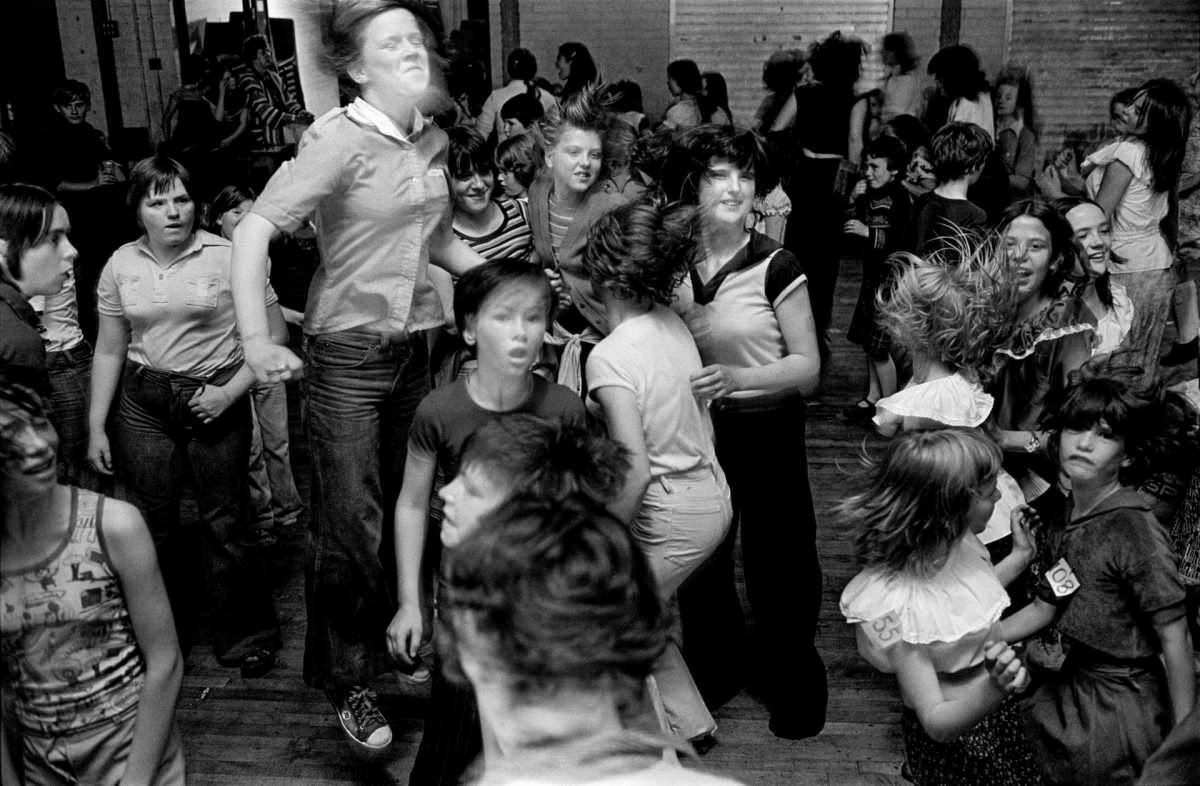
Energy spills across the floor of a community centre disco in Catholic west Belfast, 1978, where teenagers pack in shoulder to shoulder and move as one. Faces blur with motion, hair flying, as a few dancers leap high enough to catch the eye above the crowd. In the crush of striped tops, T-shirts, and flared trousers, the atmosphere feels loud even in silence—an honest snapshot of youth finding room to breathe.
Along the walls, clusters form and reform: some watch with folded arms, others grin at friends, and a few seem half-distracted by conversations that compete with the music. The plain brick backdrop and worn floorboards keep the setting grounded, reminding you this isn’t a glamorous nightclub but a local hall made temporary by a turntable and a shared understanding of Friday-night freedom. Small details—pinned numbers, sweat-damp fringe, a tilted collar—add to the sense of a lived-in, communal event.
Set against the broader tensions hinted at by “Civil Wars,” the scene reads as more than nightlife, capturing how ordinary social spaces persisted in west Belfast during the late 1970s. Community centres and parish-linked venues often doubled as safer meeting points, where dancing and flirting could briefly outrun the worries waiting outside the door. For anyone searching Belfast history, Irish social life, or everyday images from the Troubles era, this photograph holds the human texture that headlines so often miss.