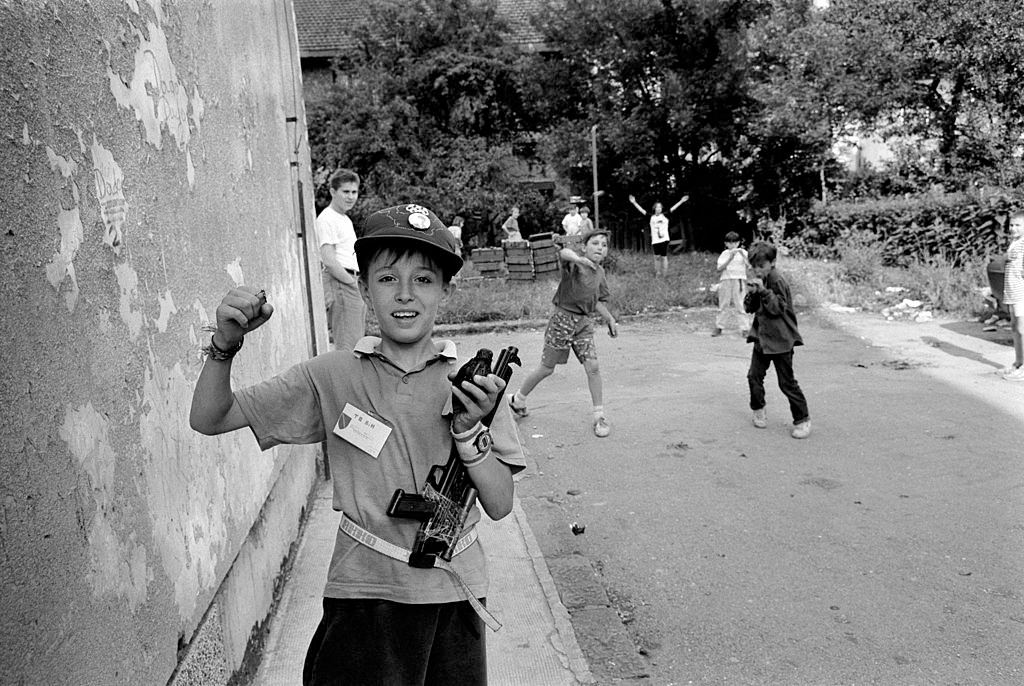
A boy steps toward the camera with the swagger of a soldier, gripping scavenged pieces that read like toys only at a distance, while behind him other children scatter across a battered street. The wall to his left is flaked and scarred, the ground is littered, and the casual summer clothing clashes with the hard-edged props of war. Even without hearing a single sound, the scene suggests a brief lull—an ordinary neighborhood moment reshaped by crisis.
During the shelling of Sarajevo in 1992, play did not disappear; it adapted, borrowing the language and objects of the conflict that surrounded these young lives. Empty ammunition boxes become stand-ins for equipment, and “Serb against Bosnians” turns into a child’s improvised script, reflecting the divisions adults were living out in deadly earnest. The photo sits uncomfortably between innocence and indoctrination, showing how quickly the routines of childhood can absorb violence when violence is constant.
For readers exploring civil wars and the siege of Sarajevo, this historical image offers a sharp entry point into daily survival, psychological resilience, and the costs of prolonged urban warfare. It’s also a reminder that conflict is not only measured in front lines and political statements, but in courtyards, sidewalks, and games that should have stayed harmless. Seen today, the children’s gestures and makeshift gear speak to a generation forced to rehearse tragedy long before they could fully understand it.