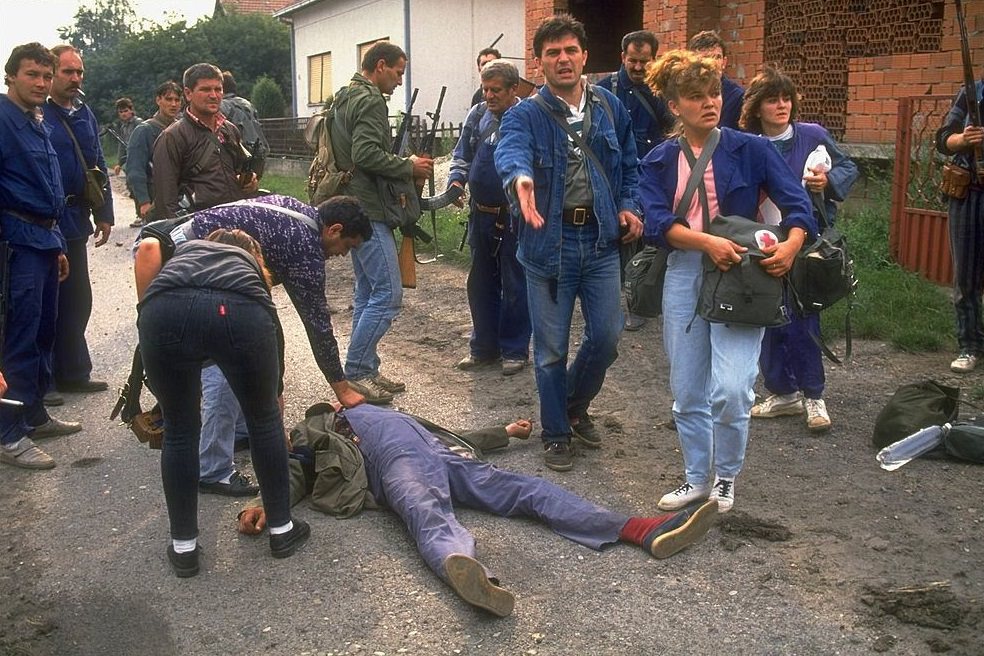
Urgency spills into the street as a wounded person lies stretched out on the roadway while civilians and aid workers crowd in close. Several figures wear armbands and carry bulky medical bags, a visual cue that matches the title’s “Red Cross-types,” even as armed men linger at the edges with rifles slung and faces tense. The setting feels improvised and exposed—houses and rough brickwork in the background, dirt and gravel underfoot—suggesting a neighborhood suddenly turned into a front line.
In the middle of the frame, gestures and glances pull in different directions: one person bends to check the casualty, another steps forward as if directing traffic or calling for space, and others look outward, alert to what might happen next. Clothing is everyday—denim, windbreakers, sneakers—rather than uniforms, underscoring how civil war drags ordinary life into violence with little warning. Even the scattered gear on the ground hints at hurried movement and the thin margin between rescue and danger.
For readers searching civil war history, humanitarian relief in conflict zones, or the lived reality behind the Red Cross emblem, this photograph offers a stark field-level view of evacuation and first aid under pressure. It captures the uneasy coexistence of care and coercion, where medics and volunteers work within sight of weapons and uncertainty. As a historical document, it invites reflection on neutrality, civilian vulnerability, and the split-second decisions that shape survival during internal wars.