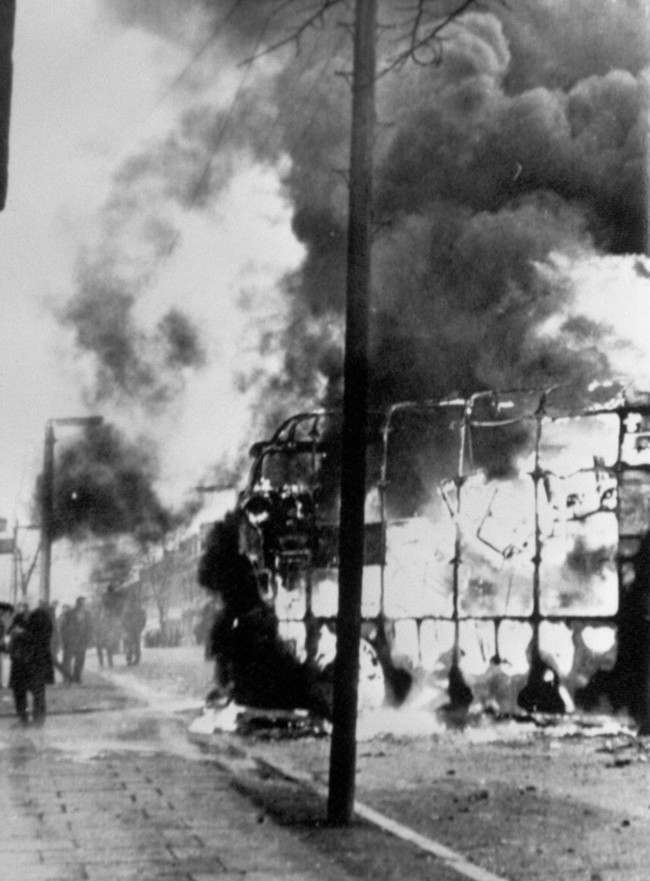
Smoke billows over Falls Road as a double-decker bus burns fiercely, its metal frame glowing while flames surge through the gutted lower deck. A tall pole divides the scene, and beyond it the street recedes into a haze of soot and drifting ash, with a few small figures silhouetted at a distance. Debris litters the pavement, turning an everyday roadway into a stark corridor of danger and disorder.
Taken during the violence in Belfast on 3 February 1971, the photo reflects how quickly a familiar symbol of city life could be transformed into a barricade in the midst of civil unrest. The title’s reference to clashes after police and troops carried out an arms operation hints at the tense, contested atmosphere in Springfield Road and the wider Falls Road area. In a single frame, the image conveys the scale of the blaze and the sense of a neighborhood caught between confrontation and control.
For readers exploring the history of the Troubles, this photograph offers more than spectacle: it shows the physical aftermath of street conflict and the improvisation of riot tactics amid fear, anger, and heavy security presence. The charred bus stands as a reminder of how public spaces and daily routines were disrupted, and how the urban landscape itself became part of the struggle. As a historical photo from Belfast, it remains a powerful, SEO-relevant document of 1971 unrest, community tension, and the lived reality behind headlines about violence.