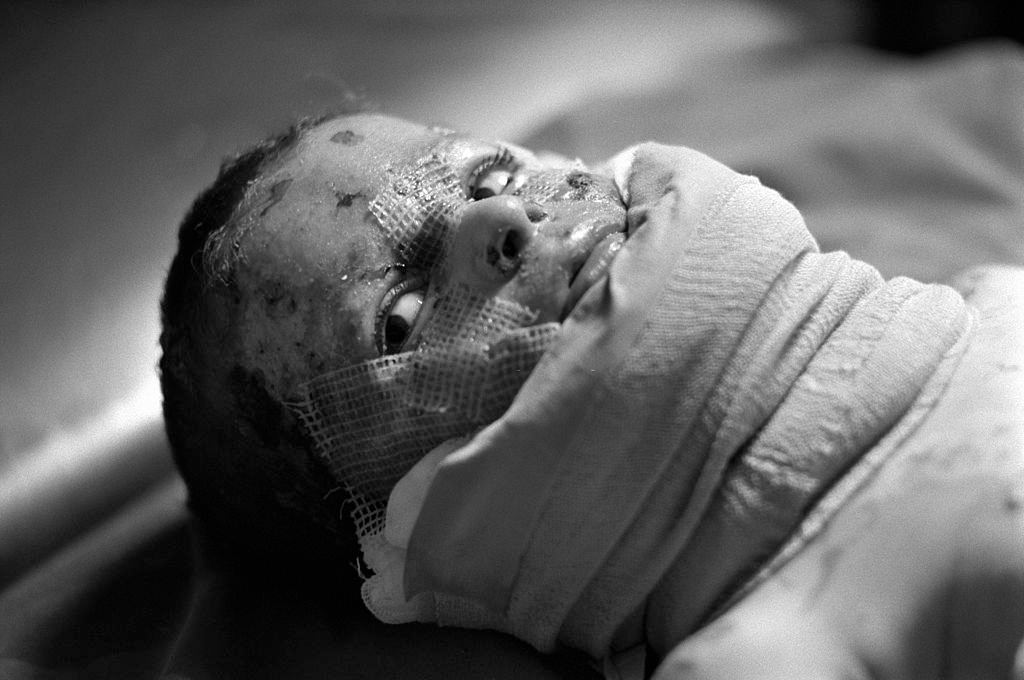
A child lies on a hospital bed, face wrapped in gauze and burn dressings, eyes open and searching past the edge of the frame. The tight focus pulls the viewer close enough to notice the texture of bandage mesh against swollen skin, while the background dissolves into a soft blur that feels like the hush of a ward. Nothing distracts from the central fact of the scene: war’s violence has reached someone who should have been far from it.
The title anchors the moment to heavy shelling in July 1992, placing this portrait within the brutal logic of civil wars where neighborhoods become front lines and civilians become casualties. Medical care appears here not as a triumphal rescue but as urgent triage—cleaning, wrapping, stabilizing—carried out under pressure and uncertainty. In a single frame, the photograph becomes both evidence and testimony, reminding us how bombardment translates into injuries measured in minutes, sutures, and nights spent listening for the next explosion.
For readers seeking historical context, images like this matter because they refuse abstraction: “conflict” becomes a wounded body, and “collateral damage” becomes a child’s gaze. The stark monochrome emphasizes form and emotion over spectacle, inviting careful looking rather than sensationalism. As a record of wartime suffering and humanitarian crisis, this photo stands as a sobering document for anyone researching civil war photography, civilian casualties, and the everyday realities of shelling in the early 1990s.