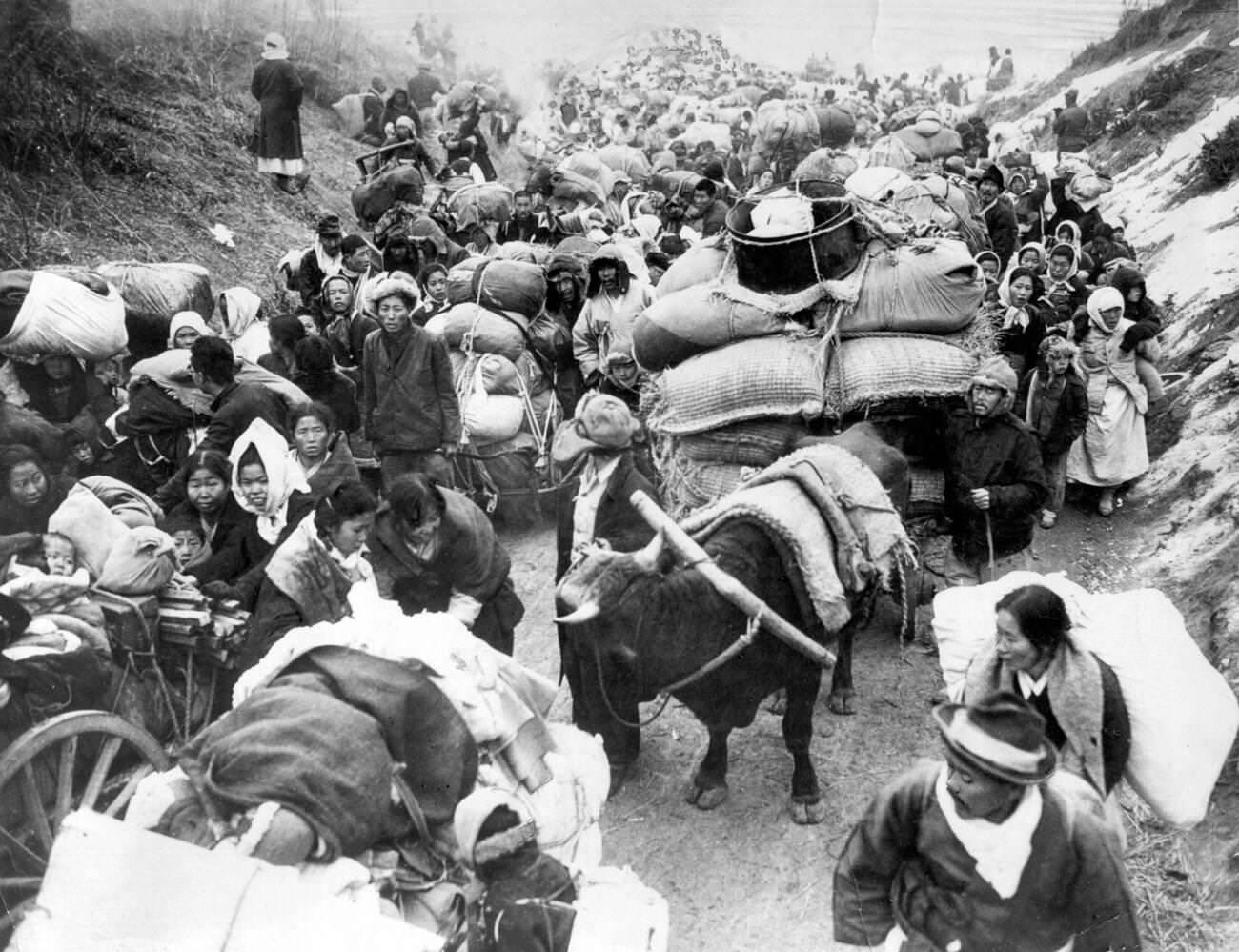
A river of people presses down a narrow road, filling the frame with faces, bundles, and the slow logic of survival. Children cling to adults, women in headscarves weave through the crush, and men shoulder sacks that look heavier than their bodies can bear. The winter-bright haze and bare embankments add to the sense of urgency, as if the land itself has been stripped to essentials.
In the foreground, oxen and carts move alongside pedestrians, piled high with bedding, pots, and tightly tied cloth-wrapped belongings—portable households reduced to what can be carried. Every inch of space is used: ropes cinch loads in place, and layered quilts become both luggage and shelter. The crowd’s density suggests not a single family on the move, but a mass displacement where ordinary routines have collapsed under the pressure of war.
Set in the 1950s during the Korean War, this scene speaks to the civilian cost of a conflict often summarized by front lines and ceasefire talks. The photo’s power lies in its detail—the anxious glances, the improvisation of transport, the mix of resignation and determination—making it a valuable historical record of Korean refugees fleeing violence and uncertainty. For readers searching for Korean War refugee photos, civilian displacement in the 1950s, or everyday life disrupted by civil wars, this image offers a stark, human-centered entry point.