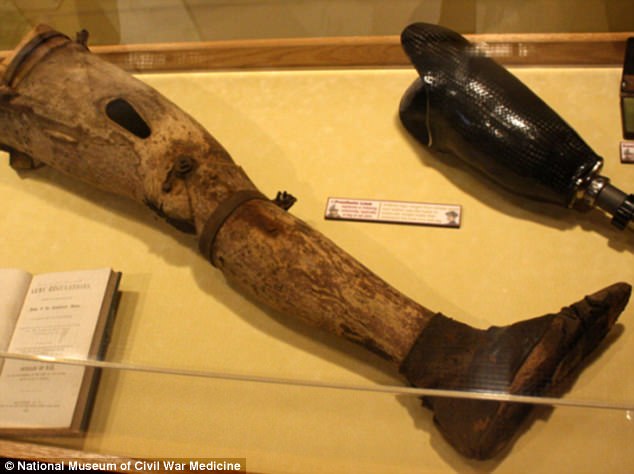
Laid out in a museum-style display case, a wooden prosthetic left leg stretches across the frame, its knee joint clearly articulated and its surface worn smooth by years of use. The craftsmanship is immediately striking: a carved calf and thigh, a cutout opening near the upper section, and a utilitarian build that favors function over ornament. Even in a still image, the object carries a heavy presence, inviting a closer look at how people once adapted to catastrophic injury.
Near the foot, a leather shoe covers the end of the limb, grounding the prosthesis in everyday life rather than purely medical curiosity. Patches of flesh-colored paint still cling to the wood, a small but telling attempt to make the device appear more lifelike and socially acceptable. Scratches, scuffs, and darkened areas read like a record of movement—proof that this wasn’t merely made, but relied upon.
Civil War–era medicine often meant survival came with lasting physical cost, and artifacts like this prosthetic leg help translate that reality into something tangible. The juxtaposition with a sleeker, modern-looking prosthetic nearby underscores a long history of innovation driven by necessity. For readers searching for Civil War medical history, antique prosthetics, or early orthopedic technology, this photograph offers a sobering, intimate window into resilience and rehabilitation in a world still learning how to care for wounded bodies.