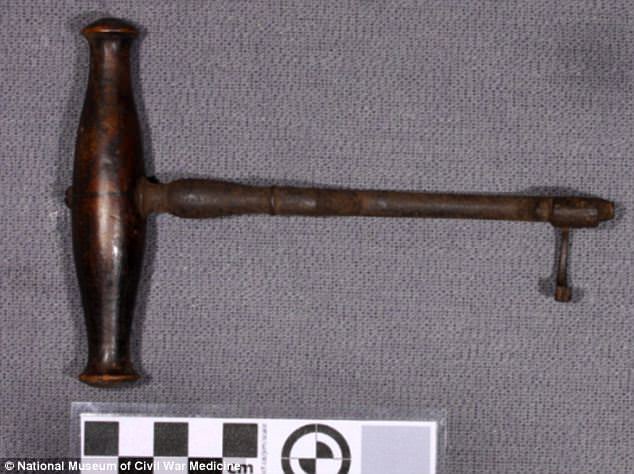
Few medical tools from the age of battlefield surgery look as deceptively simple as the tooth key. In the photo, the instrument lies against a plain surface with a measurement scale below it, emphasizing its compact size and stout, well-worn construction. A dark wooden handle meets a metal shaft that ends in the hooked working piece, the part designed to grip a tooth with grim determination.
Dentistry in the Civil War era often meant speed over comfort, and the tooth key was built for exactly that. Used like a wrench, it could twist and lever a tooth out in a single forceful motion—effective in practiced hands, but notorious for causing broken teeth, damaged gums, or worse. Seeing the tool up close helps explain why dental pain was feared and why extractions, however brutal, were sometimes the quickest route back to duty.
Objects like this tooth-pulling instrument connect everyday suffering to the larger story of wartime medicine, where limited anesthesia and infection control shaped every decision. The visible wear suggests repeated use, a reminder that oral health problems were common long before modern dental clinics and antibiotics. For readers searching Civil War medical artifacts or early dentistry tools, this image offers a stark, tangible look at the realities behind the history books.