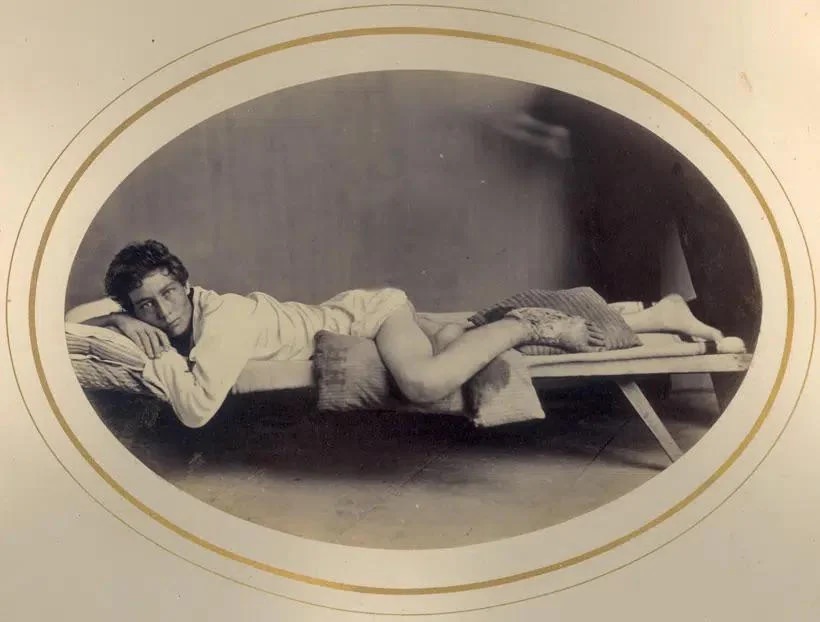
A young veteran reclines on a narrow cot, propped on a pillow, meeting the camera with a steady, exhausted gaze. The oval framing and spare interior place all attention on the body at rest—blanket pulled back, one leg ending in a bandaged stump—turning a private moment of recovery into public testimony. More than a posed studio likeness, it reads like a document of injury, care, and the uneasy quiet that followed battle.
Surviving limb loss during the Civil War meant entering a long second campaign, fought in hospitals, convalescent wards, and crowded homes. Amputation was both a life-saving procedure and a permanent upheaval, altering work, mobility, and identity while pain and infection remained constant threats. Photographs like this one were part evidence and part appeal, shaping how Americans understood military medicine, disability, and the human cost carried long after the guns fell silent.
Beneath the simplicity of the scene lies a broader story of amputee veterans navigating prosthetics, pensions, and social expectations in an era with limited support. The bed, the bandages, and the unguarded posture suggest not only trauma but endurance—an insistence on being seen as more than a casualty statistic. For readers seeking Civil War history through lived experience, this image anchors the post’s focus on recovery, resilience, and the everyday realities of surviving limb loss.