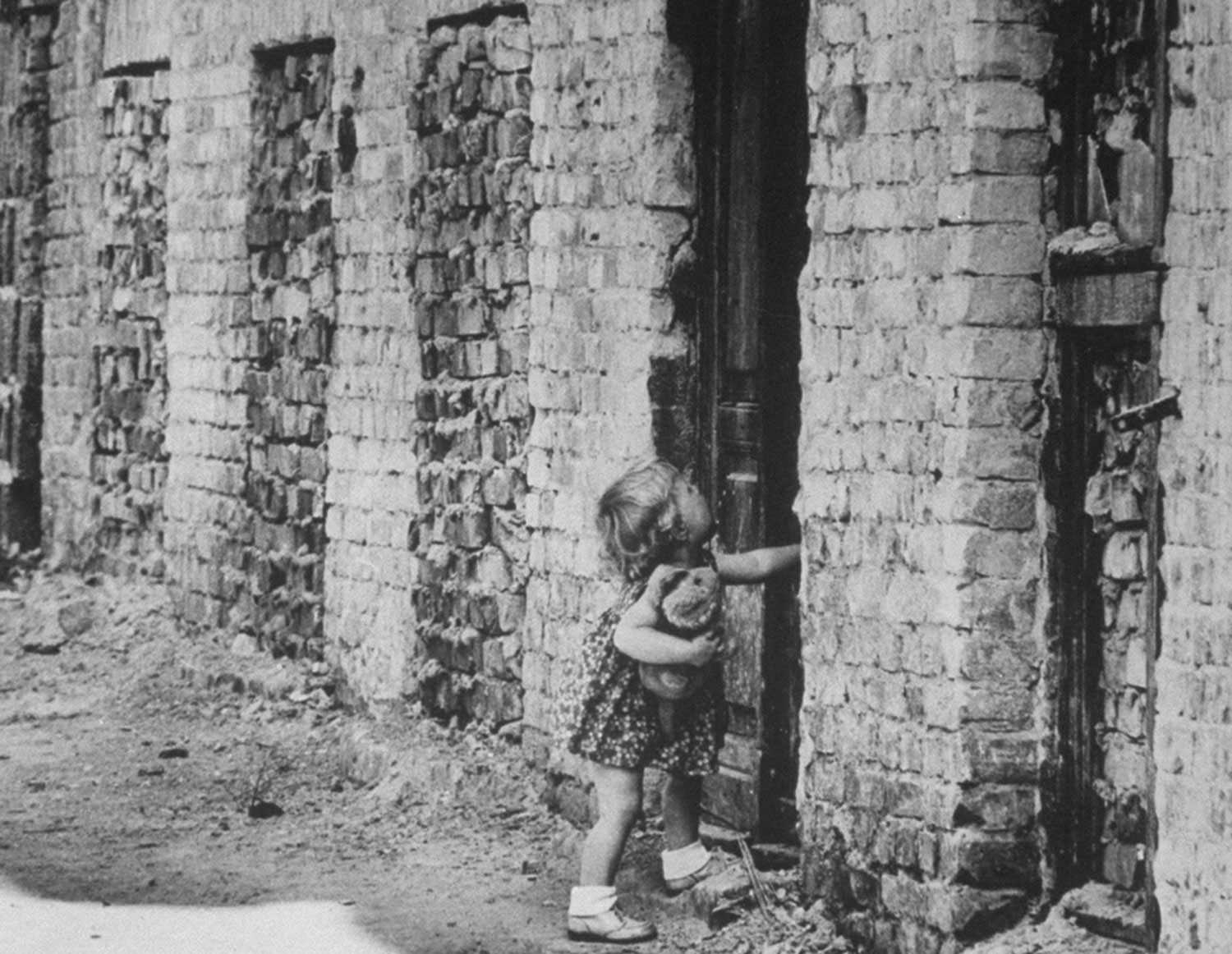
In the rubble-strewn calm of August 1961, a small child in West Berlin reaches for a door that no longer behaves like a door. The wall around it is raw brick and patched masonry, its openings sealed and its edges jagged, as if the building has been interrupted mid-breath. Clutching a teddy bear for courage, the toddler stretches up toward the handle, meeting a barrier that is both ordinary household architecture and sudden Cold War frontier.
What makes the scene so haunting is its scale: tiny shoes on broken ground, a child’s curiosity confronting a state-made boundary. A once-familiar entrance has been turned into part of the Berlin Wall, a domestic threshold repurposed into an instrument of separation. The texture of the bricks and the narrow darkness of the doorway suggest hurried closure—an everyday passage transformed into a line that divided neighbors, streets, and routines.
For readers searching the human story behind the Berlin Wall’s first days, this historical photo offers a stark reminder that political conflict often lands hardest in private spaces. The toddler’s gesture—simple, persistent, and unaware of ideology—frames the drama of 1961 in the language of home: doors, walls, and the instinct to go inside. It’s a quiet image, yet it echoes the larger story of divided Berlin, where even a child’s reach could meet a sealed world.