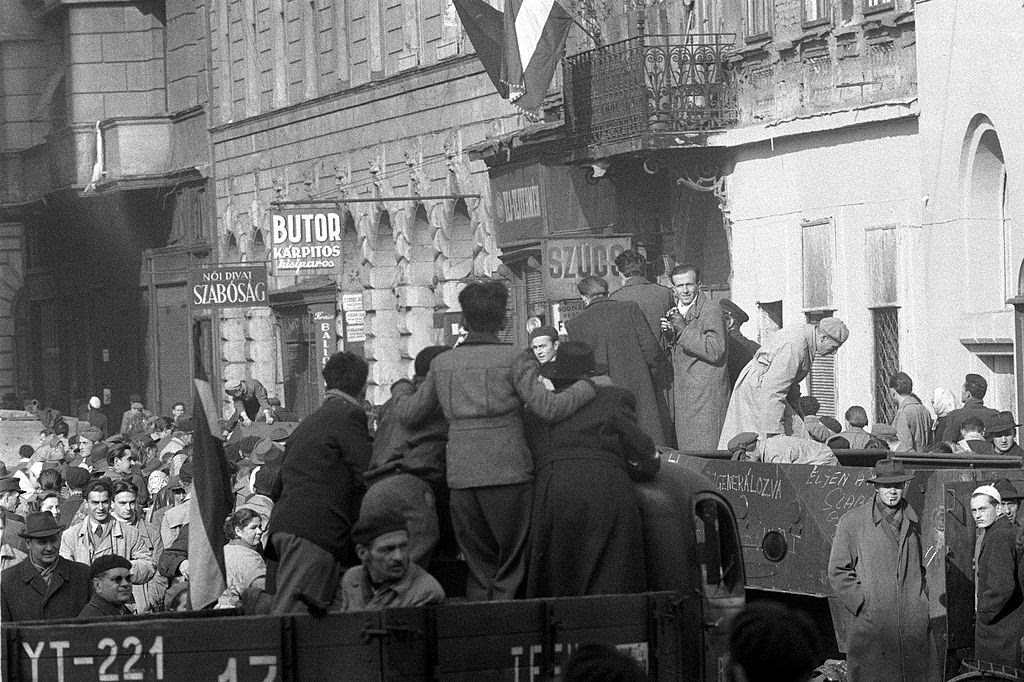
Crowds press along a narrow street in Győr, Hungary, their faces turned toward a cluster of men standing high on a vehicle, as if the truck has become an impromptu platform for announcements and resolve. Above the packed scene, Hungarian-language shop signs and the worn façades of older buildings frame a city momentarily transformed into a civic stage. The atmosphere is dense with movement—people leaning in, looking up, and holding position shoulder to shoulder as the day’s events gather momentum.
October 23, 1956, is remembered as the opening surge of the Hungarian Revolution, when tens of thousands took to the streets to demand an end to Soviet rule and reclaim national self-determination. In this photograph, the drama isn’t in weaponry or official ceremony but in ordinary citizens occupying public space and asserting a collective voice. Street-level protest, speeches from whatever elevation could be found, and the sheer mass of bodies communicate how quickly political currents can swell into a popular uprising.
Details in the scene invite a closer reading: a flag rising above the crowd, men perched on the truck’s edge, and bystanders watching with wary focus from doorways and the curb. For readers exploring Cold War history, the 1956 Hungarian uprising, or the lived texture of anti-Soviet protest in provincial cities, this image offers a grounded view of revolution as it begins—messy, communal, and intensely human. It stands as a visual record of how the call for freedom moved through Győr’s streets before the struggle hardened into conflict and repression.