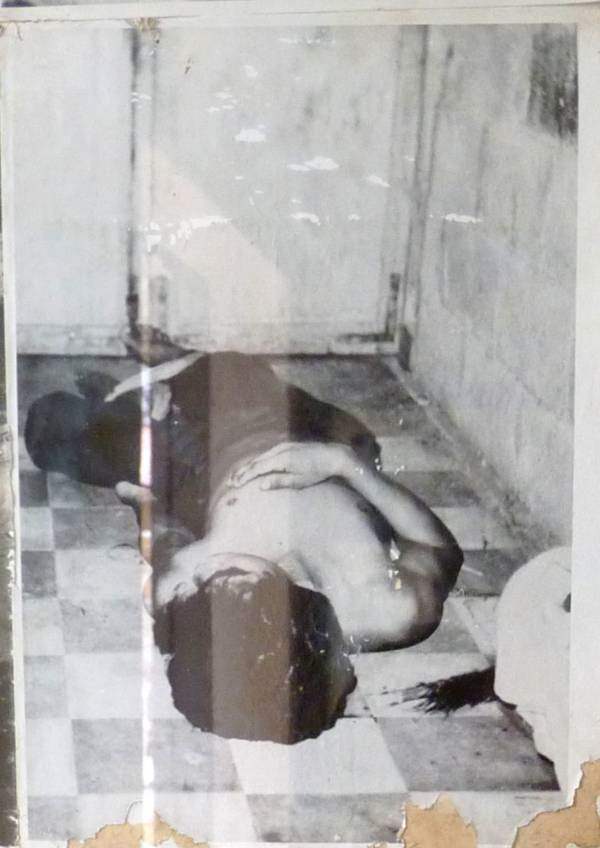
Dim light falls across a bare, tiled floor inside Tuol Sleng, where a murdered man’s body lies motionless and exposed. The room feels stripped of ordinary life—plain walls, hard surfaces, and a claustrophobic stillness that turns the scene into a blunt record rather than a composed portrait. Seen through the wear and damage of an aging print, the photograph carries the texture of evidence: something handled, filed, and preserved because it could not be forgotten.
Tuol Sleng is inseparable from the story of the Khmer Rouge, and the title frames this image within that machinery of terror. No identifying details are offered here—no name, no personal history—only the aftermath, presented with chilling simplicity. The sparseness of the setting intensifies the human reality of civil war and political violence, reducing a life to a trace on the floor of an institution built to erase people.
For readers searching the history of Cambodia, Khmer Rouge crimes, or the Tuol Sleng prison archive, this photograph confronts the subject without the distance of abstraction. It invites reflection on how regimes document their own brutality and how later generations encounter such records through fragile, surviving prints. In the end, the power of the image lies in its refusal to provide comfort: it forces the viewer to reckon with a single death as part of a much larger catastrophe.