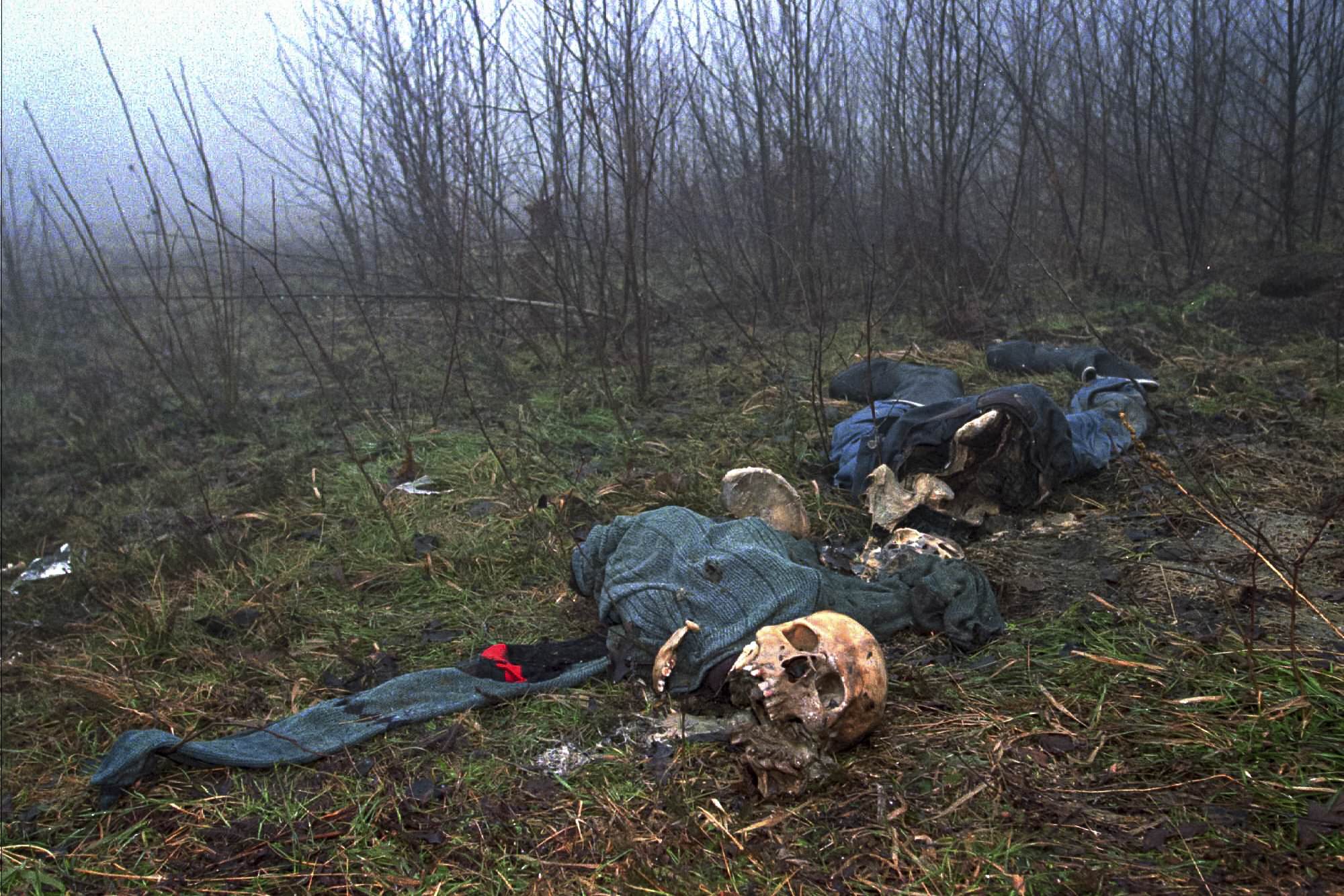
Mist hangs low over a scrubby, leafless landscape where four bodies lie in a rough line, their clothing still draped over exposed bones. The foreground draws the eye to a skull turned toward the camera, surrounded by damp grass, mud, and scattered debris, while darker garments recede into the background. The scene’s quiet, wintry palette heightens the sense of abandonment and the brutal finality of civil war violence.
According to the title, one of these clothed skeletons was examined by U.N. investigator Elizabeth Rehn, placing the photograph within the realm of international inquiry and human rights documentation. Details like the intact jackets, trousers, and shoes underscore how quickly identity can be reduced to fragments when conflict erases ordinary life. Such images are not simply “evidence” in a legal sense; they are also stark reminders of the human cost that investigations attempt to measure, name, and bring into public record.
For readers searching the history of civil wars, war crimes investigations, and United Nations fact-finding missions, this photograph offers an unflinching point of entry. It invites reflection on how landscapes become makeshift graves and how forensic scrutiny—sometimes led by high-level investigators—tries to restore truth where rumor and denial thrive. The camera’s distance, neither sensational nor detached, leaves space for the most difficult question of all: what happened here, and who was left to answer for it.