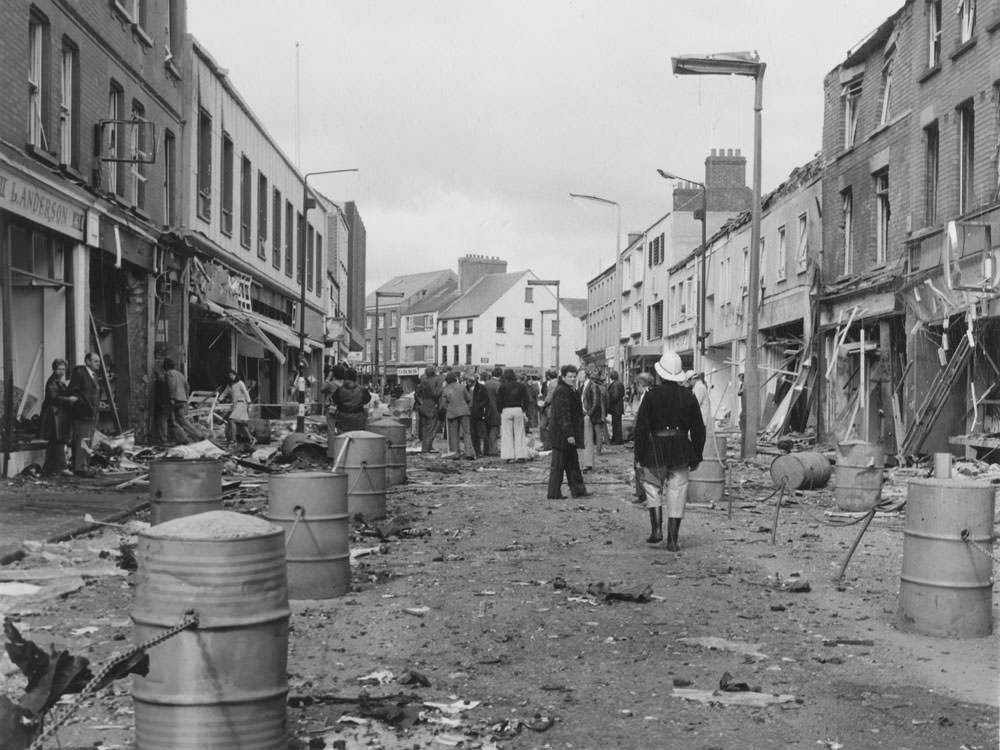
Shattered shopfronts and torn masonry line both sides of a once-ordinary street, where rubble, glass, and scattered debris turn the roadway into an obstacle course. Improvised barriers—metal drums linked by chains—suggest an urgent attempt to control access after the blast. Groups of onlookers cluster in the distance, while a uniformed figure walks through the scene, underscoring the heavy presence of security in the wake of violence.
Along the left-hand row of buildings, signage hangs above damaged entrances and exposed interiors, hinting at businesses abruptly interrupted mid-day. On the right, façades are peeled back and windows blown out, creating a jagged corridor of broken brick and splintered frames. The monochrome tones emphasize texture: dust on the ground, warped metal, and the stark emptiness where display windows and doors used to be.
Titled “The aftermath of a terrorist bombing, 1972,” this photograph sits within the wider story of civil unrest and urban conflict, where public spaces became targets and everyday routines were suddenly perilous. It invites closer reading of the small details—how people gather, how streets are cordoned, how damage spreads block by block—revealing the practical realities that follow an explosion. For readers searching the history of terrorism in the 1970s, it offers a sober, street-level view of what the headlines often reduce to a single line.