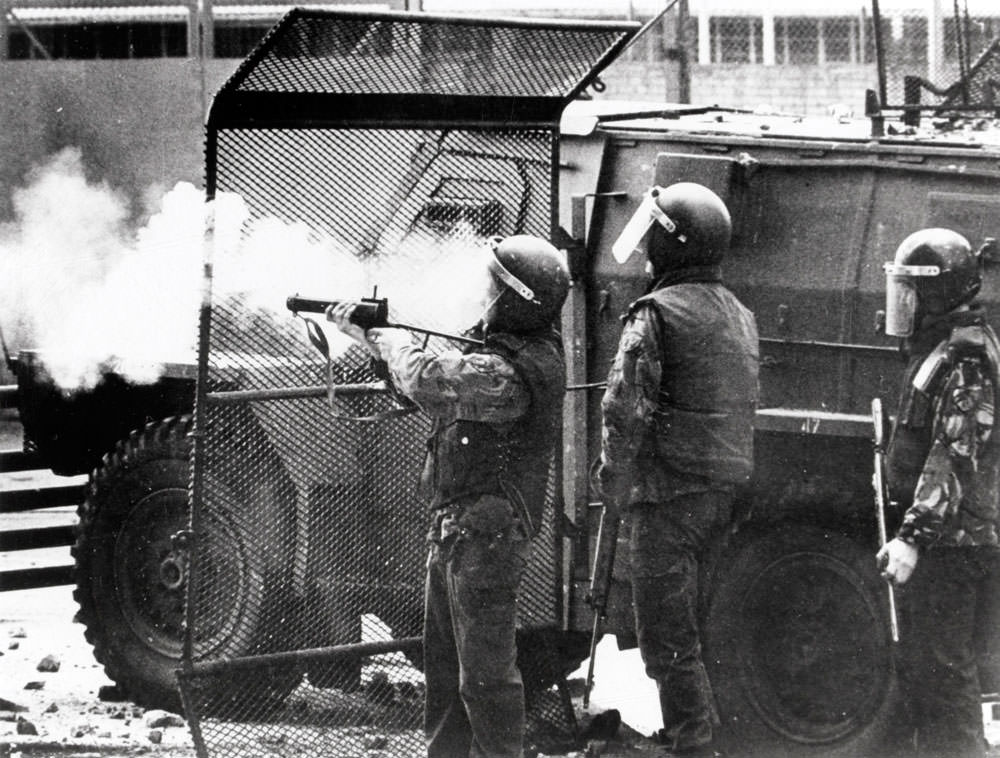
Behind a mesh riot shield and the hulking side of an armored vehicle, a helmeted soldier levels a launcher and fires a baton round into a smoke-filled street. Two other uniformed figures stand close by, face visors down, watching the same direction as debris and haze drift across the scene. The tight framing makes the moment feel claustrophobic, emphasizing improvised barriers, protective gear, and the hard geometry of military hardware in an urban setting.
Northern Ireland in 1972 sits near the most turbulent stretch of the Troubles, when public order policing and military presence collided with protests, riots, and daily insecurity. Baton rounds—officially presented as a “less-lethal” option—became one of the era’s most contested tools, associated with the logic of crowd control and the risks it carried for civilians. In this photograph, the plume at the muzzle and the tense posture of the men capture how quickly a street can turn into a front line.
For readers exploring civil conflict history, this image offers a stark visual entry point into the vocabulary of 1970s riot response: shields, visors, armored transport, and the use of impact munitions. It also raises enduring questions about force, accountability, and how governments attempt to manage unrest while communities live with the consequences. As a historical photo from Northern Ireland, 1972, it remains a powerful reminder that “civil wars” are often experienced not in grand campaigns, but in contested city streets and split-second decisions.