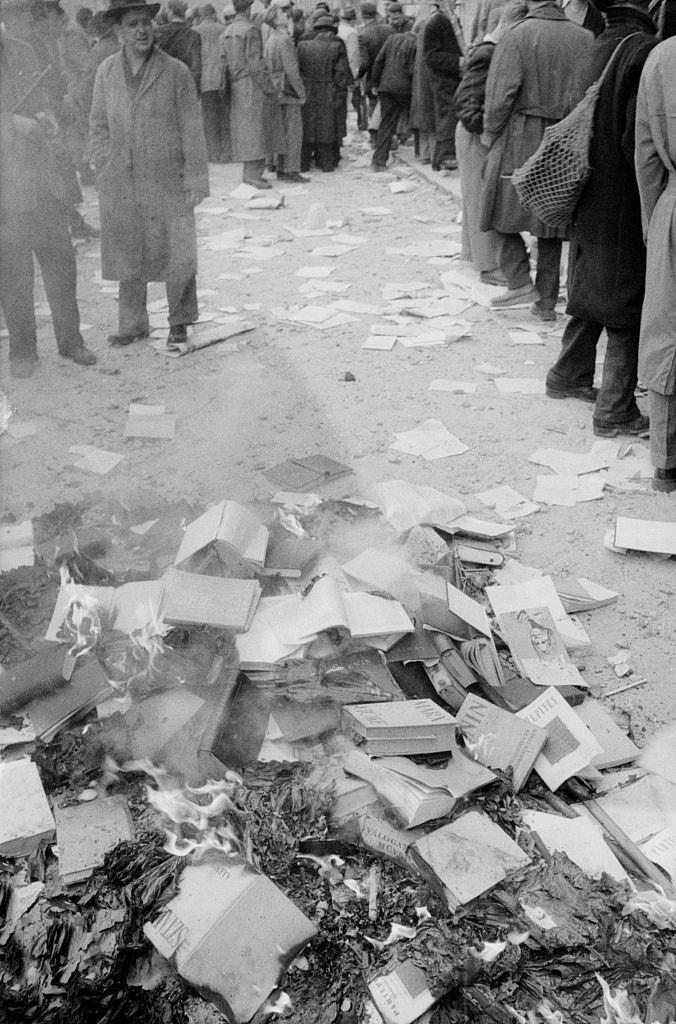
Loose pages and hardbound volumes carpet the street in Budapest, while a small fire eats at the nearest stack of books. Coats and hats crowd the edges of the frame, onlookers forming a tense corridor as smoke rises from paper that only moments earlier sat on shelves. The title anchors the scene to October 30, 1956, when rebels publicly consigned Marxist texts to the flames during the Hungarian Revolution.
Book burning is never only about paper; it is a loud, visual rejection of the authority those words represent. Here, the scattered covers and torn sheets suggest haste and anger, the kind that erupts when censorship, propaganda, and forced loyalties have pressed too long on everyday life. In the language of civil wars and uprisings, destroying ideological literature becomes both protest and performance—an attempt to erase symbols of a regime even as the wider struggle remains unsettled.
Details in the photograph draw the viewer into the lived texture of the moment: muddy ground, winter clothing, and a line of faces turned toward the commotion rather than the camera. For readers searching the history of Budapest 1956, the Hungarian uprising, or Cold War-era street protests, this image offers a stark reminder that revolutions are fought not only with weapons and barricades, but also with ideas—and with the urgent need to reclaim public space from the printed voice of power.