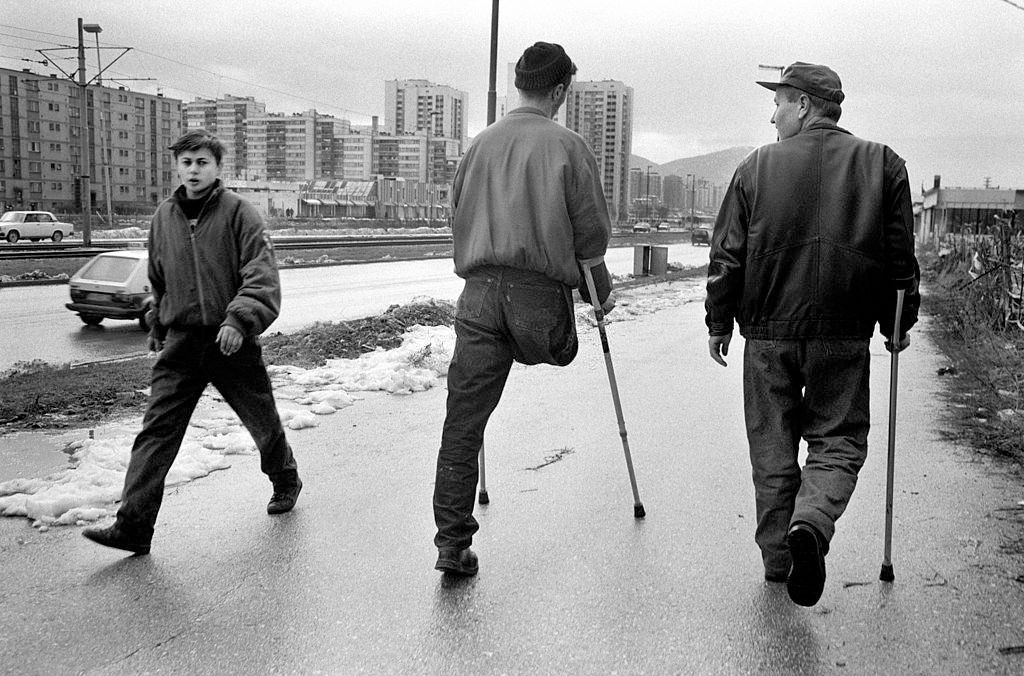
Winter slush clings to the edge of the roadway as traffic slips by, and two men on crutches move steadily down the stretch known as Sniper Alley. One lifts his weight with practiced rhythm, his trouser leg pinned where an amputated limb would be, while the other keeps pace a few steps to the side. A young passerby cuts across the frame, the everyday urgency of city life colliding with the slow, deliberate choreography of survival.
Behind them, rows of stark apartment blocks and utility lines form a hard urban backdrop, amplifying the feeling of exposure that made this main road notorious during the civil wars of the 1990s. The wide, open carriageway offers little shelter, and the men’s posture—forward-leaning, focused, conserving energy—suggests the discipline required to navigate a place where even a routine walk could become a calculated risk. The wet pavement reflects a cold light, turning the scene into a study of endurance rather than spectacle.
Photographs like this endure because they anchor history in the body: injury, mobility, and resilience rendered in a single moment on a public street. For readers searching the history of Sniper Alley in 1995, the image speaks to the long afterlife of conflict, when wounds are carried into ordinary commutes and conversations. It’s an unsentimental reminder that civil war reshapes cities not only through damaged buildings, but through the daily movements of the people who must keep going.