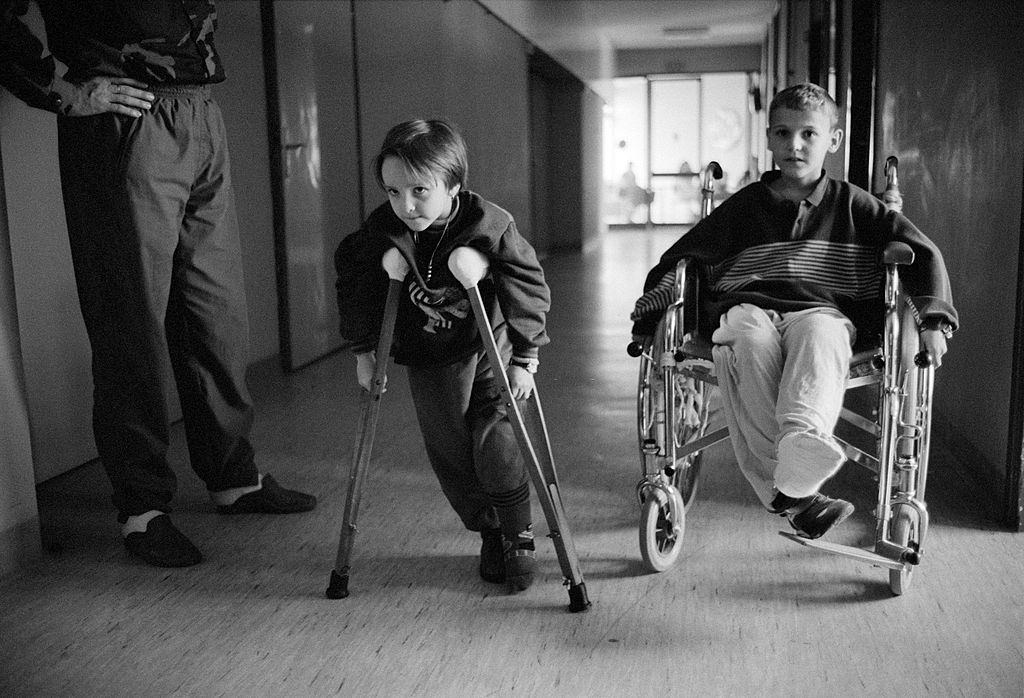
Down a dim hospital corridor in Sarajevo, two young patients move with the kind of concentration no child should have to learn. One advances on crutches, shoulders hunched with effort, while another sits in a wheelchair with a bandaged leg, looking ahead as the hallway narrows toward a bright window. The ordinary fixtures of care—doors, linoleum, scattered shadows—become a stage for the daily work of surviving injury during the siege.
Kosevo Hospital, named in the title, stands here as more than a medical facility; it becomes a refuge under the strain of civil war, where treatment and endurance happen side by side. The photograph’s stark tones emphasize the contrast between clinical calm and the chaos implied beyond the walls, hinting at shortages, overcrowding, and the relentless arrival of casualties. Even the presence of an adult just out of frame suggests how many hands were needed to guide children through routines made difficult by trauma.
For readers searching the history of the Siege of Sarajevo and the wider Bosnian War, this scene distills the conflict into a quiet, unforgettable moment. It speaks to the civilian cost of urban warfare and the particular cruelty of violence that reaches families and schools, not just front lines. As a historical photo, it invites reflection on resilience, humanitarian care, and the long aftermath carried in bodies still learning to heal.