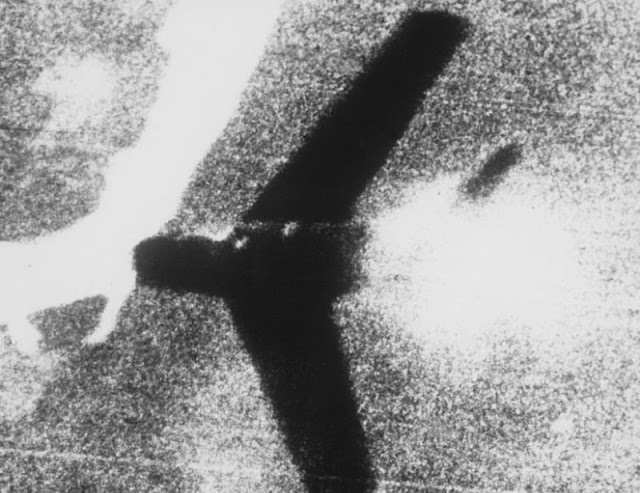
Caught in a stark blur of light and shadow, the stricken MiG-15 falls away with a bright plume trailing behind it, a split second turned permanent. The grainy, high-contrast look suggests a hurried combat camera frame—more record than art—yet the drama is unmistakable as the jet’s silhouette breaks against the sky. Even without cockpit detail, the scene conveys the suddenness of a hit at speed and altitude, when control gives way to gravity.
“MiG Alley” became shorthand for the jet-age crucible of the 1950s, where aircraft like the Soviet-designed MiG-15 met the American F-86 Sabre in fast, turning fights that defined early Cold War air combat. The Sabre versus MiG matchup was as much about doctrine and pilot training as it was about airframes, with split-second gunnery and energy management deciding who went home. In that context, a single downing carried outsized meaning—tactical victory, psychological impact, and a data point in a wider contest of technology.
For readers interested in Korean War aviation history, this photo offers a raw glimpse into what “aerial victory” actually looked like in the moment: confusion, smoke, and a disappearing aircraft. It also highlights why period imagery is often imperfect—shot from another aircraft, through vibration and glare—yet invaluable for understanding how these engagements were perceived and documented. Paired with the title, it anchors a story of the MiG-15, the F-86 Sabre, and the unforgiving reality of jet combat over contested skies.