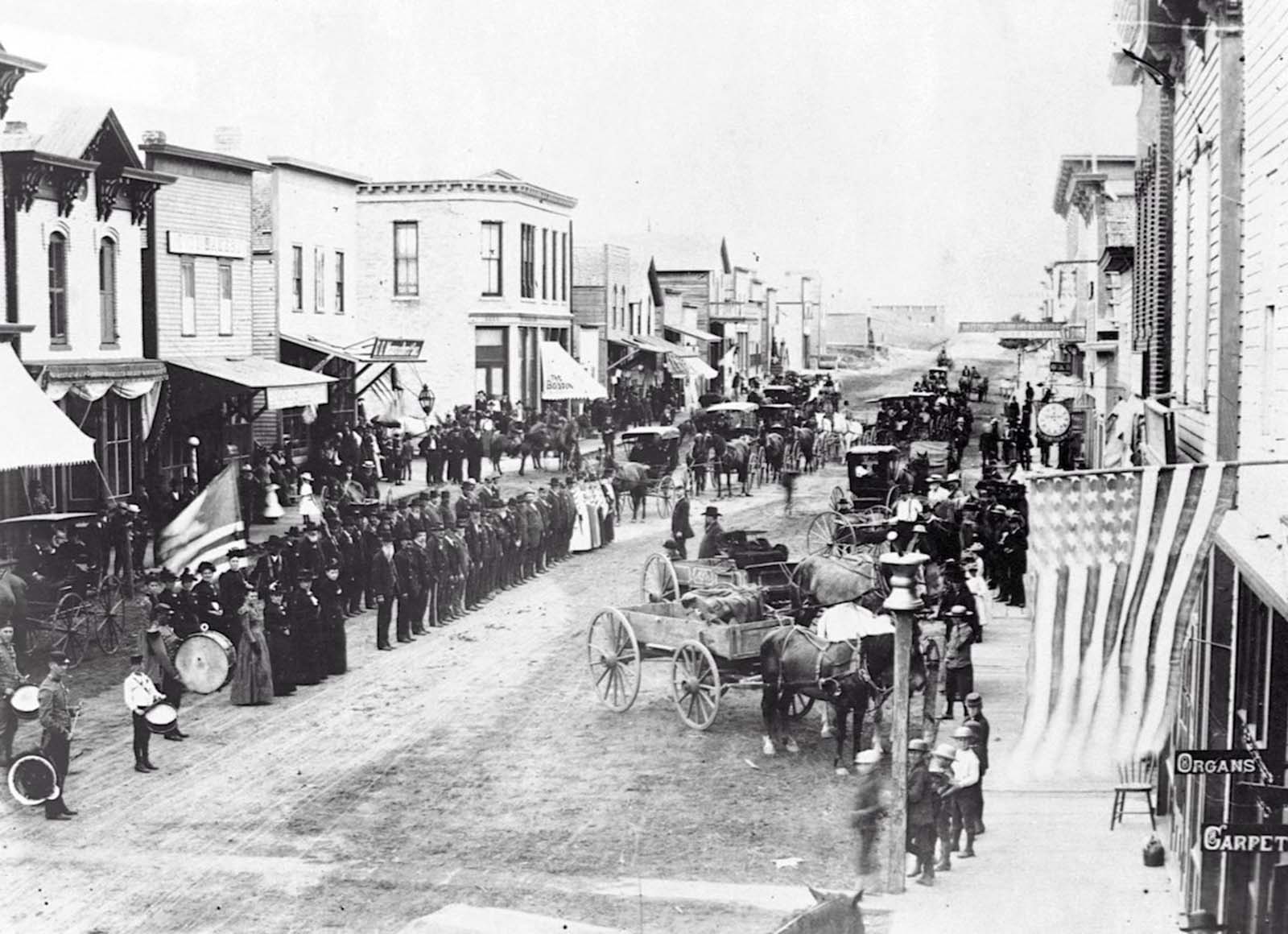
Flags and bunting turn Ortonville’s main street into a stage for remembrance and celebration, as Civil War veterans stand on review during a summer holiday observance in 1880. A long line of uniformed men holds formation along the dirt road while townspeople cluster at the curb, leaning in from storefronts and shaded awnings to witness the proceedings. The vantage point down the business district emphasizes how a small Minnesota community could gather its entire public life—commerce, neighbors, and ceremony—into one shared corridor.
Along the street, the everyday rhythms of a frontier town remain visible even as the parade moment takes over: horse-drawn wagons, carriages, and teams waiting their turn amid a dense crowd. Shop signs and second-story windows frame the scene, suggesting merchants and families watching from every available perch. The mixture of still ranks and moving traffic captures the transitional character of the era, when civic ritual marched alongside practical transportation and a growing local economy.
Decoration Day and the Fourth of July carried particular weight for veterans and their neighbors in the decades after the war, blending national identity with personal memory and public mourning. In this photograph, the review becomes a kind of living monument—men who served presenting themselves again before their community, and the community responding with attention, pageantry, and flags. For readers interested in Minnesota history, Civil War reunions, and small-town American main streets, this image offers a richly detailed glimpse into how the 1880s remembered conflict while proclaiming unity.