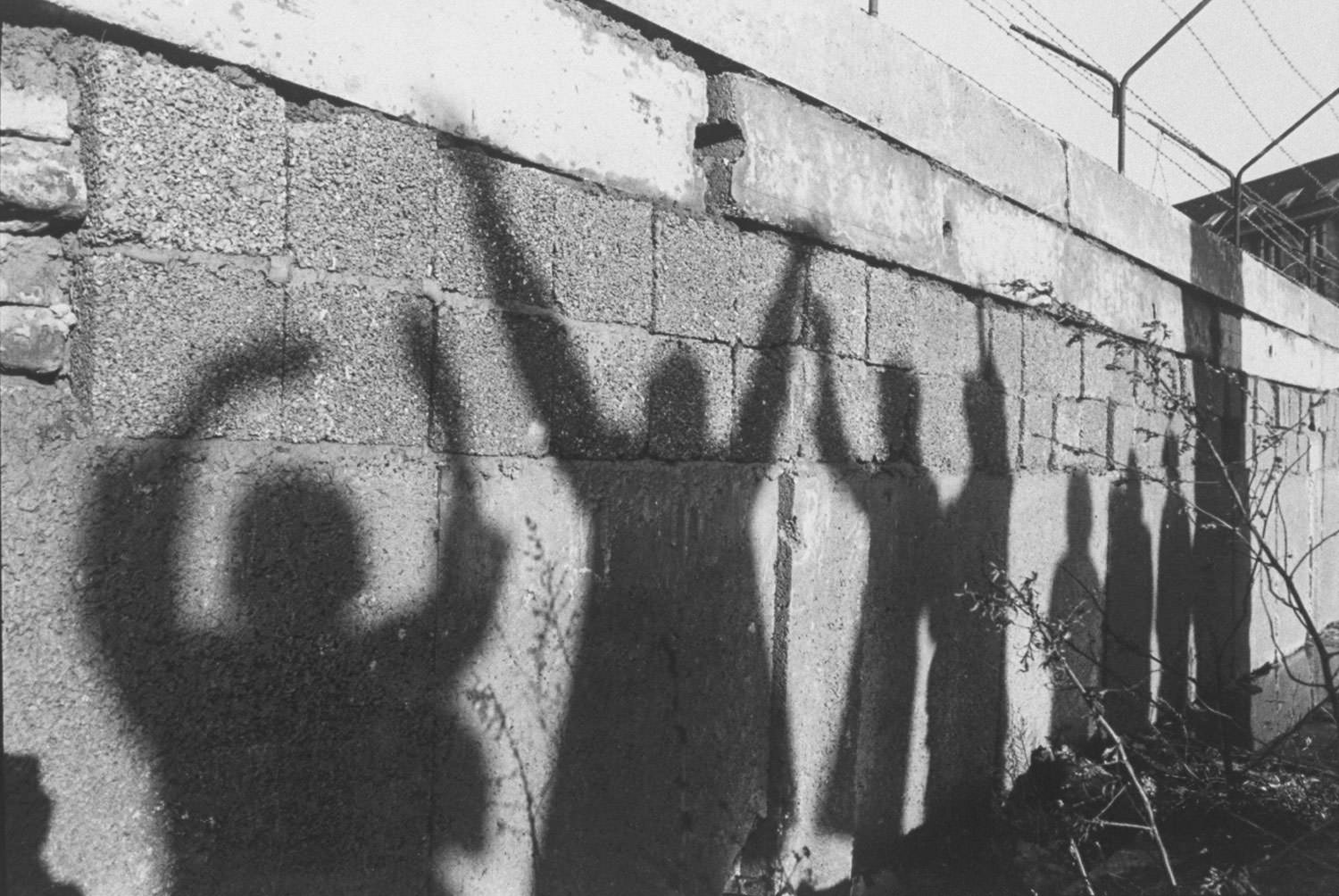
Against a rough stretch of the Berlin Wall, a row of human shadows climbs the concrete—arms raised, hands splayed, bodies reduced to silhouettes by winter light. The wall’s patched masonry and jagged cracks read like scar tissue, while barbed wire along the topline makes the boundary feel absolute. Yet the most arresting detail is that the people themselves are not seen, only their dark outlines, as if presence has been allowed but contact has not.
December 1962 sits early in the Wall’s life, when the shock of sudden division was still fresh and routines of separation were being learned the hard way. From West Berlin, relatives could sometimes approach close enough to signal across an unseen gap, turning a wave into a kind of language—simple, urgent, and painfully inadequate. The photograph frames a Cold War border not through soldiers or slogans, but through gestures that reveal how private family bonds collided with public, militarized geography.
In its quiet drama, the scene works as a visual essay on the Berlin Wall, East and West Berlin, and the everyday human cost of a city split in two. The unseen Eastern side becomes part of the composition precisely because it is absent; the viewer is asked to imagine who might be watching, and what cannot be said aloud. For readers tracing the history of divided Berlin, this image offers a stark reminder that the Wall did more than block streets—it interrupted lives, leaving people to communicate in shadows.