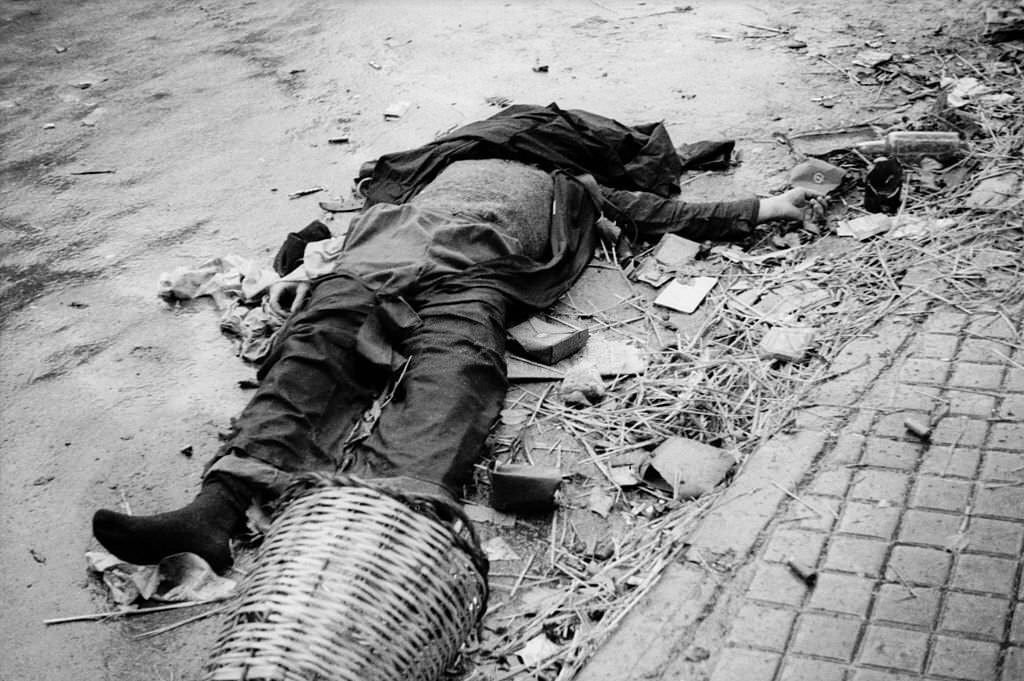
Across a littered roadside, a single body lies sprawled on the pavement, coat and clothing rumpled as if the fall came suddenly and without ceremony. Straw, torn papers, and broken bits of everyday life gather around the figure, while a brick-edged sidewalk frames the scene with grim ordinariness. The title places this moment in 1936, during the capture of a Basque town by Franco supporters, compressing a military conquest into its most intimate and brutal aftermath.
Nothing in the frame looks staged; instead, the camera lingers on the quiet that follows violence, when the street becomes both battlefield and public space again. The person’s outstretched arm and the scattered debris hint at hurried movement—flight, pursuit, or collapse—now frozen in stillness. It is a stark reminder that civil wars are fought not only with banners and speeches, but also in the anonymous corners where civilians and combatants alike can be left behind.
As a historical record of the Spanish Civil War’s early months, the photograph speaks to occupation, retaliation, and the human cost embedded in contested towns. For readers searching themes like Basque history, Franco supporters, 1936 Spain, or civil war photography, this image offers a sobering point of entry: the conquest rendered not as triumph, but as absence. The roadway, the debris, and the solitary body together evoke a community interrupted—its normal rhythms replaced, for a time, by fear and loss.