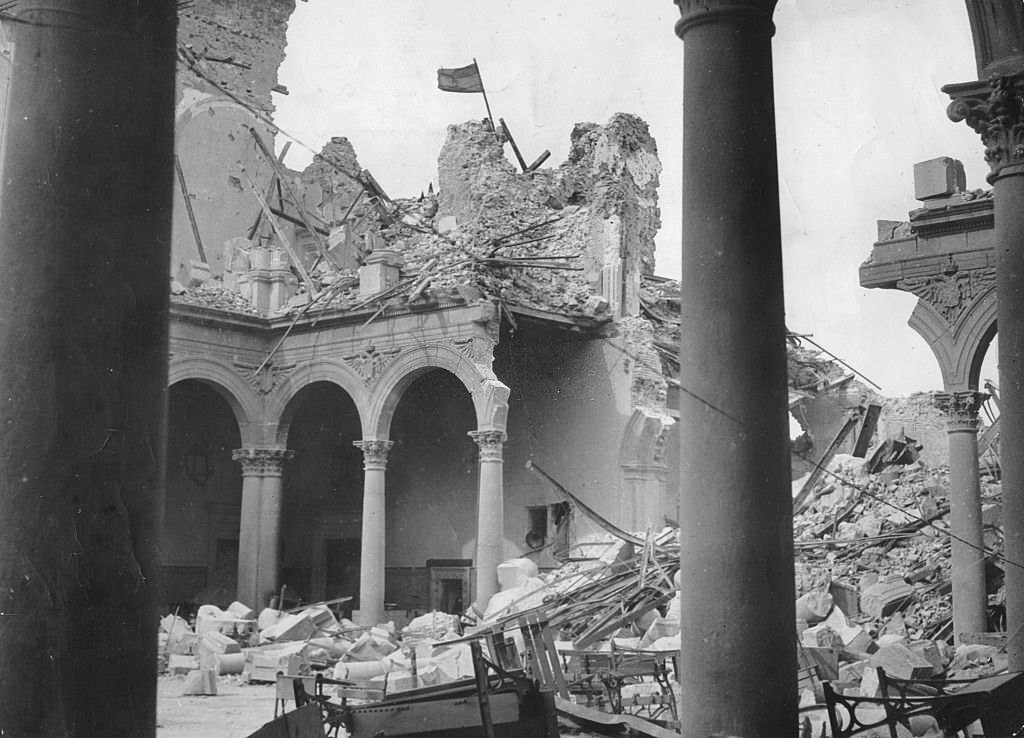
Stone arches still stand in a battered courtyard, but everything above them has been torn open—roof beams splintered, masonry peeled back, and the skyline reduced to jagged walls. The columns in the foreground frame a scene of collapse, drawing the eye toward heaps of broken blocks and twisted fragments that spill into the open space where order once ruled. Even the small flag visible atop the ruins feels less like triumph than a stark marker of endurance amid devastation.
Titled as a view of the totally destroyed Alcazar after the end of a siege by Republican troops, the photograph places the viewer inside the aftermath rather than the battle itself. The fortress architecture—arcades, carved capitals, and formal stonework—becomes a measuring stick for what sustained bombardment and close fighting can do to a landmark built to project permanence. In the context of civil wars, such ruins are more than wreckage: they are visual evidence of how political conflict reaches into courtyards, corridors, and cultural heritage.
For readers searching the history of the Alcazar siege aftermath, this image offers a grounded, unsettling clarity: destruction rendered in detail, from the collapsed upper levels to the debris-littered floor. It invites a slower look at what survives—pillars, arches, fragments of ornament—and what has been irrevocably lost, reminding us that fortresses are not only military symbols but also lived spaces caught in the sweep of history. As a WordPress feature, it stands as a powerful archival window into wartime damage and the long shadow left by internal conflict.