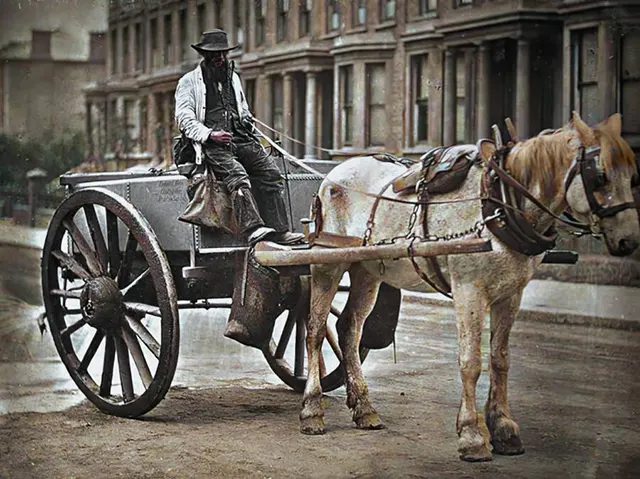
Late-19th-century city streets could turn punishingly hot and dusty, and water carts like the one seen here were part of the everyday answer. A sturdy horse stands patiently in harness while the driver sits high on the tank wagon, ready to make another pass along the roadway. The wet sheen on the street hints at recent watering, a simple but effective way to settle grit and cool the surface in an era before modern street cleaning fleets.
Look closely and the scene becomes a small study in urban work: the big wooden wheels built for rutted roads, the heavy tank balanced over the axle, and the practical clothing of a laborer who spent long hours outdoors. Multi-story stone and brick buildings line the background, suggesting a busy neighborhood where pedestrians, carts, and early traffic competed with swirling dust. Even without dramatic action, the image conveys a steady routine—one that kept commerce moving and made summer streets more bearable.
Seen through the lens of colorization, the 1890s world feels nearer, turning a utilitarian service into something almost intimate. Water carts weren’t only about comfort; they reflected public health concerns, municipal organization, and the constant maintenance required by growing cities. For anyone searching for an authentic glimpse of street life in the 1890s, this historical photo offers a grounded reminder that keeping a city livable often depended on horsepower, water, and hard daily labor.