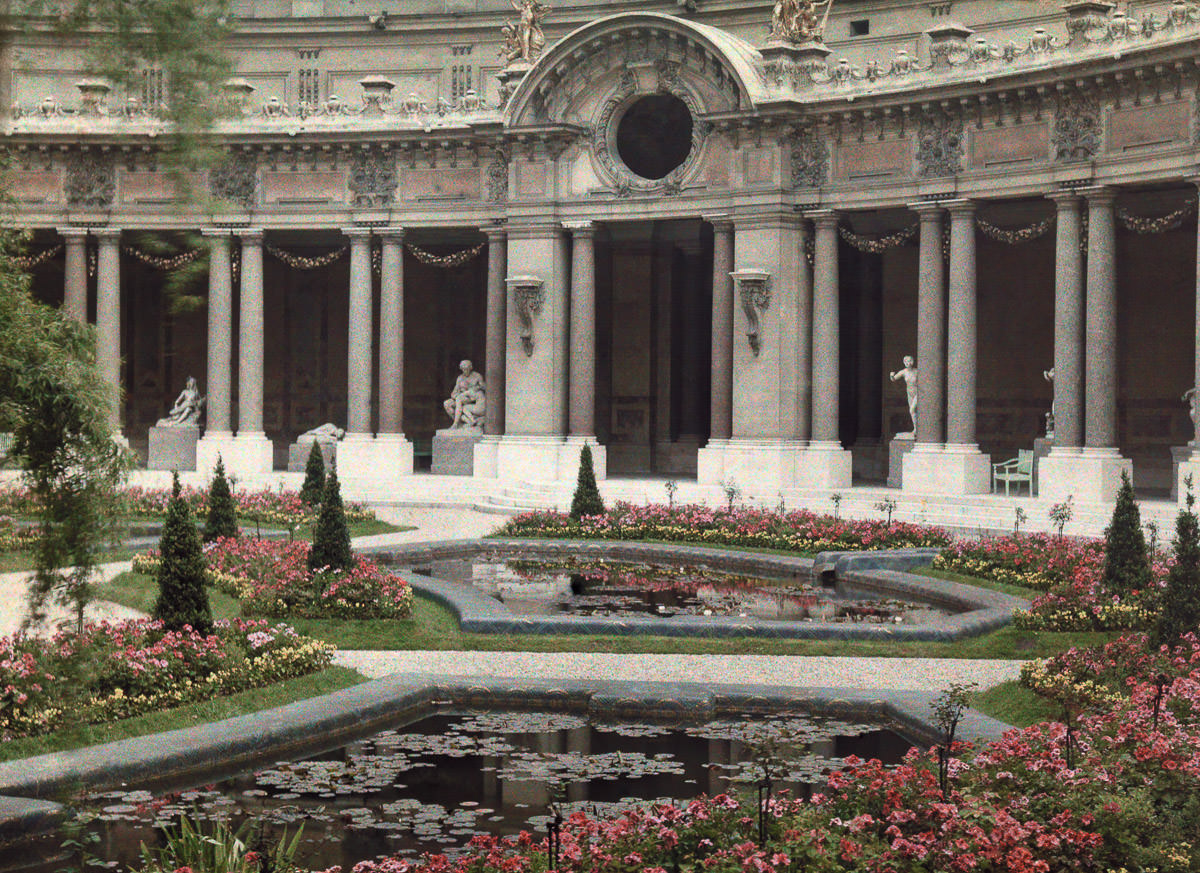
Under the soft wash of modern colorization, a formal Parisian garden unfolds with clipped lawns, bright flowerbeds, and a still pool dotted with lily pads. Beyond the water, a grand stone façade stretches in a calm rhythm of columns and shadowed arcades, its sculpted figures posed like silent guardians along the walkway. The scene feels carefully composed—architecture, greenery, and reflections arranged to invite a slow, deliberate stroll.
Paris in the 1920s is often remembered for cafés and cabarets, yet places like this reveal another side of the city: public elegance, civic pride, and the quiet pleasures of ornamental design. The colonnade’s classical detailing and the manicured borders suggest a space meant for looking as much as for lingering, where fashion and leisure could mingle without haste. Color brings out the contrast between cool stone and warm blooms, making the textures and depth easier to read than in the original monochrome.
What stands out most is the balance between permanence and seasonality—the heavy architecture anchoring a garden that must be replanted, trimmed, and renewed year after year. The dark water mirrors the arches and columns, turning the courtyard into a layered tableau of stone, sky, and petals. For anyone searching for “Paris, 1920s” or early twentieth-century France, this historical photo offers a serene glimpse of how the city’s grandeur extended into its everyday outdoor spaces.