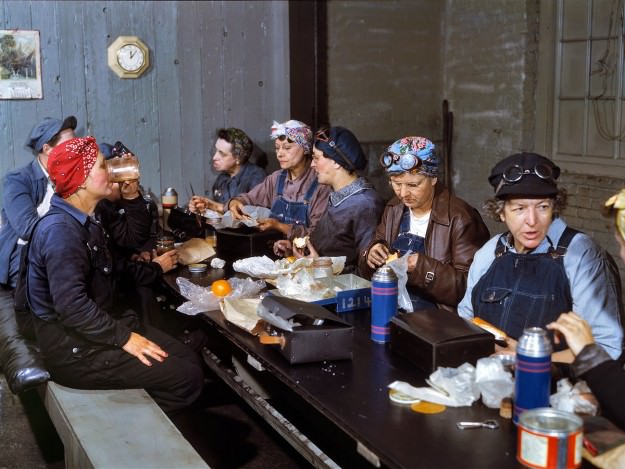
April 1943 brings us inside a lunchroom moment at the Chicago & North Western Railroad roundhouse in Clinton, Iowa, where women employed as roundhouse wipers pause mid-shift to eat, talk, and gather themselves for the work ahead. Captured as a 4×5 Kodachrome transparency by Jack Delano, the scene holds onto the everyday textures of wartime industry—work caps and headscarves, sturdy coveralls, and the close quarters of a break area that feels improvised but familiar.
Marcella Hart sits at the left edge of the table, while Mrs. Elibia Siematter is at the right, anchoring the frame with the quiet authority of people who know the rhythm of the shop. Lunch pails, wrapped sandwiches, and metal thermoses line the tabletop, with hands still bearing the marks of the roundhouse: grease-stained sleeves, practical layers, and the kind of fatigue that doesn’t stop conversation. The women’s expressions suggest a mixture of focus and camaraderie, a reminder that the railroad ran not only on machinery but on coordination, patience, and shared routines.
Because this post features a colorized look at Delano’s Kodachrome original, the details feel especially immediate—blue workwear, patterned scarves, and the industrial gray of walls and lockers behind them. For readers searching WWII home front images, women railroad workers, or Chicago & North Western Railroad history, this photograph offers a grounded view of labor as lived experience, not just headline. It’s a small interval of rest, yet it speaks volumes about changing workplaces, collective effort, and the human scale of American railroading during the war years.