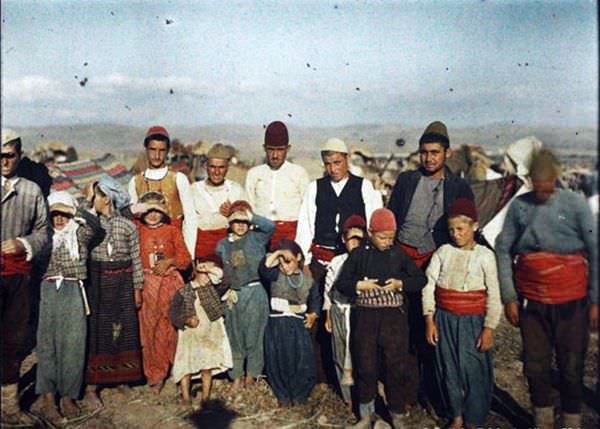
A line of villagers stands outdoors on rough, stony ground, facing the camera with the steady seriousness that early photography often demanded. Traditional clothing dominates the scene—embroidered garments, long skirts and aprons, layered vests, and the striking red sashes worn by several men and boys—offering a vivid glimpse into everyday Greek dress in the 1900s. The colorization brings out earthy blues and browns against the pale sky, making the details feel immediate rather than distant.
Children gather at the front while adults form a protective row behind them, suggesting a family group or a small community posed together during work or travel. Headwear varies from caps to brimmed hats, hinting at different ages and roles, and the mix of fabrics and patterns points to regional craft traditions that once marked identity as clearly as a surname. In the background, tents or piled textiles and the suggestion of animals lend the atmosphere of a rural encampment or a temporary gathering place on the move.
For readers interested in Greece at the turn of the twentieth century, the photograph works as more than a portrait—it’s a textured record of social life, material culture, and the rhythms of a countryside world. Colorization adds an extra layer of interpretation, helping modern eyes read clothing, weather, and landscape with greater ease while still preserving the formal pose of the original. As a historical photo of Greece in the 1900s, it invites lingering over small details: the stitching on a cuff, the dust underfoot, and the quiet pride of people presenting themselves to history.