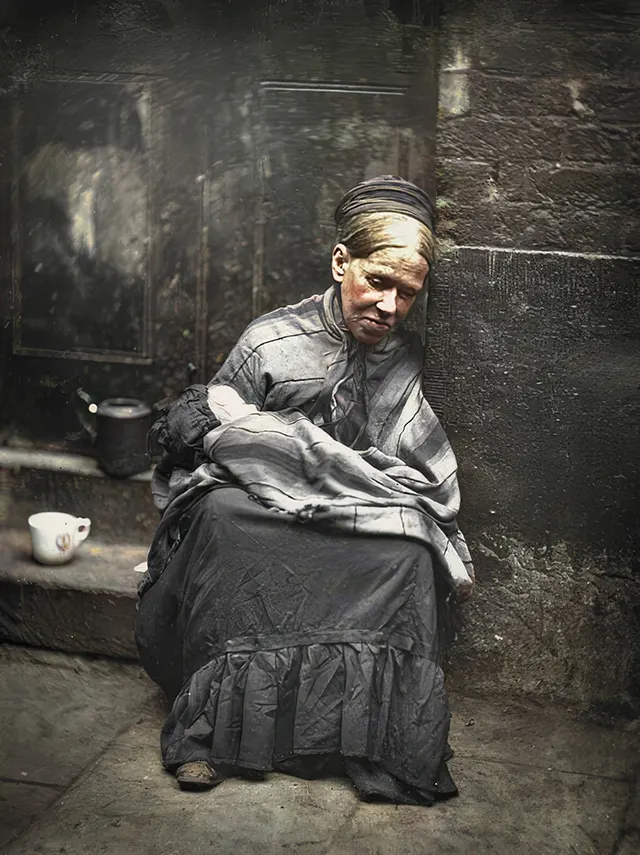
Leaning into a rough stone corner, a weary mother gathers her clothing tightly around her as if to make a shelter out of fabric alone. The colorization brings out the muted grays of her shawl and skirt, the grime and wear in each fold, and the bruised tones of a face that has seen too many hard nights. Nearby, a plain cup and a small pot sit on the ground—spare, everyday objects that quietly hint at begging, borrowed meals, and the fragile routines of street survival in the 1890s.
Her headscarf frames a downcast, guarded expression, and the hunched posture suggests exhaustion more than rest. Even without a visible setting beyond the wall and pavement, the scene feels unmistakably urban and public, a place where privacy is impossible and misfortune is on display. In the creases of her dress and the scuffed shoe at the hem, the photo preserves the material evidence of poverty: clothing pushed past its lifespan, adapted again and again to weather and circumstance.
The title’s mention of a young son adds an unseen weight, reminding us that homelessness in the late nineteenth century was often a family story, not a solitary one. As a historical image of poverty, motherhood, and survival, this portrait invites viewers to look past sensationalism and consider the systems—low wages, illness, seasonal work, displacement—that could tip a household into the street. For readers searching for an authentic 1890s glimpse of social history, the colorized details make the past feel uncomfortably close, and all the more urgent to remember.