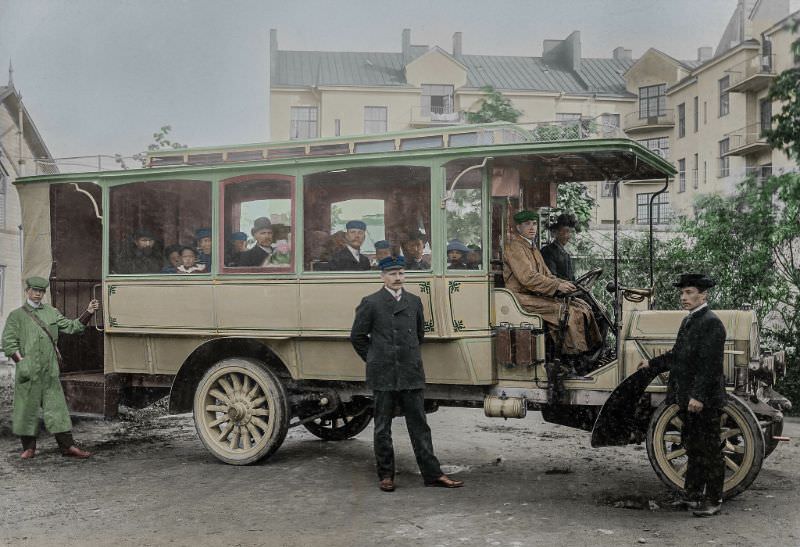
Painted in soft greens and cream, a local bus pauses on a rough street in Helsinki, offering a vivid glimpse of everyday travel in the 1900s. Passengers sit close behind tall windows, some looking out with quiet curiosity while others blend into the dim interior. The colorization brings out the contrast between polished bodywork and the gritty road surface, reminding us how new motor transport still had to contend with older urban conditions.
At the front, the open driver’s position and exposed mechanical details hint at an era when public vehicles were closer to their machines—less sealed, more tactile, and far more dependent on the skill of the person at the controls. A figure stands near the bus as if ready to assist or supervise, while another lingers by the front wheel, grounding the scene in the practical routines of early city transit. Details like the high roofline and bench-like seating suggest a coach adapted for local service, bridging the gap between carriage traditions and modern buses.
Behind the bus, Helsinki’s city buildings frame the moment with restrained façades and a hint of greenery, placing this vehicle within a lived-in neighborhood rather than a grand boulevard. For readers interested in Finnish transport history, early motor buses, or the daily life of Helsinki in the early twentieth century, the image offers plenty to linger over—from clothing and posture to the way the vehicle sits in the street. As a colorized historical photo, it doesn’t just document technology; it restores atmosphere, making a routine stop feel immediate again.