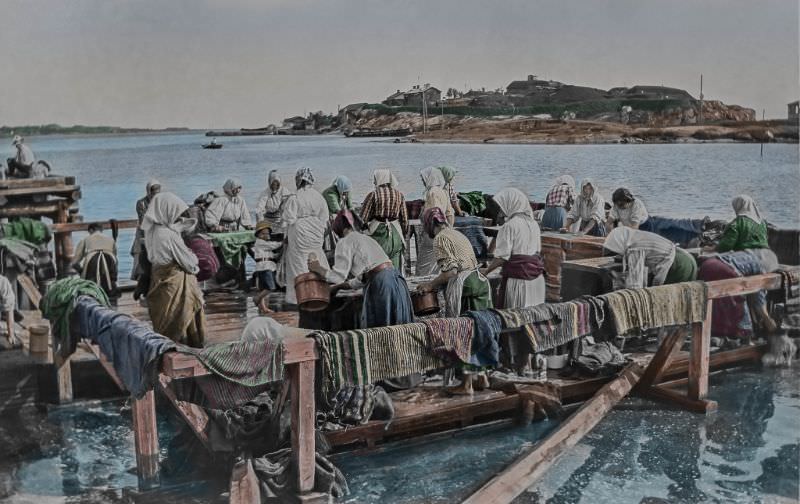
Along the waterfront in Helsinki, a line of wooden washing frames turns the sea’s edge into an open-air laundry. Dozens of women in headscarves and sturdy work clothes lean over soaking textiles, rinsing and scrubbing as water slaps against the platforms. The colorization brings out muted greens, browns, and blues, helping modern eyes read the scene as lived experience rather than distant past.
Carpets and heavy household fabrics drape over rails to drain, their patterns and fringes visible in the damp weight of wool. Buckets and tubs pass from hand to hand, suggesting a practiced rhythm and a shared knowledge of how to beat out grit and winter grime. What might seem like a mundane chore becomes a social workspace, where labor, conversation, and community likely mixed as freely as the brackish harbor water.
In the background, low rocky shorelines and scattered buildings anchor the view in a maritime city shaped by trade, weather, and seasonal routines. Carpet washing in the 1910s was not just about cleanliness; it was a practical response to homes heated by stoves, streets tracked with sand, and textiles meant to last for years. For readers searching for early 20th-century Finnish daily life, this Helsinki photo offers a vivid window into domestic work carried out in public, with the sea itself serving as both tool and setting.