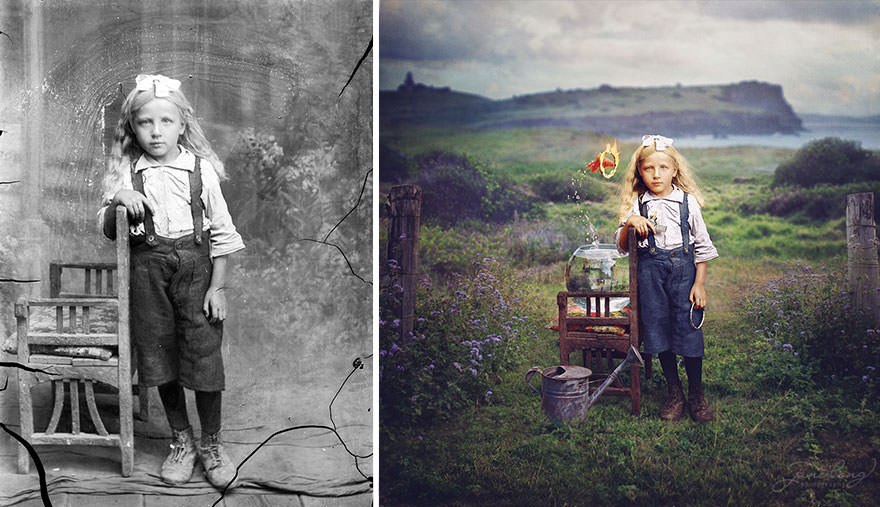
A small girl stands with a steady, almost adult composure, one hand resting on a wooden chair as if it were a prop in a stage portrait. The original glass-plate look—soft focus, visible wear, and studio-like sparseness—reminds you how fragile early photography could be, and how much meaning was carried by a simple pose, a bow in the hair, and the work-ready clothing of everyday childhood.
With recoloring, the scene slips from austere documentation into something closer to memory: green grass underfoot, a moody sky rolling over distant land, and a few carefully chosen objects that suggest domestic life and play. The artist’s conceptual approach doesn’t just “add color”; it reimagines space and atmosphere, turning a static portrait into a narrative moment that feels lived-in, tactile, and emotionally legible.
Glass-plate photographs often survive as quiet artifacts, but projects like Colori invite modern viewers to linger over textures, fabrics, and expressions we might otherwise skim past. For readers drawn to historical photo colorization, restored vintage portraits, and creative reworks of archival images, this post explores how imagination can bridge the gap between then and now—without pretending the past was ever simple.