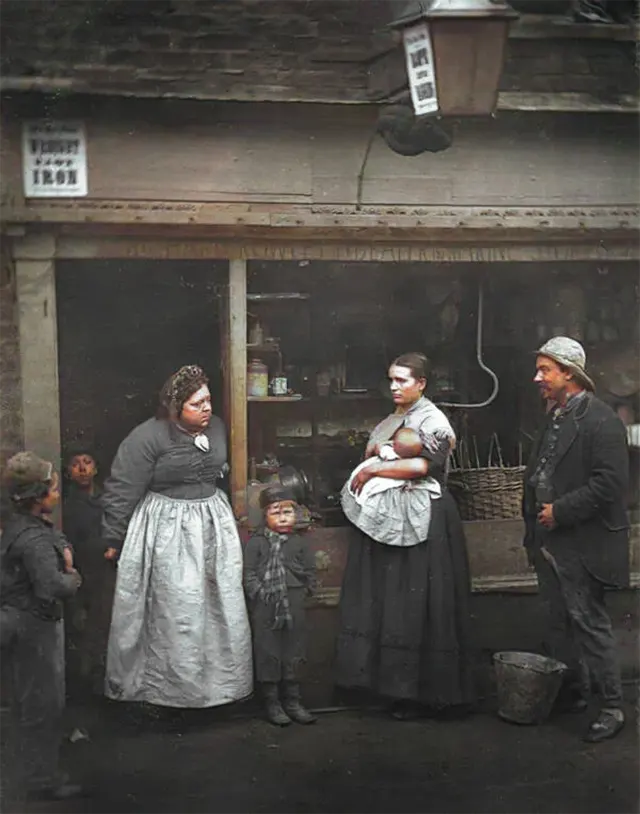
In Lambeth in the 1890s, a small rag shop could be as essential as any grocer, and the gathering at its doorway hints at the everyday economy of making do. The colorization draws the eye to worn aprons, dark skirts, and work-stained clothing—practical layers suited to long days and tight budgets. A hanging street lamp and the shop’s low frontage frame the scene, grounding it in a working London streetscape where pavement conversations were part of the trade.
Rag shops sat at the crossroads of poverty, thrift, and industry, taking in old textiles, scraps, and secondhand goods that could be reused, resold, or recycled into something useful. The open-fronted interior suggests crowded shelves and baskets, a place where small purchases mattered and where families might stretch a few coins further. Even without a posted address, the shopfront and its signage speak to a neighborhood market culture built on constant exchange.
Faces and postures tell their own story: adults pause mid-errand, a child stands close by, and the group seems caught between waiting, bargaining, and watching the street. Details like headwear, aprons, and the bucket near the ground evoke domestic labor and informal work, the kinds of tasks that rarely appear in official records but shaped daily life in Victorian London. For readers searching for Lambeth history, London street life, or the world of rag-and-bone commerce, this restored image offers a vivid window into the textures of an ordinary day.